 Save
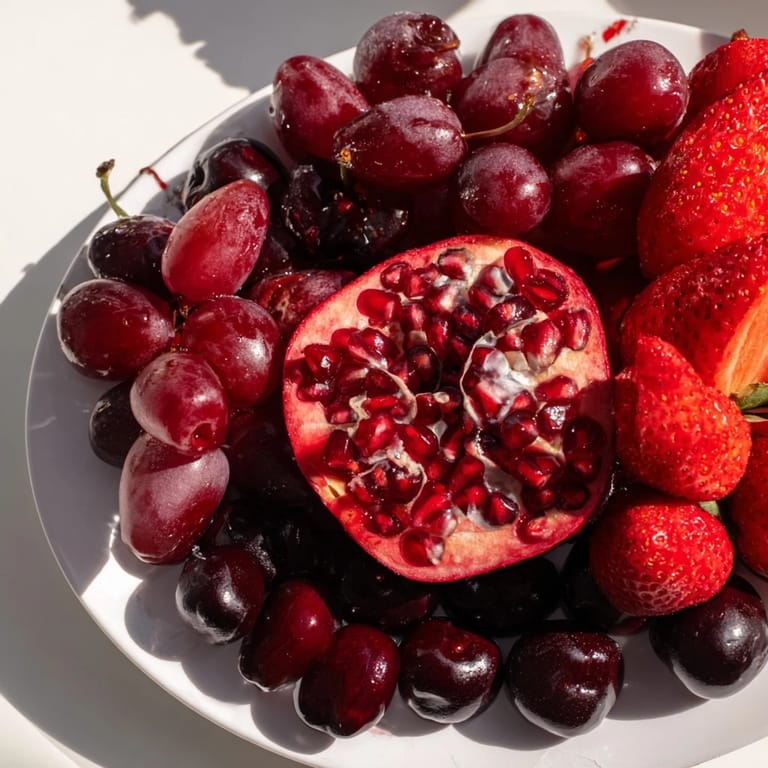
Save I discovered the magic of color gradients while standing in front of my friend's kitchen window one autumn afternoon, watching sunlight spill across her fruit bowl. She casually arranged raspberries next to strawberries, and I realized I'd never really looked at how fruits could tell a story through their shades. That moment sparked the idea for this platter—a visual journey from deep crimson to pale blush, anchored by the drama of a pomegranate split right down the middle. It's become my go-to when I want to impress without stress, because honestly, beautiful fruit arrangements do half the work for you.
I made this for a potluck once where I arrived late and panicked about not contributing enough. One look at the platter when I set it down, and suddenly my plate was the conversation starter instead of an afterthought. An older guest leaned over and told me it reminded her of a sunset she'd seen in Marrakech, which is exactly the kind of moment that reminds you food is about more than nutrition.
Ingredients
- 1 large pomegranate, halved: This is your anchor, your visual statement, your reason for doing this right. The seeds catch light and add a jewel-like quality that no other fruit quite matches.
- 1 cup dark cherries, pitted: Start here with the deepest reds—they're your foundation, the richness that makes everything else glow by comparison.
- 1 cup red grapes: These roll into gaps beautifully and their roundness softens the harder edges of other fruits.
- 1 cup strawberries, hulled: Keep them whole or halved depending on size; they're your bridge between deep and medium reds.
- 1 cup raspberries: Delicate and tumbling, they create texture and depth without overwhelming the eye.
- 1 cup watermelon, cubed: The pale pink surprise that breaks up monotony and adds a playful sweetness to the arrangement.
- 1 cup pink grapefruit segments: Tart and stunning, they add geometry and light among softer fruits.
- 1 cup dragon fruit, cubed: This pale pink-white magic keeps the gradient moving toward the lighter end without losing interest.
- 1 cup apple slices (pink or blush varieties): Choose varieties like Pink Lady or Gala for natural rosy tones that feel intentional.
- 1 cup pear slices: The gentlest finale, almost invisible until you notice how they frame everything else.
- Fresh mint leaves and edible rose petals (optional): These are your punctuation marks—they add aroma and tiny moments of surprise across the platter.
Tired of Takeout? 🥡
Get 10 meals you can make faster than delivery arrives. Seriously.
One email. No spam. Unsubscribe anytime.
Instructions
- Center Your Stage:
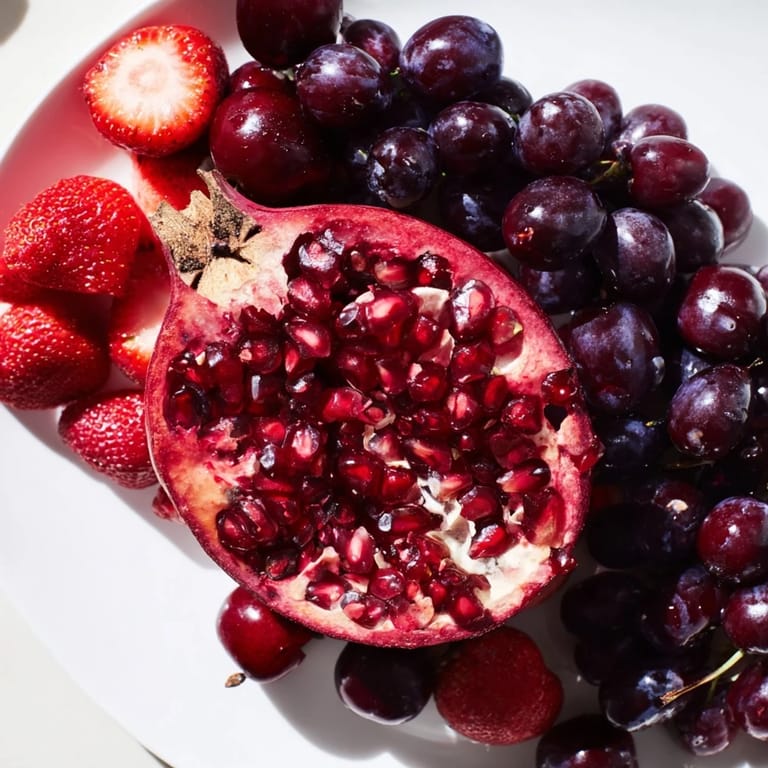
- Place your halved pomegranate cut-side up in the very middle of your platter. Feel how commanding it is just sitting there, seeds gleaming like rubies. This is your focal point, so give it breathing room.
- Build the Deep Red Foundation:
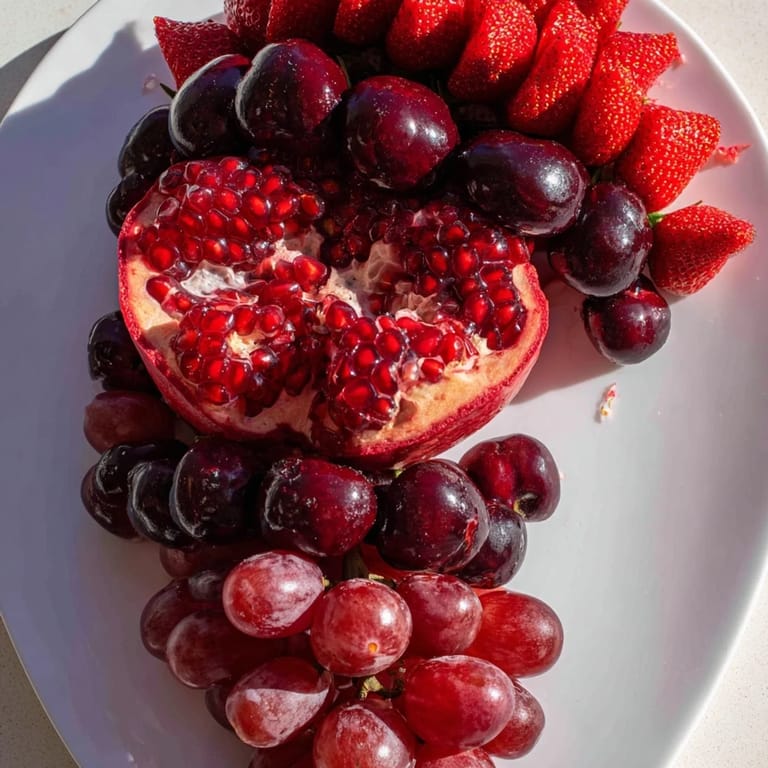
- Arrange cherries, red grapes, and strawberries in a loose crescent around the pomegranate, like you're drawing a moat of richness. Let them overlap slightly so the colors blend at the edges rather than stopping abruptly.
- Transition into Pink:
- Add raspberries, watermelon cubes, and grapefruit segments in a new layer, positioning them so there's a visual conversation between the reds and pinks. You're not trying to be perfectly geometric—just guide the eye gently toward lighter tones.
- Drift Toward Pale and White:
- Place dragon fruit, apple slices, and pear slices around the outer edge, letting the color temperature shift like a sunset fading to twilight. Fan apple slices slightly if they feel too stiff in the arrangement.
- Add Your Final Flourishes:
- Scatter mint leaves and rose petals wherever you feel the platter needs a breath or a surprise, then step back and look. Sometimes the best arrangement is the one that feels alive rather than rigid.
- Time It Right:
- Serve immediately for maximum crispness, or cover loosely with plastic wrap and refrigerate until guests arrive. The platter actually stays beautiful for several hours if fruit juices don't start pooling.
 Pin it
 I realized while making this once that the real gift of a fruit platter isn't the nutrition or even the taste—it's giving people permission to slow down and really look at their food. Watching someone's face light up when they notice the color progression happen is worth every minute of thoughtful arranging.
The Color Gradient as Your Secret Weapon
This platter works because human eyes naturally follow color shifts, and that journey keeps people interested longer than a random scatter of fruit ever could. Once you understand this principle, you'll spot it everywhere—in gardens, in sunsets, in paintings. When you bring it to a serving platter, you're not just feeding people; you're giving them a tiny moment of visual poetry while they're reaching for a piece of dragon fruit.
Seasonal Swaps and Substitutions
Pomegranate season is short and glorious, typically falling in late fall and early winter, but this platter adapts beautifully to what's actually available. In summer, swap in peaches and berries; in winter, lean into persimmons and pomegranate seeds if you can't find the halved fruit in good condition. The principle stays the same—build from deep to light, and let the seasons guide your color story.
Pairing and Presentation Magic
This platter doesn't demand anything fancy, but it pairs effortlessly with chilled sparkling rosé, a light white wine, or even sparkling water with mint. The arrangement itself becomes part of your table styling, so consider what serving platter you use—something with low edges lets the color gradient shine without distraction. Think of it as the opening act to a meal, something that sets a tone of intention and care before anyone even tastes a bite.
- Chill your platter in the refrigerator for 15 minutes before arranging so fruits stay cool longer.
- Keep extra fruit nearby to refresh any spots that start looking tired during a long gathering.
- Trust that imperfection is part of the charm—this shouldn't look computer-generated or artificial.
 Pin it
 This platter taught me that sometimes the most memorable dishes are the ones that ask nothing of your oven or stove. It's a reminder that food doesn't need complexity to feel special—sometimes it just needs clarity, color, and a moment of your attention.
Frequently Asked Questions
- → What fruits create the color gradient?
Deep red fruits like cherries and strawberries transition to pink raspberries and watermelon, finishing with pale pink dragon fruit and apple slices.
- → How should the pomegranate be prepared?
Use a large pomegranate halved and placed cut side up at the center as the platter’s focal point.
- → Can garnishes be added?
Yes, fresh mint leaves and edible rose petals add scent and color but are optional.
- → How to prevent apple browning?
Lightly drizzle lime juice on apple and pear slices to maintain freshness and color.
- → What serving tools are recommended?
A large serving platter, a sharp paring knife, and a cutting board help with precise arrangement.
- → Are substitutions allowed for seasonal fruits?
Substitute with seasonal fruits like red currants, pomegranate seeds, lychees, or peaches as desired.