 Save
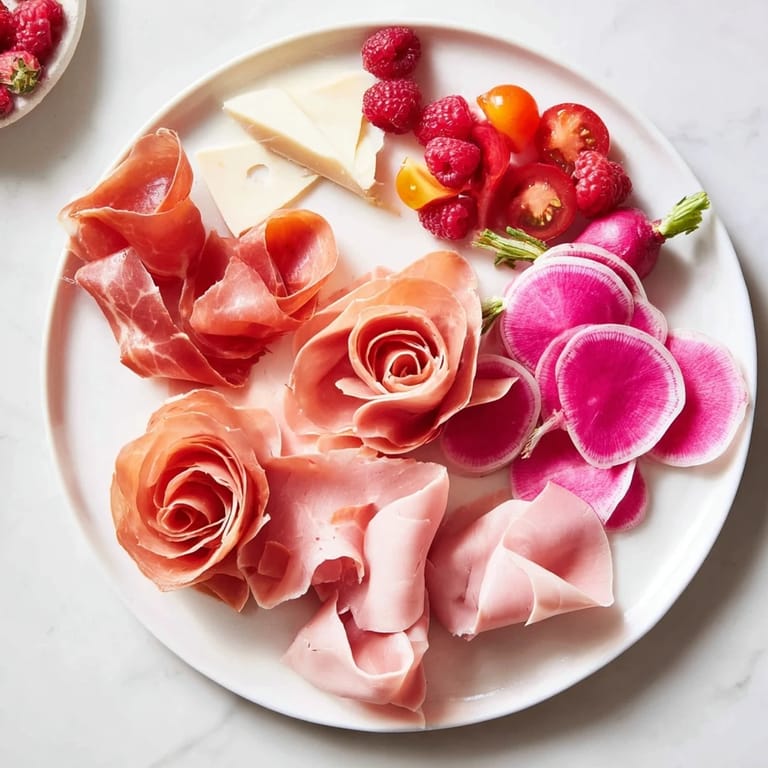
Save I'll never forget the first time I arranged a pink watercolor platter for my sister's spring brunch. She'd just moved into a new house, and I wanted to create something as beautiful as it was delicious—something that would make her guests pause and smile before diving in. As I layered the prosciutto roses, the beet slices, and those jewel-like raspberries, I realized I wasn't just making food; I was painting with flavors and colors. That platter became the conversation starter of the afternoon, and now, whenever someone asks me for an elegant appetizer idea, this is the first thing I suggest.
My coworker once told me she'd made this for a client dinner and they were so impressed they asked about her catering company. She admitted she'd assembled it in her own kitchen that morning. That's when I understood the magic of this platter—it's elegant without being fussy, impressive without being pretentious. It's the kind of thing that makes you look like you know exactly what you're doing in the kitchen, even if you're just arranging beautiful things.
Ingredients
- Prosciutto: 100 g, sliced thinly—the thinner you slice it (or have your butcher slice it), the easier it is to coax into those delicate rose shapes. I learned this the hard way after mangling the first batch.
- Mortadella: 100 g, sliced thin—it provides a softer texture contrast to the prosciutto and its marbling creates natural visual interest when loosely folded
- Pink radishes: 6–8 small ones, thinly sliced—these are your workhorse vegetables; their peppery crunch and blushing color are essential to the whole concept
- Watermelon radish: 1, thinly sliced—if you can find it, the pale pink with white and green interior creates an almost painted effect when layered
- Cooked beet: 1 small beet, thinly sliced—cook it the day before if you want to save time on the day of; it adds earthiness and deep color
- Pink-hued cheese: 100 g, such as port wine Derby, rosé goat cheese, or a berry-washed rind cheese, sliced—choose something that tastes good to you first, then consider the color; flavor always comes first
- Brie or camembert: 100 g, cut into wedges—the creamy texture balances all the crunchy vegetables and silky meats
- Baguette: 1 small, sliced (or gluten-free crackers)—slice just before serving so it stays crisp; nobody wants a sad, stale cracker
- Rice crackers: 1 package—these stay crispy longer than bread and add a delicate crunch
- Fresh strawberries: 1 cup, halved—pick them on the day you're serving; they're your brightest color accent and sweetest note
- Raspberries: 1 cup—handle them gently; they bruise easily but they're worth their delicate beauty
- Edible rose petals or microgreens: Optional, but they transform the platter from pretty to absolutely show-stopping
Tired of Takeout? 🥡
Get 10 meals you can make faster than delivery arrives. Seriously.
One email. No spam. Unsubscribe anytime.
Instructions
- Start with your canvas:
- Choose a large platter or wooden board—something big enough that everything has breathing room. I like to work on a surface that's at least 14 inches across so there's room to really play with the arrangement.
- Create your focal points with prosciutto:
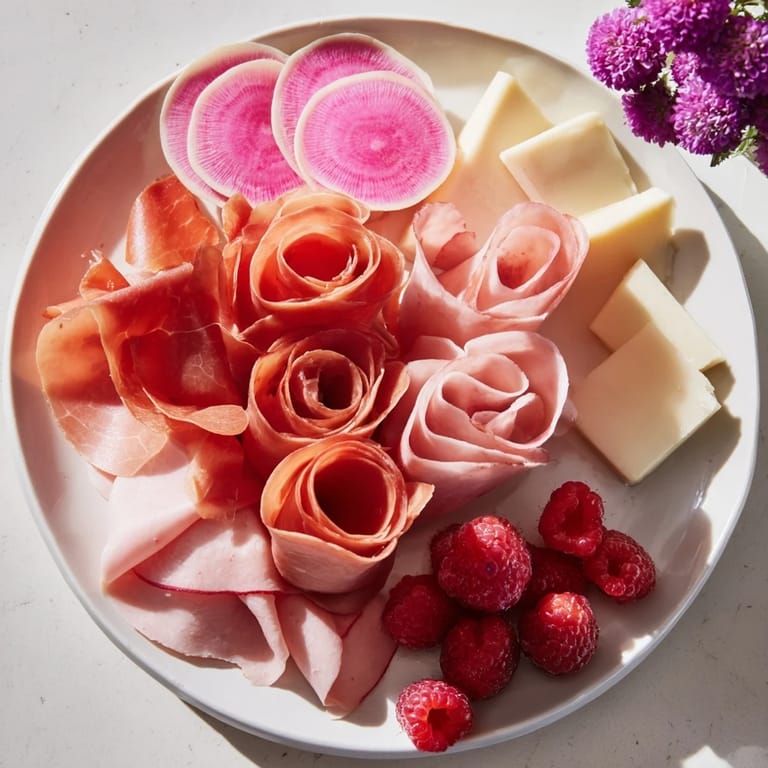
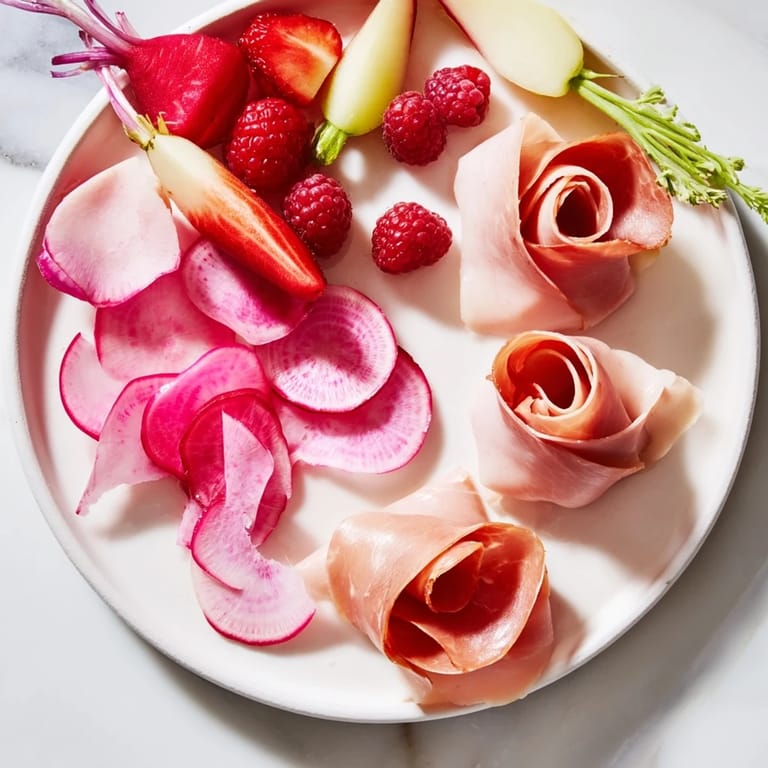
- Take each prosciutto slice and gently roll or fold it into a loose rose shape—don't stress about making them perfect. Place these rose clusters in a few spots around the platter, leaving gaps between them. They'll anchor your design.
- Layer the mortadella:
- Fold the mortadella slices into loose, wavy shapes beside the prosciutto. Let them overlap slightly in a way that feels natural, like fabric draping.
- Create watercolor strokes with vegetables:
- This is where the magic happens. Take your thinly sliced radishes, watermelon radish, and beet slices and arrange them in overlapping, fanned layers. Think about how watercolor paints blend at their edges—you want a similar effect. Don't arrange them in rows; instead, let them cascade and overlap.
- Nestle in the cheeses:
- Arrange your pink cheese slices and brie wedges in clusters, filling in gaps and letting their colors merge visually with everything else. Creamy cheeses should be near crispy vegetables for textural contrast.
- Add bread and crackers with intention:
- Arrange baguette slices and rice crackers in gentle curves—perhaps along one edge or winding through the platter. Leave them slightly standing so they're easy to grab.
- Finish with berries and sparkle:
- Scatter strawberry halves and raspberries in small piles across the platter, filling any remaining gaps with their bright, jewel-like color. Finally, sprinkle edible rose petals or microgreens on top if you're using them—this is the final flourish that makes it feel like something from a magazine.
- Serve with confidence:
- Let it sit out for no more than a couple of hours before eating—you want everything at its freshest, crispest best. Encourage your guests to mix and match, to try flavors and textures in any combination they like.
 Pin it
 I made this platter for my grandmother's 80th birthday, and watching her guests take photos before eating it felt like a small victory. She later told me it was the most thoughtful thing anyone had done all day—not because it was complicated, but because I'd clearly thought about how it would make her feel. That's what this platter does; it elevates an ordinary moment into something memorable.
The Art of Color Theory on a Plate
One of the joys of this platter is thinking about color the way a painter would. The pinks, reds, and pale whites aren't just pretty—they create a visual rhythm that draws the eye. When you layer a thin beet slice next to a pale radish next to a piece of prosciutto, you're creating subtle contrast that makes each element look better. I've learned that strategic use of white space (leaving some platter showing between ingredients) makes the colors pop even more. It's tempting to cover every inch, but restraint is actually what makes it look most elegant.
Playing with Flavors and Textures
What makes this platter work as more than just eye candy is the careful balance of flavors. The salty, rich prosciutto plays against the sweetness of strawberries. The creamy cheese softens the peppery bite of raw radishes. The earthiness of beet echoes in the umami of good cheese. Every bite is a conversation between different ingredients, which is why I encourage guests to try combinations rather than eating things separately. Some of my favorite moments at parties have been watching someone put together an unexpected pairing and then lean back with a look of delighted surprise.
Adaptations and Variations
The beauty of this platter is its flexibility. You can leave out the meats entirely and add more vegetables and cheeses without losing the impact. I've made vegetarian versions with extra varieties of cheese, pickled vegetables, and nuts, and they're just as stunning. The core principle—arranging beautiful ingredients with intention—works whether you have prosciutto or not. You might add pickled onions for tang, pink peppercorns for a subtle heat, or pomegranate seeds for jewel-like sweetness. Trust your instincts about what flavors and colors appeal to you.
- Consider your guests' dietary needs when choosing ingredients, and make substitutions boldly rather than apologetically
- A drizzle of quality olive oil or a small pot of fig jam on the side can add sophistication without requiring any plating changes
- Serve this with a chilled glass of rosé wine, and your presentation will feel complete
 Pin it
 This platter has become my go-to when I want to feel like a gracious host without spending hours cooking. It's proof that simplicity, when done with intention and care, is its own form of elegance.
Frequently Asked Questions
- → What is the best way to arrange the meats on the platter?
Shape prosciutto slices into rose-like forms by rolling or folding, and layer mortadella in loose folds beside them for visual interest.
- → How can I mimic the watercolor effect with vegetables?
Thinly slice pink radishes, watermelon radish, and cooked beets, then scatter them in overlapping, fanned layers to resemble brush strokes.
- → Which cheeses complement the pink color theme?
Use pink-hued cheeses like port wine Derby or rosé goat cheese alongside creamy brie or camembert wedges for color and flavor contrast.
- → Are there suitable substitutions for bread and crackers?
Gluten-free crackers can replace baguette slices to accommodate dietary restrictions while maintaining texture variety.
- → What garnishes enhance this platter’s elegance?
Edible rose petals or fresh microgreens add a delicate, fresh touch that elevates the platter’s presentation.
- → Can this platter be adapted for vegetarian preferences?
Omit the meats and increase the quantity and variety of cheeses and vegetables for a satisfying, meat-free version.