 Save
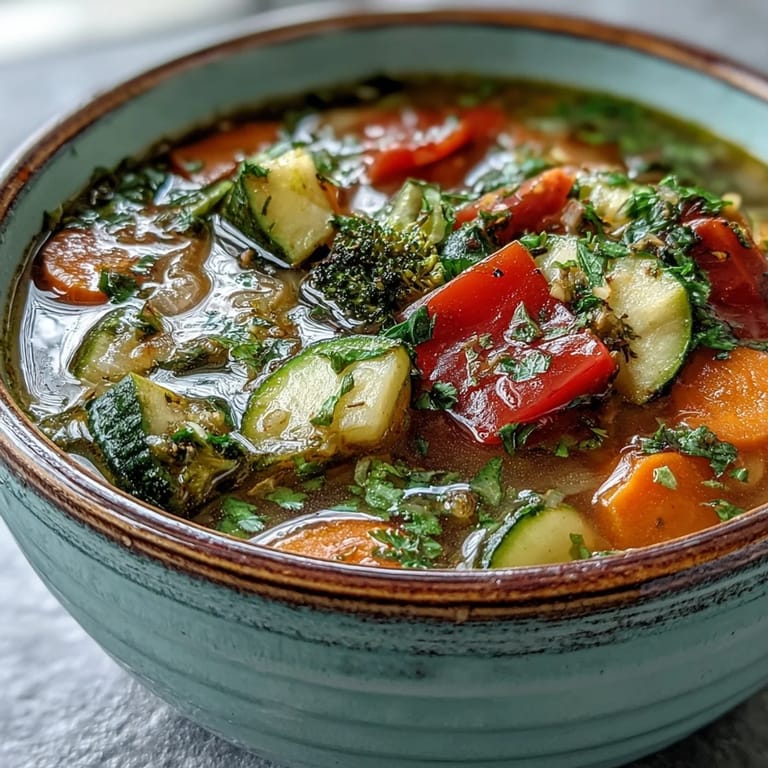
Save My neighbor brought this soup to my door on a gray Tuesday afternoon, steam still rising from the container, and I was struck by how the kitchen filled with ginger's warmth the moment I reheated it. There's something about a bowl of vegetables in fragrant broth that feels less like cooking and more like self-care, especially when life gets hectic. This soup became my go-to when I wanted something nourishing without the fuss, and now I make it whenever friends mention they're under the weather or just need a quiet moment with good food.
I made this for my sister during a particularly rough winter, and watching her face soften with that first spoonful told me everything I needed to know about the power of simple, honest food. She asked for the recipe the next day, which doesn't happen often, and now she texts me photos of her own batches. It became our thing, a quiet language between us during difficult seasons.
Ingredients
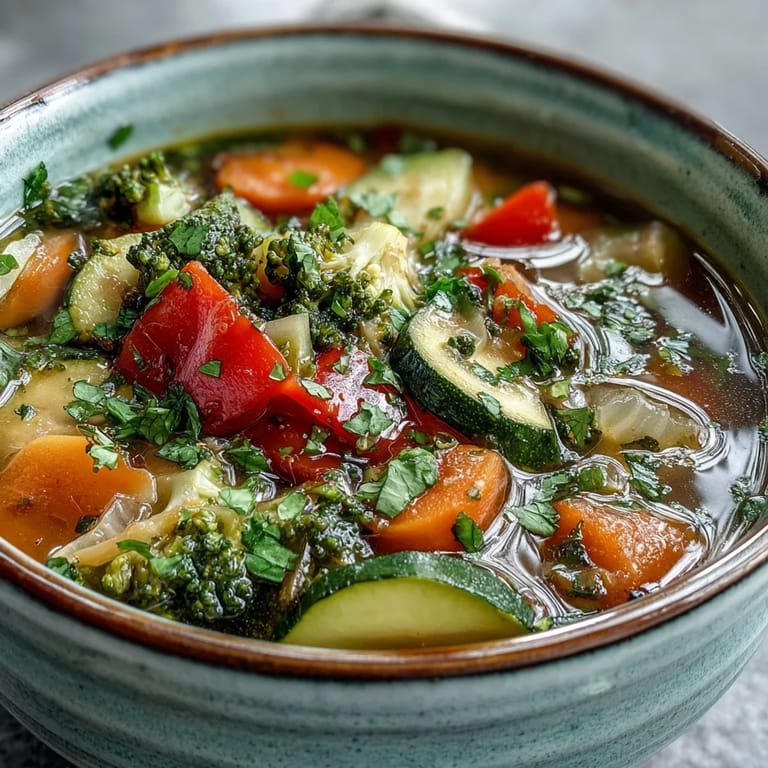
- 1 medium onion, diced: The base of everything, building sweetness as it softens and becomes almost invisible in the finished soup.
- 2 carrots, peeled and sliced: They add natural sweetness and body, holding their shape better if you don't overcook them past tender.
- 2 celery stalks, sliced: Not just filler—celery brings a subtle earthiness that balances the bright ginger.
- 1 red bell pepper, diced: Choose one that's heavy in your hand and glossy; it adds sweetness and a hint of smokiness.
- 1 zucchini, diced: It softens quickly and absorbs the broth beautifully, so cut it into bite-sized pieces.
- 2 cups broccoli florets: Keep these relatively uniform in size so they cook evenly and stay slightly firm.
- 2 tbsp fresh ginger, peeled and grated: Use a microplane or the smallest holes on a box grater for the most delicate texture, and don't be shy with it.
- 3 garlic cloves, minced: Mince them fine so they disperse throughout the broth rather than settling in chunks.
- 6 cups vegetable broth: The quality of your broth matters more than you'd think, so taste it before adding and adjust salt accordingly.
- 1 tbsp olive oil: Use something you actually like tasting, not the cheapest bottle.
- 1 tsp sea salt or to taste: Start conservative and add more at the end when you can actually taste the finished soup.
- 1/2 tsp freshly ground black pepper: Grind it just before adding so it's aromatic and not stale.
- 1 tbsp soy sauce or tamari optional for depth: This is the secret that makes people ask what your ingredient is—the umami lingers without tasting overtly salty.
- 2 tbsp fresh cilantro or parsley chopped: Cilantro brings brightness if you're into it, but parsley is more forgiving and still adds that fresh finish.
- 1 tsp toasted sesame oil optional: A tiny drizzle transforms the whole bowl, adding richness and a toasty note.
Tired of Takeout? 🥡
Get 10 meals you can make faster than delivery arrives. Seriously.
One email. No spam. Unsubscribe anytime.
Instructions
- Heat your foundation:
- Warm olive oil in a large pot over medium heat, then add your diced onion, carrots, and celery. Spend five minutes letting them soften while the kitchen starts to smell like dinner—this isn't rushing, it's building flavor.
- Bloom the aromatics:
- Once the vegetables are translucent at the edges, add your minced garlic and grated ginger, stirring constantly for about two minutes until the fragrance becomes almost overwhelming in the best way. You'll know it's right when you can't help but pause and breathe it in.
- Add the rest of the vegetables:
- Toss in your bell pepper, zucchini, and broccoli, giving everything a good stir so the ginger and garlic coat each piece. Let them toast together for three minutes, which deepens their flavors before the liquid goes in.
- Bring it all together:
- Pour in your vegetable broth slowly, watching the vegetables bob and settle as the liquid rises. Bring it to a boil, then immediately lower the heat so it simmers gently rather than aggressively rolling.
- Season and simmer:
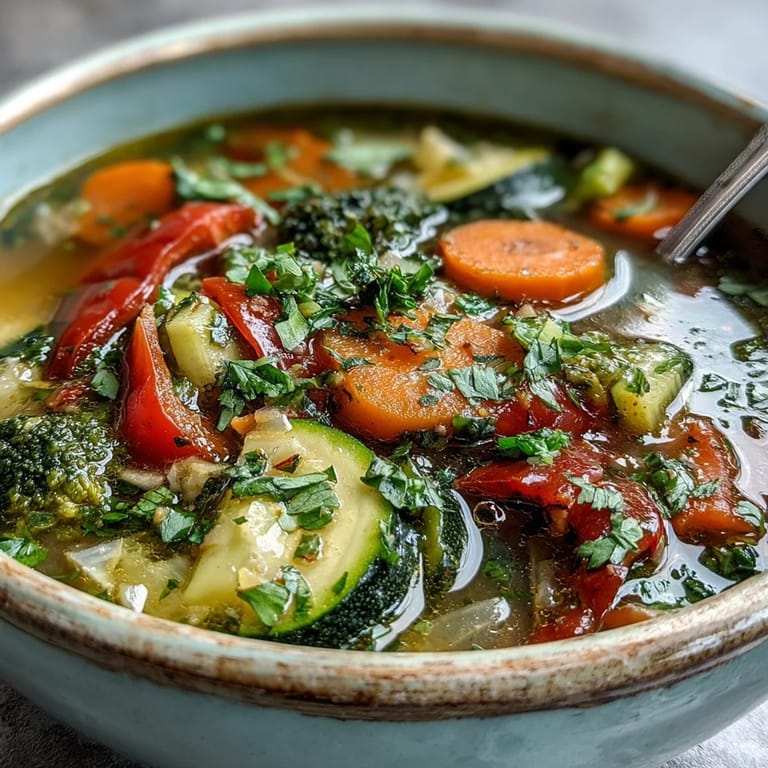
- Add salt, pepper, and soy sauce if you're using it, then let the soup bubble softly for fifteen to twenty minutes. You're looking for vegetables that are tender enough to eat easily but still have a slight firmness, not the mushy texture of soup that's been neglected on the stove.
- Taste and adjust:
- This is the moment that separates adequate soup from one people actually remember—take a spoon, blow on it, and taste. Add more salt if it tastes flat, more ginger if it needs brightness, or a pinch of pepper if it needs edge.
- Serve with intention:
- Ladle the soup into bowls and finish each one with a small drizzle of sesame oil and a scatter of fresh herbs, which adds color and a final flourish that makes it feel special rather than just practical.
 Pin it
 I learned the real magic of this soup when I made it for someone dealing with their first day of chemotherapy, and they told me later it was the only thing that didn't taste like metal that week. Food became something deeper that day—not just nutrition, but a small act of presence.
Vegetable Flexibility and Swaps
The beauty of this soup is that it forgives improvisation, which means you're never locked into one version of it. I've made it with snap peas instead of carrots when I had them on hand, added handfuls of spinach at the last moment for color and iron, and swapped mushrooms in when I was feeling earthy. The ratio that matters is roughly equal parts vegetables to broth, so play around without fear.
Making It a Meal
This soup sings as a starter, but it transforms into a full meal with minimal additions if you're actually hungry rather than just wanting something light. A slice of crusty bread becomes a vehicle for soaking up broth, while rice noodles make it more substantial without overshadowing the delicate vegetable flavors. For protein, I often stir in cooked lentils or cubed tofu after the vegetables have finished cooking, so they warm through without falling apart.
The Heat Question and Final Touches
Some days I finish this soup plain and pure, letting the vegetables and ginger speak for themselves, while other times I find myself reaching for chili flakes or a grind of white pepper to add a subtle kick. The sesame oil is the secret weapon that nobody expects but everyone notices once it's there, transforming a simple vegetable soup into something that feels intentional and thoughtful. Think of these finishing touches as ways to make the soup feel like it belongs to you rather than just a recipe you followed.
- Fresh ginger loses potency when it sits around, so buy it the day you plan to cook or store it in the freezer for surprising freshness weeks later.
- Tamari is your friend if anyone eating needs gluten-free, and it tastes just as good as soy sauce while being more inclusive.
- Taste constantly as you cook—your palate is the only seasoning guide that matters in the end.
 Pin it
 This soup sits on my stove whenever I need reminding that the best cooking happens when you stop following rules and start listening to what the food needs. Make it once and you'll understand why it became my answer to so many moments.
Frequently Asked Questions
- → Can I make this soup ahead of time?
Absolutely. The flavors deepen when stored overnight. Keep refrigerated for up to 4 days and reheat gently on the stove. Add a splash of broth if it thickens too much.
- → What vegetables work best for substitutions?
Snap peas, spinach, mushrooms, green beans, or butternut squash all work beautifully. Add delicate greens like spinach in the last few minutes to prevent overcooking.
- → How can I add more protein?
Stir in cooked lentils, chickpeas, or cubed tofu during the last 10 minutes of simmering. Quinoa or rice noodles also make excellent additions for a more filling bowl.
- → Can I freeze this soup?
Yes, freeze for up to 3 months in airtight containers. Leave a bit of space at the top as liquids expand when frozen. Thaw overnight and reheat on the stove.
- → How do I adjust the ginger flavor?
Start with 1 tablespoon if you prefer a milder taste. For more warmth and zing, increase to 3 tablespoons. Add extra early in cooking so the flavor infuses the broth properly.