 Save
Save There's something about opening your oven door in late October and being hit with the smell of roasting squash that makes you feel like you've got your life together. My neighbor handed me two acorn squashes from her garden that year, slightly lopsided and still dusty with soil, and I had no idea what to do with them until I roasted one out of pure curiosity. The kitchen filled with this warm, honeyed aroma, and by the time I'd turned it into soup, I understood why people get so excited about fall cooking.
I made this soup the night my best friend came over after a rough week at work, and she walked into my kitchen, took one inhale, and just sat at the counter without saying anything for a full minute. That's when I knew this recipe had staying power. Now every time the weather turns cool, she texts me asking if I'm making it again.
Ingredients
- 2 medium acorn squash (about 2 lbs total), halved and seeded: The smaller, sweeter cousin of butternut, acorn squash has a delicate flavor that doesn't need much to shine; roasting it first concentrates that natural sweetness into something really special.
- 1 medium yellow onion, chopped: Don't skip this—it builds the savory backbone that keeps the soup from tasting like dessert.
- 2 cloves garlic, minced: Just enough to whisper in the background, not shout.
- 1 medium carrot, peeled and chopped: A little earthiness and subtle sweetness that rounds everything out.
- 4 cups vegetable broth and 1 cup water: Use low-sodium broth so you control the salt level; the water keeps things from getting too intense.
- 1/2 cup heavy cream or coconut milk: This is where the velvety texture comes from—don't go lighter here or you'll lose that luxurious mouthfeel.
- 2 tbsp olive oil: One tablespoon for the squash, one for sautéing; good oil makes the flavors feel polished.
- 1 tsp salt, 1/2 tsp black pepper, 1/4 tsp ground nutmeg, 1/4 tsp ground cinnamon: These spices are doing the real work—nutmeg and cinnamon are what make people ask what you put in here.
Tired of Takeout? 🥡
Get 10 meals you can make faster than delivery arrives. Seriously.
One email. No spam. Unsubscribe anytime.
Instructions
- Get your oven ready and prep the squash:
- Preheat to 400°F and line a baking sheet with parchment paper. Brush the cut sides of each squash half with olive oil until they glisten, then place them cut-side down on the sheet—this is the secret to getting them to caramelize and deepen their flavor.
- Roast until golden and tender:
- Set a timer for 30 to 35 minutes; you want the flesh to be soft enough that a fork slides through easily. Let them cool for a few minutes, then scoop the flesh away from the skin—it'll come away like butter.
- Build your flavor base:
- Heat your remaining olive oil in a large pot over medium heat and add the onion, carrot, and garlic. Sauté for 5 to 7 minutes, stirring occasionally, until the onion turns translucent and everything smells incredible.
- Combine and simmer:
- Add the roasted squash flesh, broth, water, salt, pepper, nutmeg, and cinnamon. Bring everything to a gentle boil, then lower the heat and let it simmer for about 10 minutes so the spices can get to know each other.
- Blend until silky:
- Remove from heat and use an immersion blender to puree the soup right in the pot, moving it around until there are no lumps and everything is the texture of velvet. If you prefer using a countertop blender, work in batches and be careful with the hot liquid.
- Finish with cream and taste:
- Stir in the cream or coconut milk and taste for seasoning—you might want a touch more salt or nutmeg depending on your broth. Reheat gently if it's cooled down.
- Serve with intention:
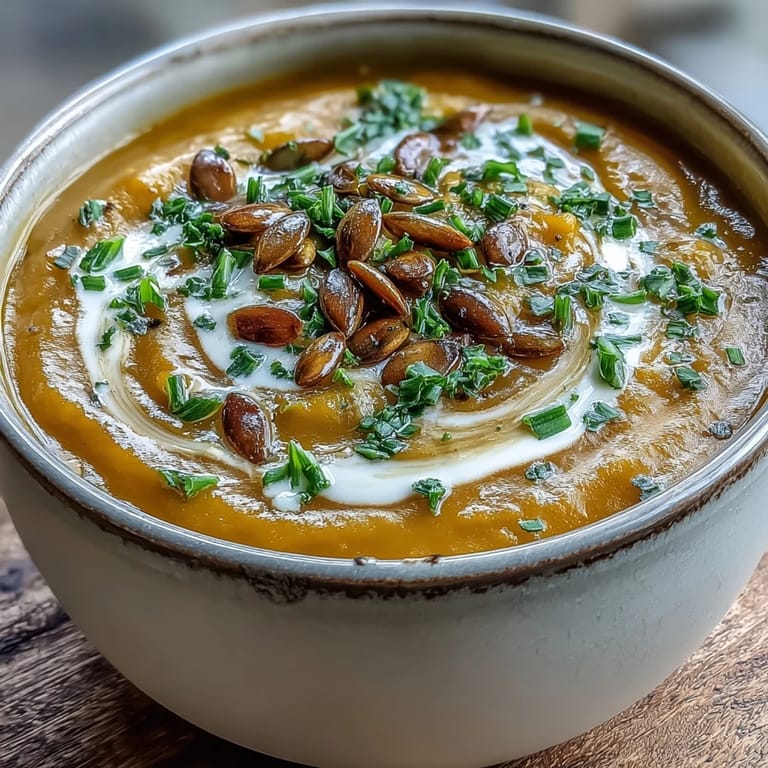
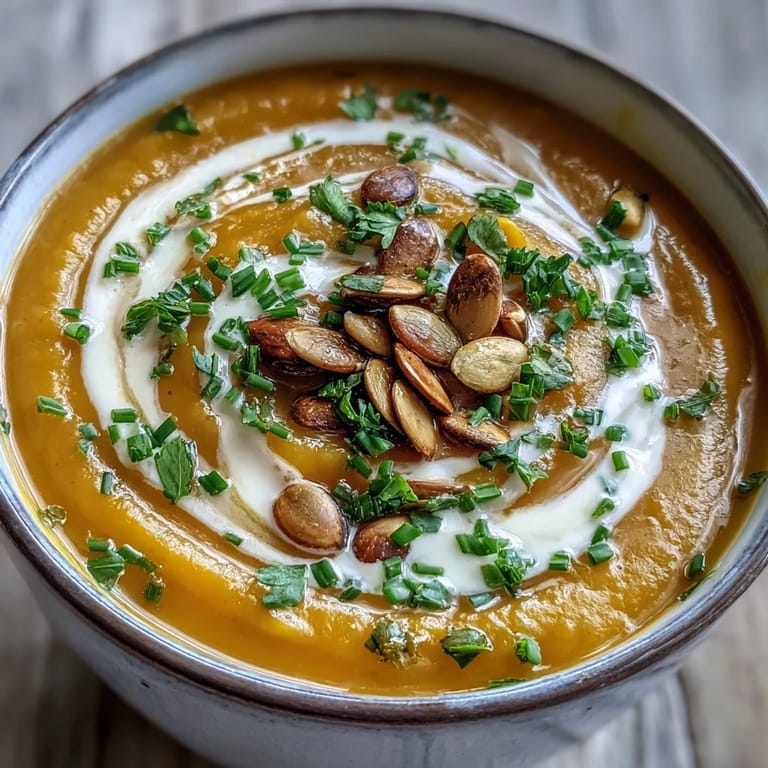
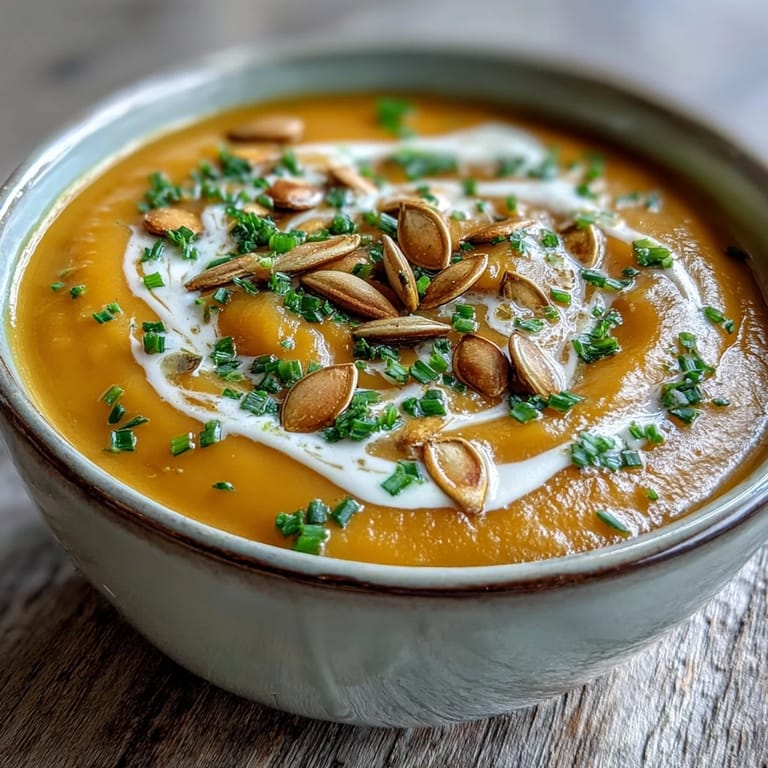
- Ladle into bowls and scatter toasted pumpkin seeds and fresh chives on top, with a small drizzle of cream if you're feeling it.
 Pin it
 I once made this soup for a Thanksgiving potluck where I wasn't sure what to bring, and it disappeared before the main course even came out. One person actually asked if I'd added butterscotch to it—I hadn't, but the compliment made my whole night.
The Magic of Roasting
There's a real difference between roasting vegetables and boiling them, and this soup taught me that in the clearest way possible. When you roast acorn squash, the natural sugars concentrate and caramelize slightly, which creates a depth of flavor that you simply cannot achieve by simmering it in water. The cut sides turn slightly golden and the edges crisp up just a little, and that's where all the magic lives. Once I understood this, I started roasting everything.
Spice Balance and Your Own Taste
The first time I made this, I followed the measurements exactly and wondered if maybe I'd messed up because the spices seemed subtle. Then I realized that was the whole point—this isn't a pumpkin spice explosion, it's a gentle reminder that fall exists. If you like things spicier, a pinch of cayenne or ginger is your friend, but start small and taste as you go. I've learned that the best recipes are the ones you adjust to fit yourself.
Serving and Storage
This soup tastes even better the next day once the flavors have settled and become friends with each other. It stores beautifully in the refrigerator for up to four days, and freezes well for up to three months if you leave out the cream and stir it in after reheating. Serve it hot with crusty bread, or even chilled on a warm day if you're feeling adventurous.
- Top with toasted pumpkin seeds for crunch and a little nod to the season.
- A sprinkle of crispy sage or even a tiny dollop of sour cream takes it from good to restaurant-quality.
- Make a double batch because you'll want leftovers, and this freezes like a dream.
 Pin it
 This soup is one of those recipes that reminds you why cooking matters—it's warmth in a bowl, and it tastes like someone who loves you made it just for you. Make it this week.
Frequently Asked Questions
- → Can I make this soup ahead of time?
Yes, this soup reheats beautifully. Prepare it up to 3 days in advance and store in an airtight container in the refrigerator. Reheat gently over low heat, adding a splash of broth or cream if needed to adjust consistency.
- → Is this soup freezer-friendly?
Absolutely. Let the soup cool completely before transferring to freezer-safe containers. It will keep well for up to 3 months. Thaw overnight in the refrigerator and reheat gently. Note that the texture may be slightly thicker after freezing.
- → What can I substitute for heavy cream?
Coconut milk works wonderfully for a dairy-free version and adds a subtle tropical note. You can also use half-and-half for a lighter option, or puree in a cooked potato for extra creaminess without any dairy.
- → Do I have to roast the squash first?
While roasting isn't strictly necessary, it significantly enhances the flavor by caramelizing the natural sugars. If you're pressed for time, you can peel and cube the raw squash and simmer it directly in the broth for 20-25 minutes until tender.
- → How can I make this soup more filling?
Serve with crusty bread or gluten-free crackers to dip. You can also add protein like cooked white beans, lentils, or shredded chicken. A side salad turns it into a complete meal, or top with toasted seeds and nuts for extra texture and sustenance.
- → Can I use butternut squash instead?
Yes, butternut squash makes an excellent substitute and will yield similar results. It has a slightly nuttier flavor and creamy texture. Kabocha squash or delicata would also work well in this preparation method.