 Save
Save I'll never forget the afternoon I discovered this salad while wandering through a farmer's market, mesmerized by the shades of green on display. The vendor was arranging produce with such care, creating gradients from deep spinach to bright kiwi, and I thought, "What if I could capture that beauty on a plate?" That conversation sparked the idea for the Emerald Isle Greenscape—a salad that's as much about visual storytelling as it is about flavor. Every time I make it, I'm transported back to that moment of inspiration, when I realized that a salad could be a canvas.
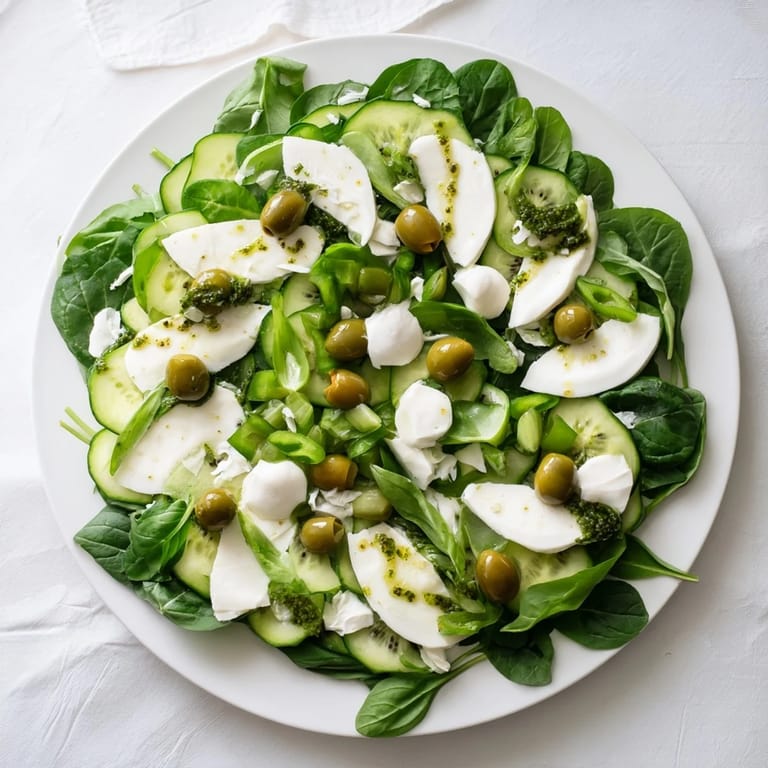
I made this for my book club last spring, and one friend told me it was the first time she'd ever felt that a salad deserved to be photographed. We spent twenty minutes just arranging and rearranging the mozzarella "river" down the center, laughing at how seriously we were taking it. But that's the magic of this salad—it invites you to slow down and play with your food like you're a kid again.
Ingredients
- Baby spinach leaves, 100 g: The foundation of your green landscape—choose fresh, tender leaves because they're the first thing people notice. They wilt slightly under the weight of other ingredients, which is exactly what you want.
- Arugula, 50 g: This adds a peppery bite that makes your taste buds wake up. Its delicate leaves catch the light beautifully, so position them where they'll be seen.
- Cucumber, 1 small, thinly sliced: Slice it thin and even; these translucent rounds create visual layers that light shines through. I've learned that a mandoline makes this foolproof, though a sharp knife works just fine.
- Green bell pepper, 1, diced: The dice should be small and uniform so they nestle into the gaps between other ingredients without overwhelming the delicate composition.
- Kiwis, 2, peeled and sliced: The jewel of the palette—those seeds create speckled patterns that draw the eye. Slice them no more than an hour before serving so they stay perky and don't release too much moisture.
- Green grapes, 100 g, halved: Halving them reveals their interior and doubles their visual presence. They also roll slightly, which is okay—embrace the movement.
- Green olives, 50 g, pitted and sliced: The dark interior contrasts beautifully with the lighter greens, adding depth. If you can find castelvetrano olives, they're milder and slightly buttery, which elevates everything.
- Fresh basil leaves, 30 g: Tuck these in last, just before serving, so they stay vibrant and their fragrance hasn't faded. Their aroma is part of the experience.
- Basil pesto, 3 tbsp: Whether store-bought or homemade, this is your dressing's soul. I make mine with equal parts basil and extra-virgin olive oil, always tasting as I go.
- Extra-virgin olive oil, 2 tbsp: Choose one you genuinely love drinking; it makes a difference in dressing and shouldn't hide in the shadows.
- Lemon juice, 1 tbsp: Fresh is non-negotiable here—bottled lemon juice tastes like sadness compared to what a real lemon brings.
- Salt and freshly ground black pepper: Season deliberately, tasting between pinches. The pesto is already seasoned, so go gently at first.
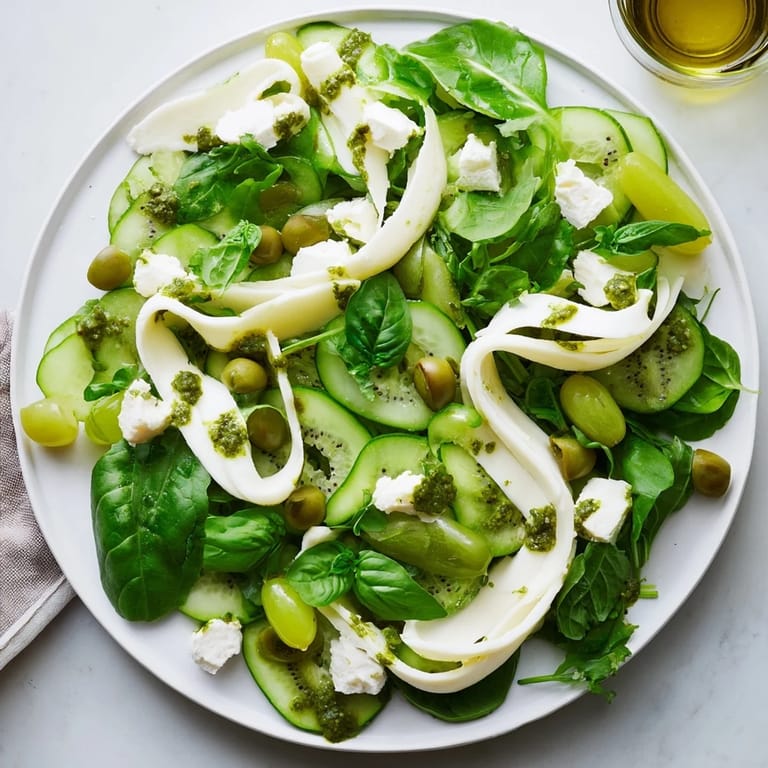
- Fresh mozzarella, 100 g: This is your "river." Tear it gently rather than cutting; the irregular edges are more romantic and catch light in different ways. Room temperature mozzarella tastes creamier than cold.
- Crème fraîche or Greek yogurt, 1 tbsp (optional): This isn't decoration—it's insurance. A spoonful dotted here and there adds a subtle creaminess that makes people wonder what your secret is.
Tired of Takeout? 🥡
Get 10 meals you can make faster than delivery arrives. Seriously.
One email. No spam. Unsubscribe anytime.
Instructions
- Build your foundation:
- Scatter the spinach and arugula across your large platter, letting them overlap naturally. This isn't about perfection; it's about creating a base that feels organic and alive. Pay attention to the color—the deeper spinach should anchor the composition while the peppery arugula adds brightness.
- Layer with intention:
- Now comes the part where you become an artist. Arrange the cucumber slices in gentle overlaps, then nestle the diced bell pepper into the spaces between them. You're creating visual rhythm—think of it like musical notes on a staff, each ingredient finding its place.
- Add the jeweled accents:
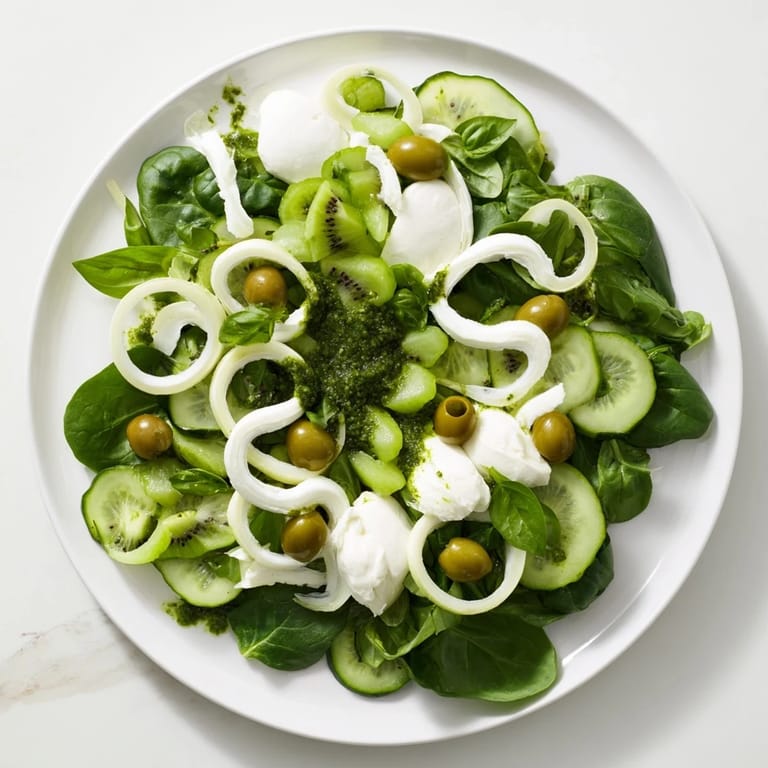
- This is where the magic happens. Scatter the kiwi slices, grape halves, and olive slices across the salad with deliberate randomness. Don't cluster them; let them breathe. Step back and squint—if the greens look like they have depth and variation in shade, you've nailed it.
- Weave in the basil:
- Just before you're ready to dress the salad, gently tuck the basil leaves throughout. Their vibrant green and the aromatic release matter as much as how they look.
- Make your dressing:
- In a small bowl, whisk the pesto and olive oil together first until they're emulsified, then add the lemon juice gradually. Taste. Adjust. The dressing should taste bright enough that you'd eat it with a spoon, but balanced enough that it doesn't overpower the delicate vegetables.
- Dress with grace:
- Pour or drizzle the dressing evenly over the salad in a light hand. If you pour too eagerly, you'll create puddles. A steady, calm drizzle creates coverage without saturation. Some people even use a spoon to distribute dressing into the gaps between layers.
- Create the river:
- Now for the finale. With tweezers or your fingers, arrange the mozzarella pieces in a meandering line across the salad, like a river flowing through an emerald landscape. It should feel organic, not perfectly straight. If you're using the crème fraîche or yogurt, dot small spoonfuls along the river. Let some pieces sit on top of the greens, and let some nestle into the crevices.
- Present and serve:
- Step back. Admire your work. Invite people to look before you toss. Then, when everyone's had a moment to appreciate it, use two large spoons to toss everything together gently, ensuring every plate gets a piece of the river.
 Pin it
 There was an evening when I served this salad at a dinner party where everyone was a bit tense—old friends who hadn't seen each other in years. The moment I placed it on the table, the room went quiet, and I watched as people's shoulders softened. They started talking about the colors, the arrangements, and suddenly they were leaning over the platter together, pointing out details, laughing. The salad became a bridge, and I realized then that food's greatest power isn't always about flavor—sometimes it's about creating a moment where everyone can pause and find common ground.
The Philosophy Behind the Presentation
There's something deeply satisfying about eating with your eyes first. In a world where so much food arrives in bowls or on crowded plates, this salad invites a different experience. It asks you to see the individual ingredients, to appreciate their textures and colors before they become one cohesive bite. I've found that when people slow down to admire their food, they actually taste it better—their palates are more engaged, more curious. This salad is an exercise in mindfulness disguised as dinner.
Variations and Personal Touches
The beauty of this salad is that it's a framework, not a rulebook. I've made it with avocado slices creating a creamy river instead of mozzarella, and the result was equally stunning. A friend added toasted pistachios for crunch and suddenly it had a texture dimension that surprised everyone. Another time, I used a lemon-herb goat cheese crumbled across the top instead of mozzarella, and it brought a tangy complexity that made the dish feel completely new. The rule I follow is simple: keep the palette green, keep the presentation intentional, and let your kitchen instincts guide you toward what feels right.
Pairing and Serving Suggestions
This salad doesn't demand a heavy main course because it's satisfying on its own, but it pairs beautifully with light proteins like grilled chicken, fresh fish, or creamy ricotta-filled pasta. For summer entertaining, serve it alongside a crisp Sauvignon Blanc or a citrusy sparkling water for those who prefer non-alcoholic options. The key is choosing beverages that won't compete with the delicate basil notes in the dressing. I've also learned that this salad is one of the rare dishes that actually improves in the moments after assembly—as the ingredients mingle slightly and the dressing seeps into the greens, the flavors deepen and become more harmonious.
- Serve the salad immediately after assembly to maintain the striking visual layers before tossing.
- If making ahead, prepare ingredients separately and assemble no more than 20 minutes before serving.
- Save any extra dressing in a jar—it's delicious on everything from roasted vegetables to fresh bread.
 Pin it
 Every time you make this salad, you're creating an edible piece of art. That matters more than you might think.
Frequently Asked Questions
- → What greens are used as the base?
Baby spinach and arugula serve as the fresh, leafy foundation for this vibrant salad.
- → How is the creamy cheese component presented?
Mozzarella is torn or sliced into strips, arranged in a river-like stream across the salad for visual appeal and creaminess.
- → What fruits add sweetness and texture?
Slices of kiwi and halved green grapes introduce subtle sweetness and juicy bites to complement the greens.
- → How is the dressing prepared?
A blend of basil pesto, extra-virgin olive oil, lemon juice, salt, and pepper creates a herbaceous and tangy dressing.
- → Can this dish be adapted for vegan diets?
Yes, by substituting vegan pesto and plant-based cheese alternatives, this vibrant salad becomes vegan-friendly.
- → What optional ingredients add extra texture or flavor?
Toasted pistachios or pumpkin seeds provide a crunchy contrast, enhancing flavor and texture.