 Save
Save I still remember the evening I decided to stop serving the same tired cheese boards everyone brings to parties. I was standing in my kitchen, surrounded by beautiful ingredients, thinking about how color could tell a story on a platter. That's when I discovered the magic of opposing blocks—deep crimsons against brilliant golds, a visual conversation that made guests pause before they even tasted anything. This Crimson & Gold Gala was born from that moment, and it has become my signature way of saying I actually care about how food looks and tastes.
I'll never forget when I served this at my sister's engagement celebration. Someone took a photo and it became the backdrop for her entire social media announcement. That's when I realized this platter does something most food can't—it creates a moment, a memory, a reason to gather closer and pay attention to the simple beauty of what's in front of you.
Ingredients
- Fresh sweet cherries, pitted (1 cup): These are your jewels—their deep red almost glows against the gold. Always taste one first to make sure they're actually sweet, not mealy
- Wine-soaked cheese, like Drunken Goat or Merlot BellaVitano (120 g / 4 oz), sliced: This is the soul of the red section. The wine gives it a subtle complexity that plain cheese could never achieve
- Dried cranberries (1/2 cup): They add a chew and slight tartness that makes you want another bite
- Red grapes, halved (1/2 cup): These bridge the gap between the chewy and the juicy—they're the connective tissue of flavor
- Pomegranate seeds (1/4 cup): Pure luxury in tiny packets. If they're hard to find, don't skip them—they're worth the hunt
- Large yellow bell peppers, roasted, peeled, and sliced (2): Roasting transforms these from crunchy to silky-tender, and that charred edge is where the magic lives
- Aged cheddar or gouda, cubed (120 g / 4 oz): Golden cheese needs to be genuinely aged—the crystalline texture is what catches the light
- Gold leaf–topped crackers or plain water crackers (12–16): These are your edible canvas. If you can't find gold leaf crackers, regular ones work just fine and you can add the leaf yourself
- Golden raisins (1/4 cup): These plump nuggets taste like concentrated sunshine compared to regular raisins
- Yellow cherry tomatoes, halved (1/2 cup): Their sweetness is unexpected and their round shape creates visual rhythm
- Edible gold leaf sheets (optional): If you use these, handle them like they're made of cobwebs—they're fragile and temperamental but absolutely worth it
- Fresh basil or microgreens: This is your green anchor, the thing that makes both blocks read as alive and fresh
- Olive oil (1 tbsp): For the roasted peppers, nothing fancy needed, just something that tastes good to you
- Freshly ground black pepper: Always grind this yourself. The difference is real
Tired of Takeout? 🥡
Get 10 meals you can make faster than delivery arrives. Seriously.
One email. No spam. Unsubscribe anytime.
Instructions
- Roast the yellow peppers first:
- Preheat your oven to 220°C (425°F). Place whole yellow bell peppers directly on a baking sheet and slide them in. You're looking for the skins to blacken and blister—this should take about 10–12 minutes, and yes, you'll need to turn them occasionally so they char evenly. When they look almost angry, transfer them to a bowl and cover it tightly. Let them steam for 5 minutes while you catch your breath. Then, and this is important, peel off that papery skin under cool running water. It comes off like you're helping the pepper shed its old self. Slice them into strips, drizzle with olive oil, crack black pepper over them, and let them cool to room temperature. These are your golden foundation.
- Prepare the gold leaf crackers with intention:
- If you're using edible gold leaf, do this next while you have focus. Follow the package instructions carefully—usually it means a tiny dab of edible glue and then a feather-light touch with tweezers. This step feels fussy, but the payoff when light hits those crackers is worth every careful second.
- Build your crimson block:
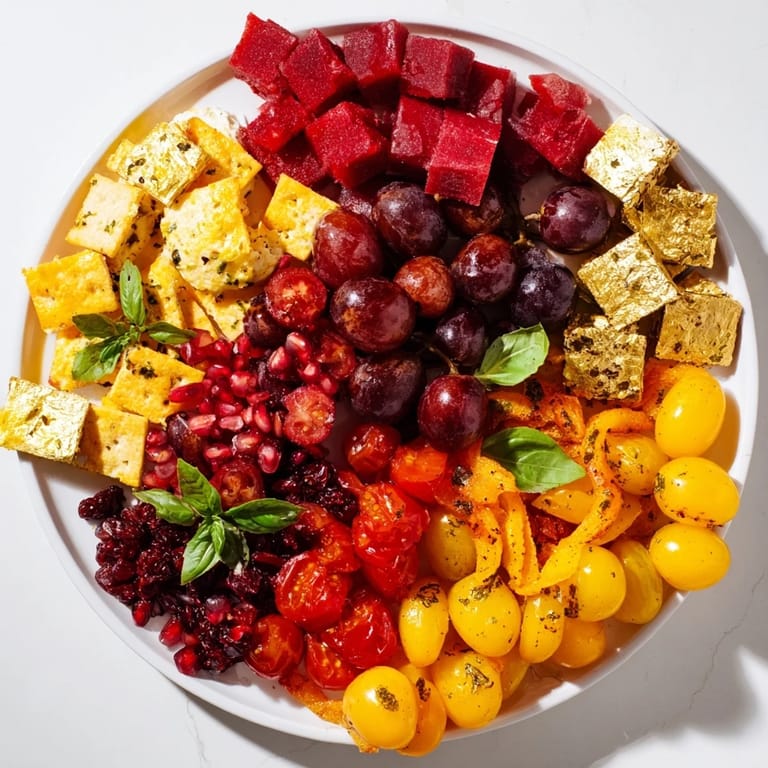
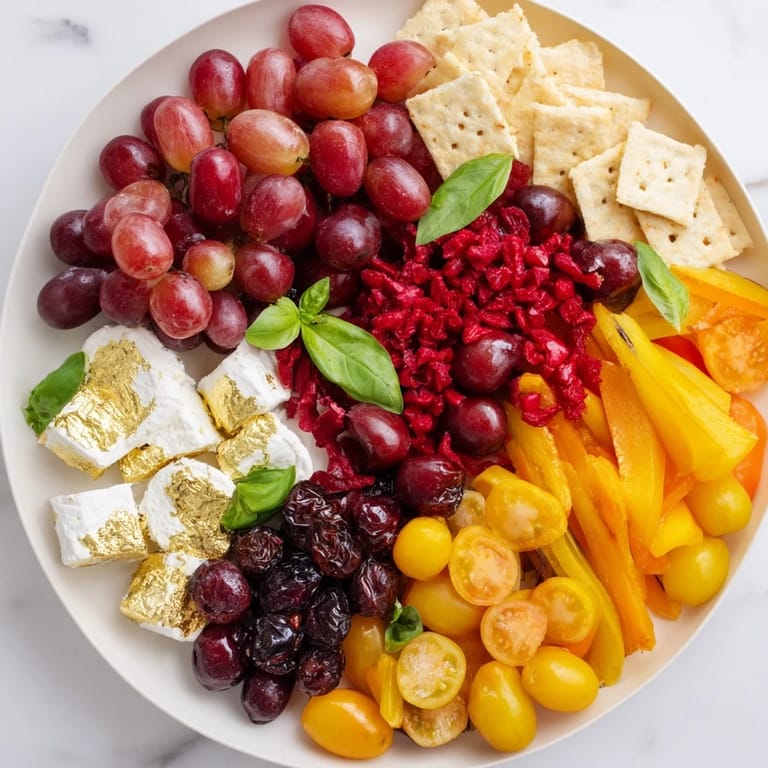
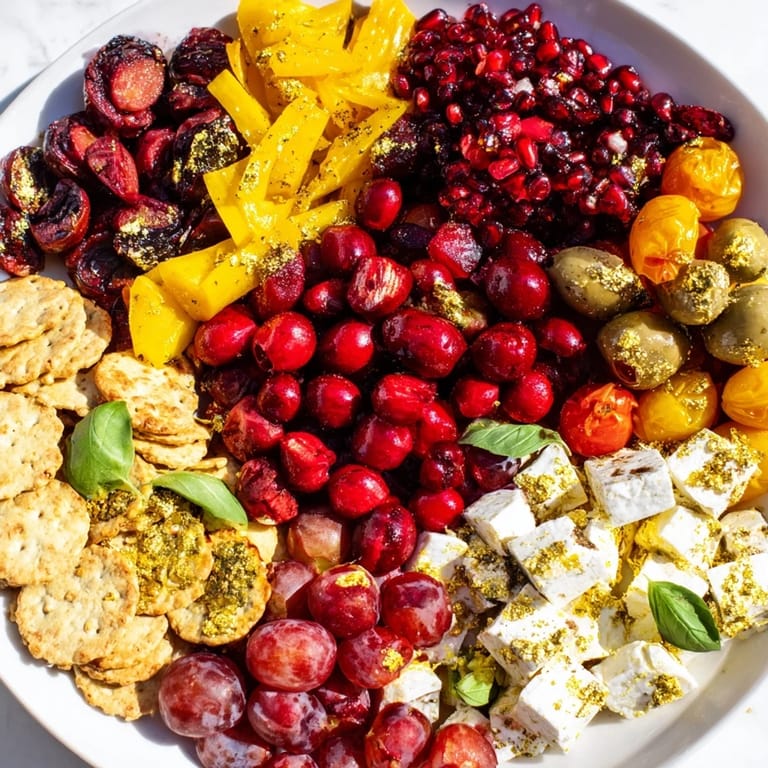
- On one half of your platter, gather everything red and wine-dark. Create a tight cluster of pitted cherries, sliced wine-soaked cheese, dried cranberries, halved grapes, and pomegranate seeds. Don't spread them out—pack them so the colors intensify. Think of it like you're painting with food. The tightness creates depth and makes the block feel intentional, not scattered.
- Create your golden counterpoint:
- On the opposite side, arrange your roasted yellow pepper strips, cubed golden cheese, your gold leaf crackers, golden raisins, and halved yellow cherry tomatoes. Again, tightness and intention. These two blocks should feel like they're having a conversation across the platter, each claiming their territory.
- Finish with grace:
- Scatter fresh basil or microgreens across both sections—just enough to add a whisper of green without overwhelming the color story. Serve immediately and watch people lean in. They always do.
 Pin it
 There was a moment at a small dinner party when someone bit into a roasted pepper, then a piece of wine-soaked cheese, then a cherry, all in succession. Their eyes closed for a second. That's the moment I understood this platter wasn't really about appearance—it was about giving people permission to experience flavors in a new order, to make their own combinations, to play with their food like they meant it.
The Color Philosophy
There's something deeply satisfying about opposing colors on a platter. Red and gold aren't just pretty together—they complement each other scientifically. Red makes gold seem warmer, and gold makes red seem deeper. When you arrange them in blocks instead of mixing them, you're creating a visual rhythm that actually guides how people eat. They notice the contrast, they taste more intentionally, and somehow everything tastes better when you've thought about how it looks.
Timing & Prep Strategy
The beauty of this platter is that almost everything can be done hours ahead. Roast your peppers in the morning. Prep your cheeses and fruits. The only thing you do right before serving is arrange the blocks and add the fresh basil. This means you can spend your party time actually enjoying people instead of frantically prepping in the kitchen. I usually assemble mine about an hour before guests arrive, cover it loosely with plastic wrap, and it sits beautifully at room temperature, getting even more aromatic as it waits.
Variations & Personal Touches
Once you understand the color logic, you can start improvising. Don't have pomegranate seeds? Red peppercorns work. No wine-soaked cheese? A sharp aged gouda in the red section shifts the balance but still works. And the gold section is flexible too—roasted yellow squash, golden beets, or even crispy sage leaves can replace any gold ingredient. I've made versions with dried apricots, candied orange peel, and even toasted pine nuts. The rule is simple: stay true to the color story and you can't really fail.
- For a vegan version, plant-based cheeses and crispy crackers do the job beautifully
- A drizzle of honey over the gold section right before serving adds an unexpected luxurious note
- If edible gold leaf feels pretentious, a whisper of turmeric or a few saffron threads create that same sense of occasion
 Pin it
 This platter taught me that sometimes the most memorable food isn't complicated—it's just arranged with intention and served with pride. Make this for people you care about, and they'll remember it.
Frequently Asked Questions
- → How do I roast the yellow peppers for the platter?
Roast whole yellow bell peppers at 220°C (425°F) for 10-12 minutes until charred. Steam covered for 5 minutes, then peel, deseed, and slice before drizzling with olive oil and seasoning.
- → Can I substitute the wine-soaked cheese?
Yes, any rich, semi-soft cheese soaked in wine works well. Alternatives like aged cheddar or gouda can complement the flavors if preferred.
- → Is edible gold leaf necessary?
Edible gold leaf adds a luxurious touch but is optional. You can substitute with turmeric or saffron threads for color contrast.
- → How should I arrange the platter for best visual impact?
Arrange deep red ingredients tightly on one side and bright gold items opposite, creating contrasting color blocks for maximum appeal.
- → Are there vegan alternatives for this platter?
Yes, plant-based cheeses and crackers can replace dairy and gluten-based items to suit vegan preferences without compromising flavor.