 Save
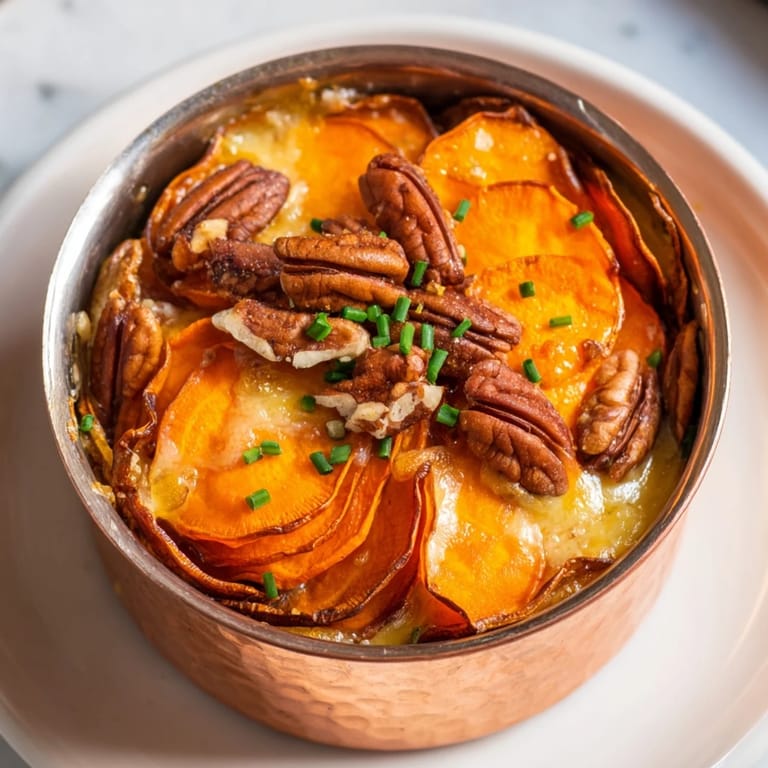
Save I discovered Copper Penny Warmth on a crisp autumn afternoon when I was rummaging through my pantry, desperate to use up some aged cheddar that had been sitting longer than intended. I had just roasted a batch of sweet potatoes and carrots, and on a whim, I grabbed those copper ramekins my grandmother had given me years ago—the ones I'd been too nervous to actually use. Within minutes, I was layering vegetables like I was creating edible art, tucking in dried apricots for pops of color, and suddenly what started as pantry cleanup became something I couldn't stop thinking about. That first warm, cheesy bite straight from the ramekin made me realize I'd stumbled onto something special—a dish that felt both refined and deeply comforting.
I remember making this for a dinner party on a November evening when the first real cold snap hit. My friend Sarah arrived bundled in her winter coat, and the moment she stepped inside and saw those warm ramekins sitting on the table—steam still rising, cheese glistening under the kitchen light—her whole face lit up. She said it looked like something from a magazine, but what really got her was that first bite, the way the warm pecans crackled against the soft cheese. Watching her close her eyes and just savor that mouthful reminded me why I cook: not just to feed people, but to create those small moments of joy.
Ingredients
- Sweet potatoes (2 medium, peeled and thinly sliced): These are your foundation—they get creamy and almost buttery when roasted, and their natural sweetness becomes the backbone of this dish. Slice them thin so they cook through evenly and create that tender texture that melts in your mouth
- Carrots (2 large, peeled and thinly sliced): The brighter color carrot brings earthiness and holds its shape better than sweet potato, creating nice texture contrast. Thin slicing ensures they soften alongside the potatoes without getting mushy
- Olive oil (2 tablespoons): This carries your seasonings and helps everything caramelize slightly at the edges, building flavor as it roasts. Don't skip this—it's essential for developing those golden, slightly crispy edges
- Smoked paprika (1 teaspoon): This is the secret layer of flavor that makes people ask what that subtle smokiness is. It adds depth without overpowering the vegetables, almost like a whisper of autumn
- Sea salt (½ teaspoon) and black pepper (¼ teaspoon): Season generously but thoughtfully—these humble seasonings let everything else shine without fighting for attention
- Dried apricots (½ cup, sliced): These jewel-like pieces add brightness, chewiness, and a tart-sweet flavor that plays beautifully against the aged cheese. The heat softens them just enough without turning them to mush
- Pecan halves (½ cup, lightly toasted): Toasting them first intensifies their buttery, slightly sweet flavor—it's the difference between forgettable and memorable. They add crunch and richness that keeps every bite interesting
- Aged cheddar cheese (1 cup, coarsely grated): Use real aged cheddar if you can; the sharpness and complexity make this dish sing. Avoid pre-shredded if possible—it contains anti-caking agents that prevent it from melting smoothly
- Fresh chives (2 tablespoons, finely chopped): These are optional but worth the effort—they add a fresh, oniony brightness that cuts through the richness and reminds your palate that spring exists somewhere in the world
Tired of Takeout? 🥡
Get 10 meals you can make faster than delivery arrives. Seriously.
One email. No spam. Unsubscribe anytime.
Instructions
- Heat your oven and prep your stage:
- Get your oven to 400°F and let it preheat fully—this is non-negotiable. A properly heated oven gives your vegetables those caramelized edges that add another layer of flavor. While it heats, prep all your ingredients and line up your four copper ramekins or small baking dishes within arm's reach
- Season and coat the vegetables:
- In a large bowl, toss your thin-sliced sweet potatoes and carrots with olive oil, smoked paprika, salt, and pepper. Get your hands in there if you need to—make sure every slice is kissed with the seasoning and oil. This step is where the magic starts; you're building flavor into every layer
- Build your edible towers:
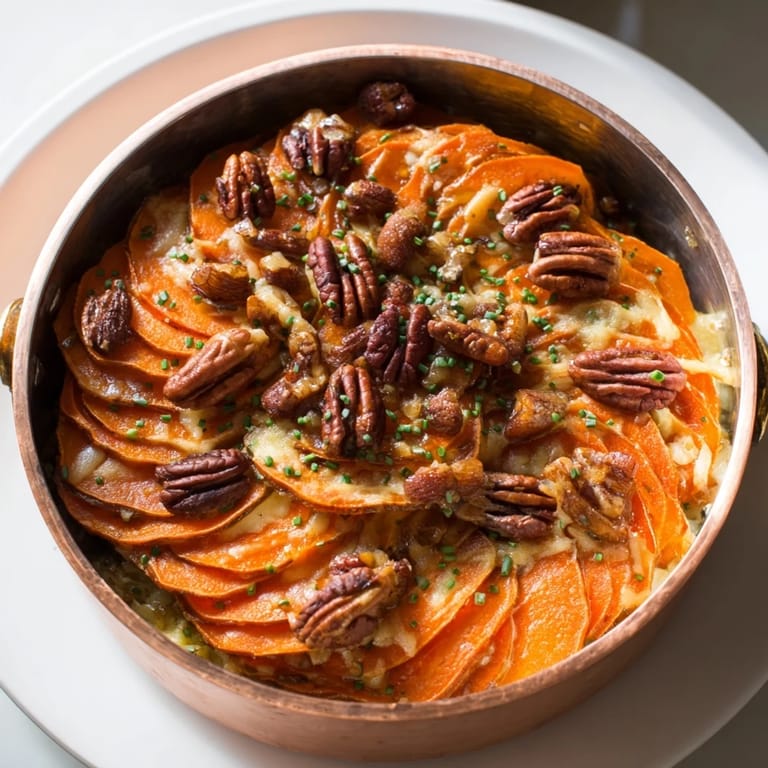
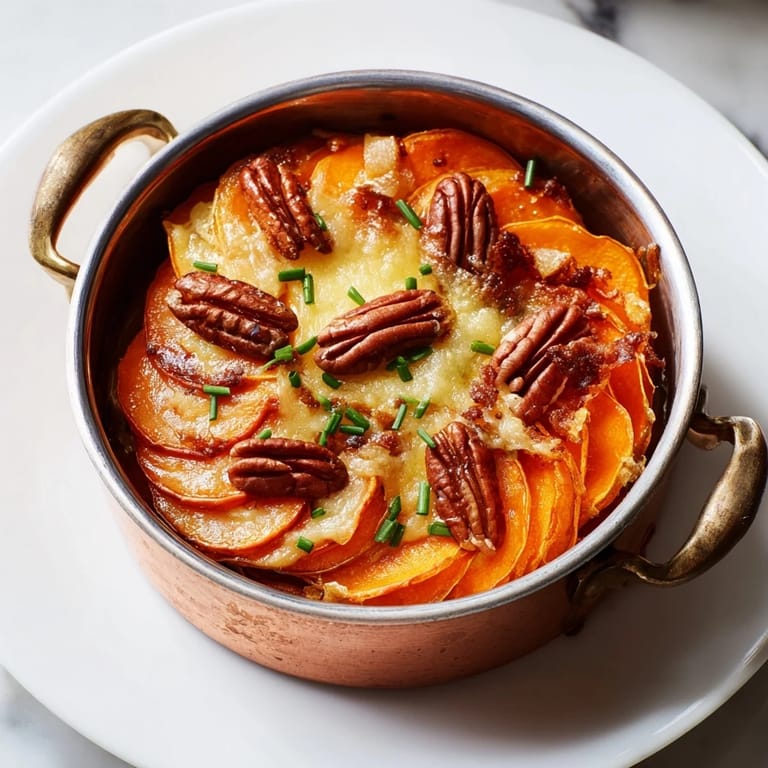
- Now comes the fun part. In each ramekin, create overlapping, interlocking layers of vegetable slices—think shingles on a roof or fallen dominoes standing back up. Alternate sweet potato and carrot, and as you build, tuck in slices of dried apricot and scattered pecans between the layers. This isn't about perfection; it's about creating a beautiful arrangement that you'll be proud to serve
- First roast with protection:
- Cover each ramekin loosely with foil—not sealed tight, just draped over the top so steam can escape. This protects the vegetables while they soften and start to caramelize. Bake for 20 minutes. You'll start to smell the apricots sweetening and the pecans toasting, which is your signal that things are happening
- Add the cheese crown:
- Remove the foil carefully—watch out for the steam that escapes. Top each ramekin generously with grated aged cheddar, making sure some reaches the edges where it can get those golden, slightly crispy bits. Return to the oven uncovered for another 5 minutes, just until the cheese melts and turns golden
- Rest and garnish:
- Let the ramekins cool for just a minute or two—this allows the cheese to set slightly so it holds together beautifully. Scatter fresh chives over the top if using. The slight cooling also prevents burning your mouth on that first eager bite, though the warmth is absolutely part of the experience
 Pin it
 There's a moment that always happens when I make this dish for others. The ramekin arrives at the table, cheese still bubbling slightly, and there's this collective pause. People lean in, drawn by the visual beauty and the aroma of roasted vegetables and toasted cheese. That moment—before the first bite, when everyone's just taking it in—that's when I know a dish has become more than sustenance. It's become an experience, a memory in the making.
The Art of Layering
Layering vegetables in a ramekin is less about precision and more about intention. I've learned that the slightly imperfect arrangements often look more beautiful than the perfectly geometric ones—there's something charming about a slice of apricot peeking out at an unexpected angle, or a pecan half nestled in a gap between two carrot slices. The beauty of this dish comes from the natural colors and shapes of real ingredients, not from military precision. That said, alternating your vegetables as you go—sweet potato, carrot, sweet potato, carrot—creates a rhythm that looks intentional and helps distribute flavors evenly. Think of it as creating a edible tapestry where each layer adds not just flavor but visual interest.
Why Copper Ramekins Matter
Technically, any oven-safe dish works for this recipe, but copper ramekins elevate it from a side dish to a presentation. Copper conducts heat beautifully and evenly, meaning your vegetables cook consistently from all angles. But honestly, the real magic is that serving directly in the ramekin keeps everything hot longer and makes the whole experience feel more intentional, more special. Your guests get their own individual edible artwork, warming their hands as they eat. If you don't have copper ramekins, ceramic or small cast iron works wonderfully too—what matters is that you're serving it with intention and warmth.
Customization and Pairing
This dish is incredibly flexible once you understand its building blocks. The structure is: roasted vegetables, dried fruit, nuts, and aged cheese. Swap the apricots for figs or dried cranberries if you want different tartness or sweetness. Try different cheese—sharp Gruyère, smoked Gouda, or even a creamy aged blue can work beautifully. Walnuts or toasted almonds can replace pecans without losing that crucial textural contrast. The smoked paprika can give way to regular paprika, curry powder, or even a hint of cumin if you want to travel to a different flavor region. Once you've made this dish once, you own it—you know where to improvise and where tradition serves you best.
- For wine pairing, a medium-bodied Chardonnay complements the roasted vegetables and nutty cheese beautifully, while spiced cider brings out the apricot's natural sweetness
- This works as an elegant appetizer when you want something that feels substantial, or as a side dish next to roasted chicken or a simple salad
- Leftovers can be gently reheated in a 325°F oven for about 10 minutes, though honestly, most people won't have leftovers—this dish disappears
 Pin it
 This dish has become my answer to the question "What should I make?" when I want to impress without stress. Every time I pull those copper ramekins from the cabinet and start slicing vegetables, I'm reminded of that first accidental discovery and all the people I've cooked this for since.
Frequently Asked Questions
- → What vegetables are used in Copper Penny Warmth?
Thinly sliced sweet potatoes and carrots form the base, seasoned with smoked paprika, salt, and pepper.
- → Can dried apricots be substituted?
Yes, dried figs or dates can be used for a different but equally delicious flavor profile.
- → Is there a vegetarian or gluten-free option?
Using gluten-free cheese keeps it gluten-free, and substituting plant-based cheddar can make it vegan-friendly.
- → How are the pecans prepared?
Pecan halves are lightly toasted before layering to enhance their flavor and crunch.
- → What is the recommended oven temperature and baking time?
Bake at 400°F (200°C) covered for 20 minutes, then add cheddar and bake uncovered for 5 more minutes.