 Save
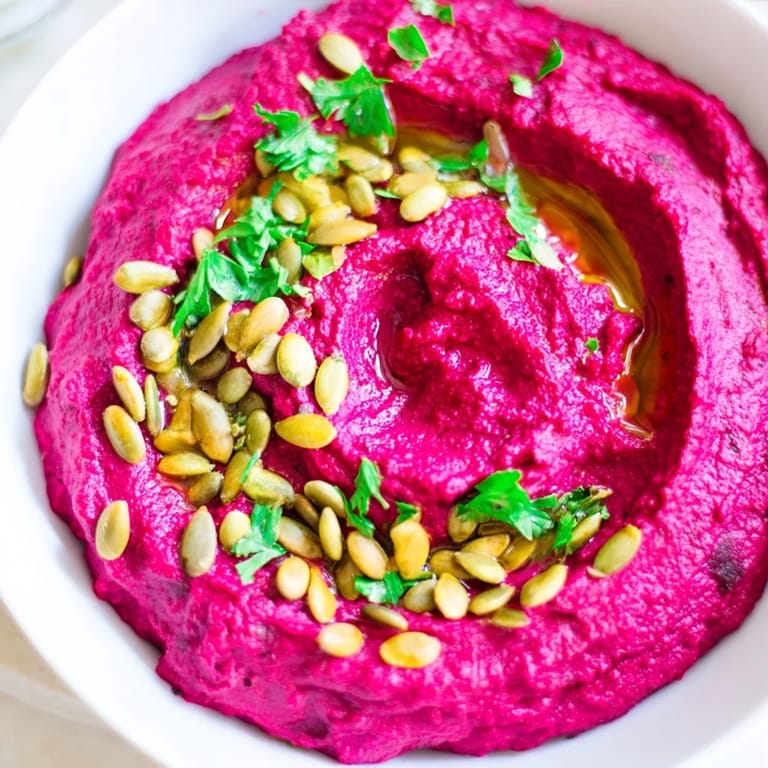
Save The first time I made beet hummus, I was trying to rescue a dinner party that felt predictably beige. I'd planned the usual chickpea spread, but then I spotted those jewel-toned beets at the market—deep crimson, still dusty with soil—and something clicked. Forty minutes later, when I opened the oven, the kitchen smelled like sweet earth and caramelized vegetables, and that pink hummus I pulled from the food processor stopped everyone mid-conversation. It became the dish people asked for, the one that proved sometimes the best recipes find you when you're not overthinking.
I'll never forget watching my friend Maya dip a piece of pita into this and then just stop, fork mid-air, asking if I'd added something secret. I hadn't—just beets, chickpeas, tahini, and patience—but that moment taught me that simple ingredients handled with care can feel luxurious. She started making it for her own gatherings, and now whenever I see that particular shade of pink hummus at a potluck, I know where it came from.
Ingredients
- Medium beets (2): The stars of the show; roasting them brings out their natural sweetness and makes peeling easier once they've cooled. Don't skip the cooling step—your fingers will thank you.
- Olive oil (total 3 tablespoons): One tablespoon for roasting the beets, two for the hummus itself, plus a final drizzle for garnish. Quality matters here since it's tasted directly.
- Canned chickpeas (15 oz): Rinsing them thoroughly removes the starchy liquid that can make hummus gummy. If you have time, peel the skins off for an almost impossibly smooth texture.
- Tahini (3 tablespoons): The creamy backbone; stir it well before measuring since the oil separates. Room-temperature tahini blends more smoothly than cold.
- Fresh lemon juice (3 tablespoons): Bottled won't give you the same brightness, and squeezing by hand takes less than a minute.
- Garlic cloves (2): Raw garlic brings bite; if you prefer something softer, roast these cloves alongside the beets.
- Ground cumin (1 teaspoon): Toast it in a dry pan for thirty seconds before adding if you want the flavor to really sing.
- Fine sea salt (½ teaspoon): Start here and adjust—you might want more depending on your palate and your tahini brand.
- Cold water (2–3 tablespoons): Add it slowly with the processor running; this is what transforms the mixture from thick to cloud-like.
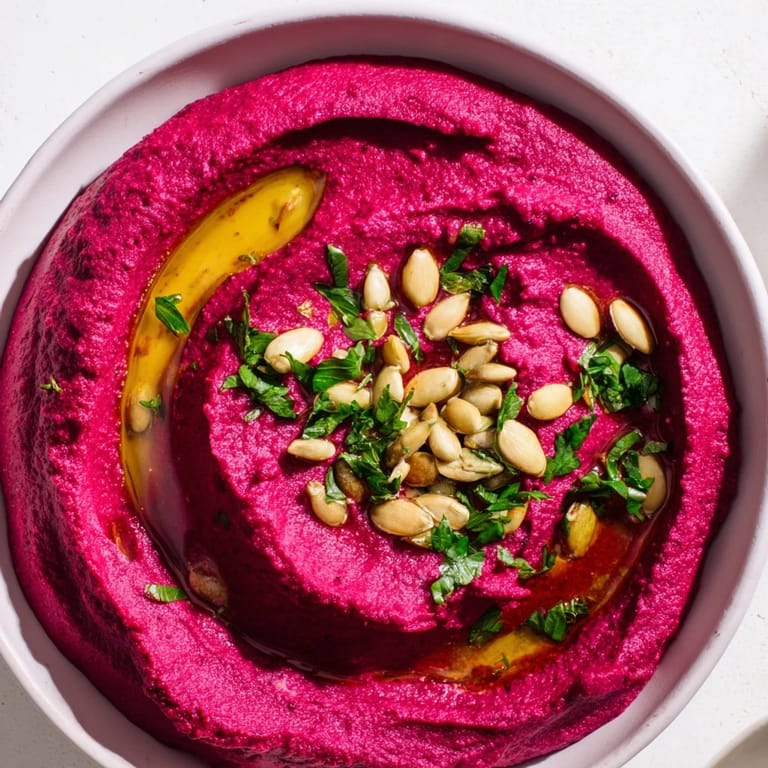
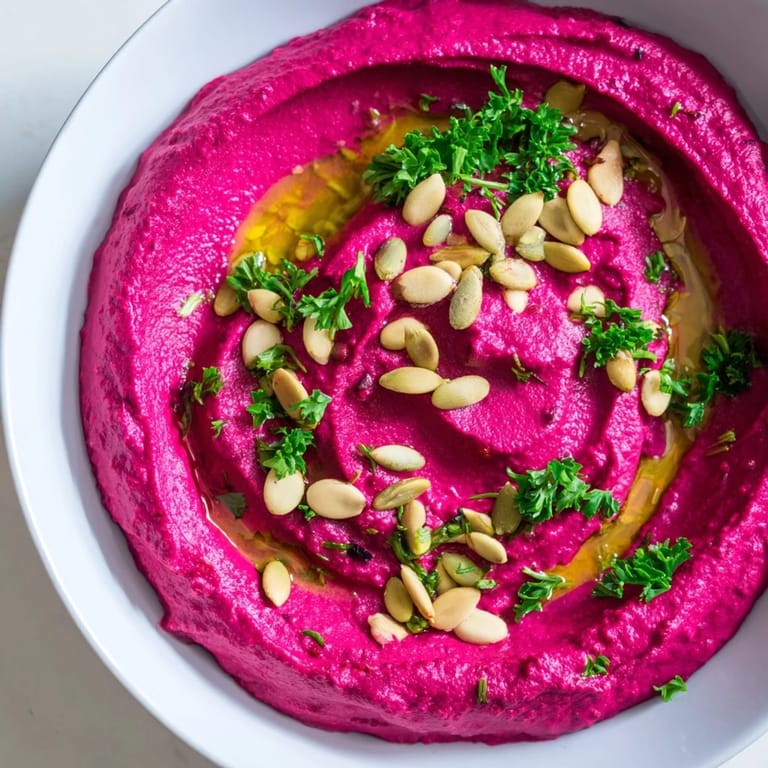
- Toasted seeds (pumpkin or sesame) and fresh parsley: The finish that makes people stop and look before they taste.
Tired of Takeout? 🥡
Get 10 meals you can make faster than delivery arrives. Seriously.
One email. No spam. Unsubscribe anytime.
Instructions
- Roast the beets:
- Heat your oven to 400°F and wrap each beet tightly in foil after a light brushing with olive oil. They'll roast for 35 to 40 minutes—you'll know they're done when a fork slides through like butter. Let them cool until you can handle them, then rub off the skin under cool running water; it should slip away easily.
- Build the base:
- Into your food processor goes everything except the water: the cooled, chopped beets, drained chickpeas, tahini, lemon juice, olive oil, garlic, cumin, and salt. Pulse first, then let the machine run until the mixture is mostly smooth—you're aiming for creamy, not baby food.
- Reach for silky creaminess:
- With the processor still running, drizzle in your cold water slowly. Watch as the hummus suddenly transforms, becoming impossibly smooth and luxurious. This is the magic moment.
- Taste and adjust:
- Stop the processor and taste. Does it need more salt? More lemon? More cumin? Make these adjustments now, then give it another quick pulse.
- Plate with intention:
- Transfer to your serving bowl, use the back of a spoon to create a shallow well in the center, and drizzle with a final ribbon of olive oil. Scatter the toasted seeds and fresh parsley over the top for that showstopping finish.
 Pin it
 There's something almost ceremonial about serving this hummus. I remember one winter evening when the table was chaos—kids arguing, someone's phone ringing, my partner stressed about work—and then we put out this bowl with its impossible pink color and everything just... paused. People reached for it, tasted it, and for a moment the conversation shifted to something lighter. Food does that sometimes.
Roasting Beets Like You Mean It
Roasting transforms beets from earthy and dense to naturally sweet and tender. The foil keeps them from drying out and makes cleanup easier—the steam trapped inside does the work. I've tried roasting uncovered, and the texture suffers; it becomes grainy instead of creamy. Wrapping them is non-negotiable. Also, the longer you roast them (within reason, up to 45 minutes for larger beets), the sweeter they become as their sugars concentrate.
The Creaming Power of Cold Water
This hummus's silky texture comes from slowly incorporating cold water while the processor runs—it's an emulsification technique borrowed from mayonnaise-making. The cold temperature helps the oil, tahini, and water bind together into something luxuriously smooth. I learned this the hard way by adding water all at once and ending up with something separated and grainy. Now I drizzle it in like I'm making something precious, because I am.
Variations and Moments of Brightness
This hummus is forgiving enough to play with. Roasted garlic instead of raw softens the bite beautifully for people who find raw garlic aggressive. Golden beets create a sunny yellow version that's equally stunning. A pinch of smoked paprika adds warmth without changing the color much. Every variation tastes like a different season or mood, which is why I keep making it different ways.
- Golden beets make a cheerful yellow hummus that tastes slightly earthier and less sweet than the pink version.
- Roast the garlic cloves wrapped in foil alongside the beets for a mellow, caramelized flavor instead of raw bite.
- A small pinch of smoked paprika adds complexity and warmth without overwhelming the delicate sweetness.
 Pin it
 Beet hummus has become one of those dishes I make without thinking much anymore, the way you develop a shorthand with someone you've known for years. It's reliable, it's beautiful, and it brings people to the table. Make it once, and you'll understand why.
Frequently Asked Questions
- → How do roasted beets affect the flavor?
Roasting beets brings out their natural sweetness and deepens their earthy flavor, enhancing the overall richness of the spread.
- → Can other seeds be used for garnish?
Yes, toasted pumpkin seeds or sesame seeds both add a delightful crunch and nutty flavor to complement the smooth blend.
- → What is the purpose of adding cold water?
Cold water helps create a creamy, smooth texture by thinning the mixture without diluting the robust flavors.
- → Is peeling chickpeas necessary for smoothness?
Peeling chickpeas can make the spread extra smooth, but it is optional and may require more preparation time.
- → What are good serving suggestions for this spread?
Serve with pita, fresh raw vegetables, or use as a colorful sandwich spread for a flavorful boost.
- → Can garlic flavor be adjusted?
Yes, using roasted garlic instead of raw provides a milder, sweeter garlic note in the blend.