 Save
Save There's something about the smell of chicken hitting a hot grill that makes everything else fade away—the kitchen fills with this smoky, garlicky promise that the meal is about to be something special. I learned to make this Mediterranean version on a summer evening when a friend brought over a bottle of wine and mentioned she'd been craving something light but filling. We threw together what we had: chicken, lemons, herbs from the garden, and a can of chickpeas that seemed to whisper endless possibilities. What emerged was this bright, balanced plate that somehow felt both indulgent and nourishing, the kind of dish that makes you want to linger at the table longer than usual.
I remember making this for a dinner party where I wasn't quite sure what my guests would eat—one person avoided gluten, another was cutting back on dairy, and someone else just wanted real food without fuss. By the end of the night, the plates were clean and people were asking for the recipe, which hardly ever happens. That's when I realized this wasn't just a meal; it was a way to feed people without making anyone feel like they were eating something different or lesser.
Ingredients
- Boneless, skinless chicken breasts (4): Look for ones that are similar in thickness so they cook evenly; if they're lumpy, use a meat mallet to gently pound them flat.
- Olive oil (for marinade and tabbouleh, 6 tbsp total): Use a decent quality oil here since it's not cooked down—you'll actually taste it, and it makes a difference.
- Lemon juice (5 tbsp total): Fresh is non-negotiable; bottled lemon juice tastes tinny and will throw off the whole bright flavor profile.
- Garlic (3 cloves total): Mince it fine for the marinade so it distributes evenly and won't burn on the grill.
- Ground cumin (1.5 tsp): This is the backbone of the flavor—it's warm and slightly earthy without being overpowering.
- Smoked paprika (1 tsp): The smoke adds depth that regular paprika just can't match, and it hints at the grill before the chicken even touches the heat.
- Ground coriander (0.5 tsp): A small amount adds a subtle sweetness and complexity that makes people ask what the secret ingredient is.
- Dried oregano (1 tsp): Mediterranean cooking leans heavily on this, and dried actually works better here than fresh because it's more concentrated.
- Chickpeas (1 can, 15 oz): Drain and rinse them thoroughly to remove the starchy liquid—this is what makes hummus silky instead of gluey.
- Tahini (3 tbsp): The sesame paste that makes hummus actually creamy; don't skip it or substitute with peanut butter.
- Fine bulgur wheat (0.5 cup): The grain base for tabbouleh that absorbs the dressing without turning mushy if you use the right ratio of liquid.
- Fresh flat-leaf parsley (2 cups, finely chopped): This is not a garnish amount—parsley is the star of tabbouleh, so don't skimp.
- Fresh mint leaves (0.5 cup, finely chopped): The brightness that lifts the whole salad, especially important if your tomatoes aren't at peak ripeness.
- Fresh tomatoes (2 medium, diced): Cherry tomatoes work in a pinch but medium ones give you better texture and less liquid seeping into the salad.
- English cucumber (0.5, diced): The thin-skinned variety means you don't have to peel it, and it's less watery than regular cucumbers.
- Green onions (3, thinly sliced): A touch of allium that adds sharpness without the heavy bite of raw regular onions.
Tired of Takeout? 🥡
Get 10 meals you can make faster than delivery arrives. Seriously.
One email. No spam. Unsubscribe anytime.
Instructions
- Build the Marinade:
- Whisk together the olive oil, lemon juice, minced garlic, cumin, paprika, coriander, oregano, salt, and black pepper in a bowl until the spices are evenly distributed and the garlic has no dry pockets. You'll notice how fragrant this mixture becomes—that's exactly what you want pulling into the chicken over the next couple of hours.
- Coat and Chill the Chicken:
- Place chicken breasts in a dish or zip-top bag and pour the marinade over them, making sure every surface gets coated; if you're using a bag, press out as much air as you can before sealing. Refrigerate for at least 20 minutes—I usually do 45 minutes to an hour because the flavors have time to really settle in, but don't go longer than 2 hours or the acid from the lemon starts to make the texture weird.
- Start the Tabbouleh Base:
- Pour boiling water over the fine bulgur in a bowl, cover it with plastic wrap or a plate, and let it sit quietly for 15 to 20 minutes until the grains are tender and have absorbed all the liquid. You can prepare this while the chicken is marinating, which saves time later.
- Chop Your Herbs and Vegetables:
- Finely chop the parsley and mint—and I mean finely, almost to the point where it looks like green confetti. Dice the tomatoes and cucumber into small, even pieces, and thinly slice the green onions so everything has a uniform texture.
- Assemble the Tabbouleh:
- Combine the fluffed bulgur with the parsley, mint, tomatoes, cucumber, and green onions in a large bowl, then drizzle with olive oil and lemon juice, adding salt and pepper to taste. Toss gently—you want to distribute the dressing without crushing the herbs—then cover and chill while you handle the hummus and chicken.
- Blend the Hummus:
- Add drained chickpeas, tahini, lemon juice, olive oil, minced garlic, cumin, and a pinch of salt to a food processor and blend until the mixture is completely smooth. Start adding cold water one tablespoon at a time, pulsing between additions, until you reach that perfect creamy consistency that's spreadable but still holds its shape.
- Heat and Prepare the Grill:
- Get your grill or grill pan hot over medium-high heat for about 5 minutes—you want it hot enough that when you place your hand 6 inches above the grate, you can only hold it there for 2 to 3 seconds. Oil the grates lightly so the chicken won't stick and tear.
- Grill the Chicken:
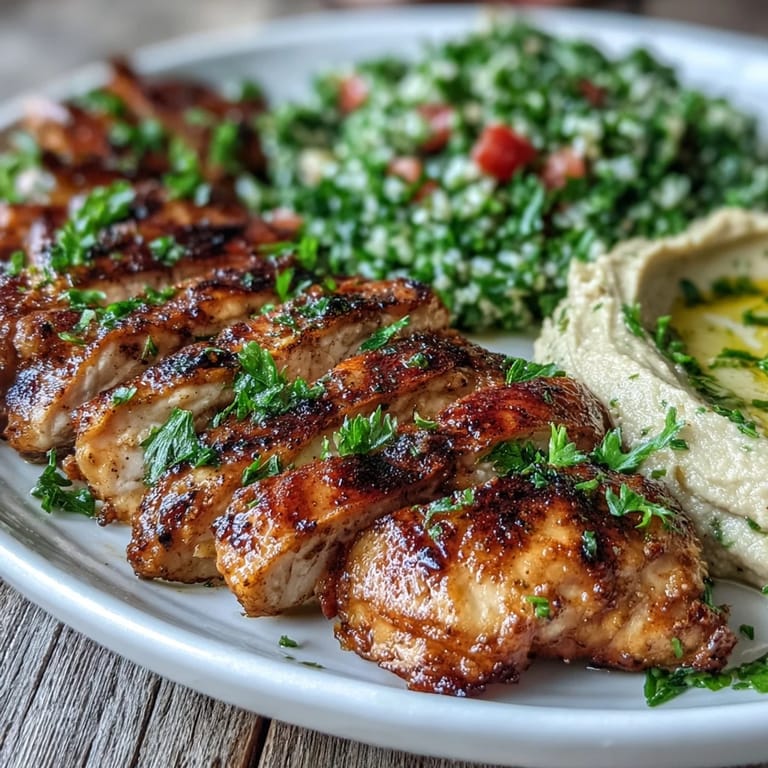
- Place the marinated chicken on the hot grill and resist the urge to touch it—let it sit for 6 to 8 minutes per side, undisturbed, so it develops that golden crust with the characteristic grill marks. The internal temperature should reach 165°F (74°C), which you can check with a meat thermometer if you're unsure.
- Rest and Slice:
- Transfer the grilled chicken to a cutting board and let it rest for 5 minutes—this keeps all the juices inside instead of running out onto your plate. Slice it thinly against the grain so each piece is tender and easy to eat.
- Plate and Serve:
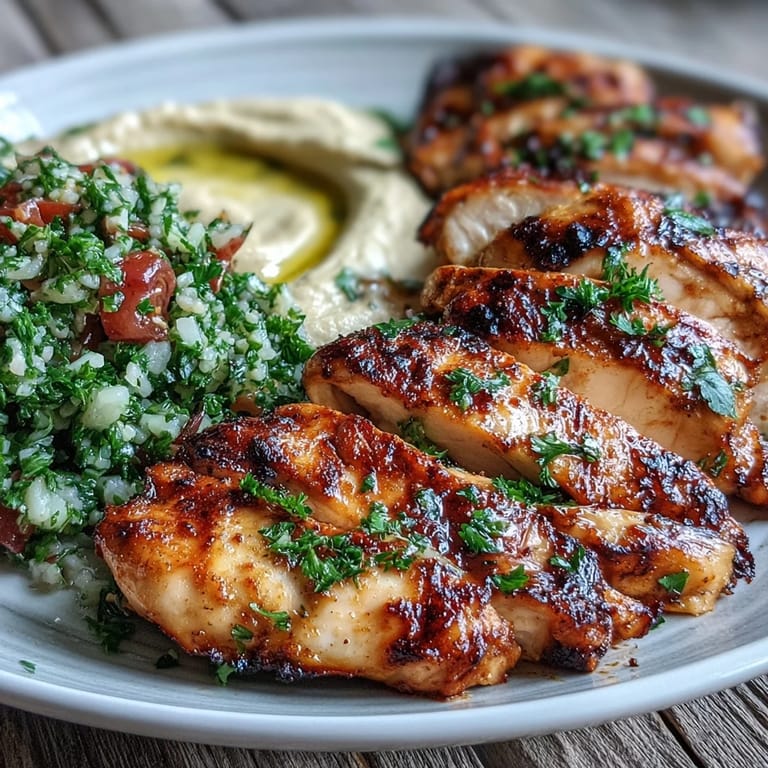
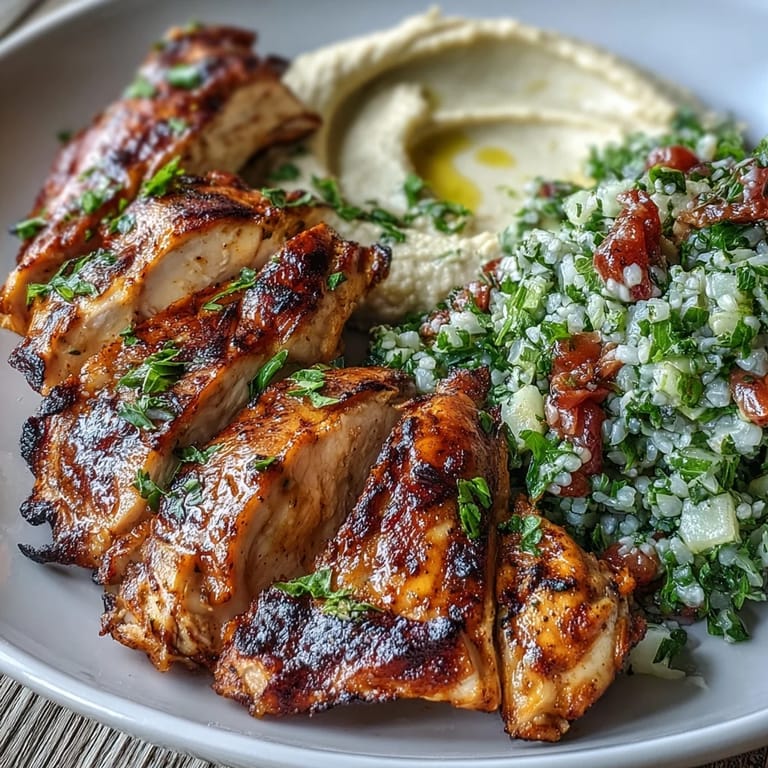
- Arrange the sliced chicken on plates alongside a generous scoop of hummus and a portion of chilled tabbouleh, finishing with a lemon wedge and a few fresh herb leaves if you have them.
 Pin it
 One evening, someone at the table mentioned that this was the first time they'd had hummus that actually tasted homemade instead of store-bought, and it sparked this whole conversation about how much better food becomes when you make it yourself. That's when I understood this recipe wasn't just about feeding people—it was about reminding them that simple, real ingredients in the right proportions are all you need to create something that tastes like care.
Timing and Make-Ahead Magic
The beauty of this meal is that almost everything can be prepared in advance, which takes the stress out of cooking for guests. You can marinate the chicken up to 2 hours ahead, prepare the tabbouleh completely and let it chill in the fridge (it actually improves as it sits), and make the hummus several hours before serving—just cover it with plastic wrap pressed directly onto the surface so it doesn't oxidize and turn brown. The only thing you do right before eating is grill the chicken, which takes maybe 20 minutes total from cold to plated.
Flavor Building Blocks
What makes this dish feel balanced instead of chaotic is that each component plays a specific role: the chicken provides richness and protein, the hummus adds creamy comfort, and the tabbouleh cuts through everything with brightness and acidity. The spices in the marinade aren't random—cumin and coriander work together to create warmth, the paprika adds smoke, and oregano ties it all to that Mediterranean feeling. Understanding why these flavors work together means you can adjust them slightly if you want more heat, more earthiness, or more citrus without losing the soul of the dish.
Variations and Personal Touches
This recipe is forgiving enough to welcome your own ideas without falling apart. Some days I'll add a pinch of sumac to the tabbouleh for a tangy complexity, other times a drizzle of pomegranate molasses right at the end adds this sweet-tart punch that makes people pause mid-bite. For a gluten-free version, quinoa works beautifully in place of bulgur—it needs the same steeping time and brings a slightly nuttier flavor. If you want to add more vegetables, thinly sliced radishes or diced bell peppers disappear into the tabbouleh and add crunch.
- Try adding a teaspoon of Aleppo pepper to the marinade for a gentle heat that doesn't overpower.
- A handful of pomegranate seeds scattered over the top at serving time adds jewel-like color and a surprising burst of tartness.
- If you can find za'atar, sprinkle a pinch on the hummus right before serving for an earthy, herbal depth.
 Pin it
 This meal has become one of those recipes I return to again and again because it works for almost every occasion and every person at the table. There's something deeply satisfying about a plate where every element is intentional and every bite tastes like someone actually cared.
Frequently Asked Questions
- → Can I make the hummus and tabbouleh ahead of time?
Yes, both components actually benefit from being made ahead. The hummus can be prepared up to 3 days in advance and stored in an airtight container in the refrigerator—it may thicken slightly, so add a splash of water or olive oil when serving. The tabbouleh can be made a day ahead, though it's best added the herbs and vegetables just before serving to maintain their fresh texture and vibrant color.
- → What's the best way to get tender grilled chicken breasts?
Marinating the chicken for at least 20 minutes helps tenderize and infuse flavor. For the most juicy results, pound the chicken breasts to even thickness before grilling, which ensures they cook uniformly. Preheat your grill properly and resist the urge to move the chicken too frequently—let it develop a nice sear before flipping. Most importantly, let the chicken rest for 5 minutes after grilling to allow the juices to redistribute throughout the meat.
- → Is this dish suitable for meal prep?
Absolutely. The grilled chicken, hummus, and tabbouleh all store well separately for 3-4 days. Keep the chicken sliced in containers, the hummus in a sealed jar, and the tabbouleh in its own bowl. For the best texture, pack the tabbouleh without the dressing if taking it for lunch, then add the olive oil and lemon juice just before eating. Reheat chicken gently or enjoy cold—both ways are delicious.
- → What can I substitute for bulgur to make it gluten-free?
Quinoa makes an excellent gluten-free substitute for bulgur in tabbouleh. Rinse the quinoa well, then cook it according to package directions (usually 1 cup quinoa to 2 cups water, simmered for 15 minutes). Let it cool completely before mixing with the herbs and vegetables. Alternatively, cauliflower rice works well for a grain-free version, though it will have a lighter texture than traditional bulgur.
- → How do I know when the chicken is done cooking?
The most reliable method is using a meat thermometer inserted into the thickest part of the breast. The chicken is safely cooked when it reaches 165°F (74°C). If you don't have a thermometer, cut into the thickest portion—the meat should be opaque throughout and the juices should run clear, not pink. The chicken should feel firm but still spring back when pressed gently.
- → Can I bake the chicken instead of grilling?
Yes, baking works beautifully. Preheat your oven to 400°F (200°C) and place the marinated chicken on a lined baking sheet. Bake for 20-25 minutes, flipping halfway through, until the chicken reaches 165°F internally. For a grilled appearance and extra flavor, broil for the last 2-3 minutes to achieve a nice char on the outside.