 Save
Save One Tuesday evening, my gym buddy texted asking what I ate after workouts, and I realized I'd been rotating the same three chicken dishes for months. That night, I threw together whatever vegetables were in my crisper drawer with some chicken breast and a quick sauce, and it hit differently—satisfying, fast, and actually fun to make. The kitchen filled with that sizzle-and-steam smell that made the whole process feel less like meal prep and more like cooking something worth eating. Now it's become my go-to when I want something that tastes indulgent but keeps me on track.
I made this for my sister when she started training for a half-marathon, and watching her go back for seconds while staying in control of her calories felt like sharing a secret. She'd been stressed about eating enough protein without going overboard, and suddenly this became her rotation too. It's the kind of dish that proves healthy eating doesn't mean boring eating, and that moment when she asked for the recipe was worth more than any compliment.
Ingredients
- Chicken breast, thinly sliced (500 g): Slicing it thin means it cooks in minutes and becomes tender, plus it absorbs the sauce beautifully instead of staying dry and bland.
- Red and yellow bell peppers, sliced: They're not just pretty—the sweetness balances the ginger and garlic while delivering vitamin C in every bite.
- Broccoli florets: Add these first because they need the head start to get tender; they'll hold their crunch if you time it right.
- Snap peas and zucchini: These cook quickly without turning mushy, keeping the whole dish light and textured.
- Carrot, julienned: Cut it thin so it softens properly; thick chunks will stay hard and ruin the flow of the meal.
- Spring onions: These go on last as a fresh finish, catching light and adding a bite that reminds you this isn't just fuel.
- Low-sodium soy sauce or tamari: The difference between homemade and takeout quality is using low-sodium; it lets the other flavors sing instead of drowning in salt.
- Oyster sauce: Optional but transformative—it adds umami depth that makes people wonder what your secret ingredient is.
- Rice vinegar: A tablespoon cuts through the richness and keeps everything bright and balanced.
- Sesame oil: Use real sesame oil, not the cooking kind; it's the difference between adequate and aromatic.
- Fresh ginger and garlic: Grating ginger fresh instead of using paste changes the texture and intensity—it's gentler and more elegant on the palate.
- Chili flakes: Keep them optional so people can adjust heat to their preference without you overcommitting to spice.
- Cornstarch slurry: This thickens the sauce so it clings to everything instead of pooling at the bottom of the pan.
- Vegetable oil for cooking: Avocado or canola oil has a high smoke point, which means your kitchen won't fill with burnt-oil smoke when you're stir-frying.
Tired of Takeout? 🥡
Get 10 meals you can make faster than delivery arrives. Seriously.
One email. No spam. Unsubscribe anytime.
Instructions
- Build your sauce first:
- Whisk soy sauce, oyster sauce, rice vinegar, sesame oil, ginger, garlic, chili flakes, and that cornstarch slurry together in a small bowl—this takes the pressure off while cooking and keeps you from fumbling around searching for bottles. Set it aside and breathe; you're already ahead of the game.
- Get your pan screaming hot:
- Heat a teaspoon of oil in a large non-stick skillet or wok over medium-high heat until it shimmers and moves around like liquid mercury. This is crucial because cold pans steam vegetables instead of searing them.
- Sear the chicken until golden:
- Add your thin-sliced chicken and let it sit undisturbed for 30 seconds before stirring—this creates those golden bits that make people say it tastes restaurant-quality. After 4 to 5 minutes, it should be mostly cooked through with no pink remaining; pull it out and set it on a plate.
- Start with the hardest vegetables:
- Add the remaining oil, then broccoli, carrot, and snap peas, stirring constantly for about 2 minutes. You want to hear that consistent sizzle and smell that raw-vegetable-meeting-hot-oil aroma.
- Follow with the quicker vegetables:
- Toss in bell peppers and zucchini, stirring for another 2 to 3 minutes until you can pierce a piece with a fork but still feel a tiny bit of resistance. The goal is crisp-tender, not soft.
- Bring it all together:
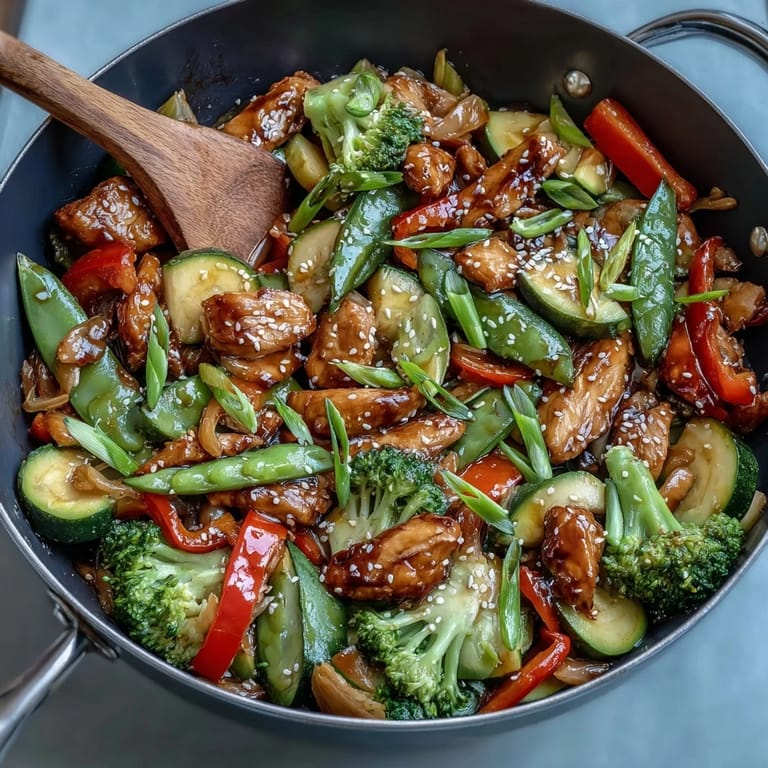
- Return the chicken to the pan, pour in that sauce you made earlier, and toss everything for 2 to 3 minutes while the sauce thickens and coats everything in glossy, fragrant richness. You'll see the raw flour taste disappear and the sauce go from thin to clinging.
- Finish with fresh onion:
- Scatter those sliced spring onions on top just before plating—they add a sharp, bright note that makes people notice and appreciate the care you took.
 Pin it
 There's a quiet win in making something that tastes like someone else made it for you—that moment when you take a bite and feel like you're treating yourself instead of just managing your diet. This dish became that for me because it sits in this perfect space where health and pleasure aren't fighting each other.
The Secret to Crisp Vegetables
The difference between vegetables that taste alive and vegetables that taste resigned comes down to not stirring constantly and respecting the heat. Give each batch a minute or two to make contact with the hot pan and develop color before you start moving things around. I learned this the hard way after making soggy stir-fries for years, thinking constant motion was the point—it's not. Stillness, even brief stillness, creates texture.
Making It Your Own
This recipe is a framework, not a rule, which is why it survived in my rotation for so long. Some weeks I had snap peas, other weeks I found myself with mushrooms or bok choy, and every version worked because the sauce and technique stayed the same. The flexibility is what kept it from becoming boring, even when I ate it twice a week. You can swap chicken for shrimp or tofu depending on your protein source, add cashews or sesame seeds for crunch, or amp up the chili flakes if you like heat that lingers.
Storage and Reheating Tips
This stir-fry holds up remarkably well in the refrigerator for three days, though the vegetables will soften slightly when you reheat them—that's not a failure, just physics. Reheating in a hot skillet instead of the microwave brings back some of that crisp texture and prevents the whole thing from becoming steamed mush. If you're meal prepping, keep the sauce separate from the vegetables and chicken until just before eating, and your leftovers will taste fresher than you'd expect.
- Store everything in an airtight container to prevent the fridge from absorbing that ginger-garlic smell.
- If the sauce thickened too much overnight, a splash of water or low-sodium broth loosens it right up.
- This freezes okay for up to a month, but the vegetables will be softer when thawed—better as a quick weeknight reheat than as meal prep for next month.
 Pin it
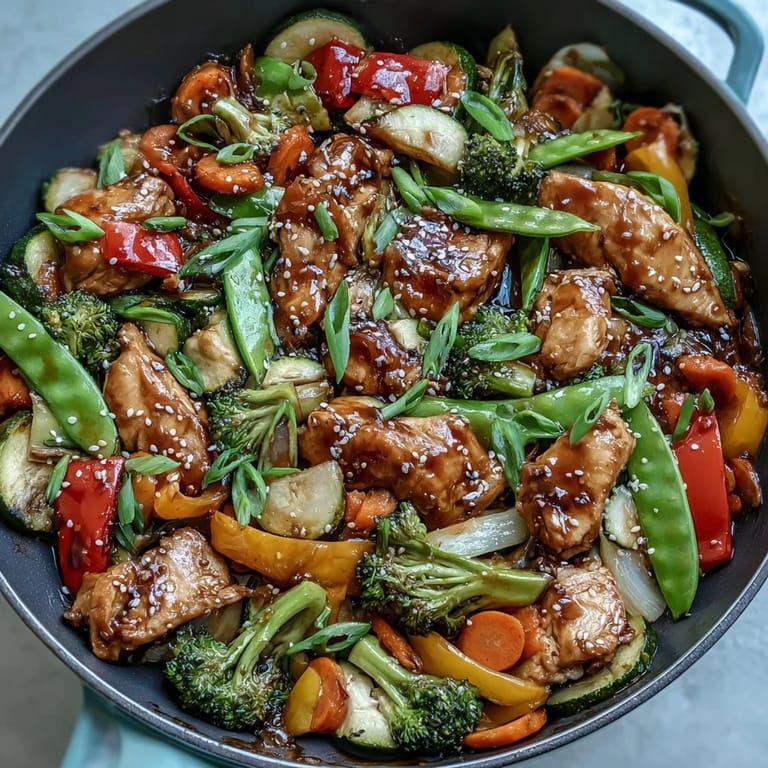
 This dish proved to me that eating for results and eating with pleasure aren't mutually exclusive—they're actually the same thing when you stop treating food like punishment. Make it tonight and see why it's still on my table after all this time.
Frequently Asked Questions
- → How long does this dish take to prepare?
The entire dish comes together in just 30 minutes total—15 minutes for prep and 15 minutes for actual cooking time, making it perfect for quick weeknight dinners.
- → Can I make this gluten-free?
Absolutely. Simply substitute regular soy sauce with tamari and verify that your oyster sauce and other condiments are certified gluten-free to accommodate dietary restrictions.
- → What protein alternatives work well?
Firm tofu cubes or medium shrimp both work beautifully as substitutes. Adjust cooking time accordingly—tofu needs 4-5 minutes to brown, while shrimp cook in just 2-3 minutes until pink.
- → How can I increase the vegetable variety?
Consider adding bok choy, mushrooms, baby corn, or water chestnuts. The key is to add denser vegetables like carrots and broccoli first, followed by quicker-cooking items like bell peppers.
- → What's the best way to achieve crisp-tender vegetables?
Work in batches if needed and avoid overcrowding the pan. Keep the heat at medium-high and stir frequently—vegetables should retain some crunch and vibrant color rather than becoming soft.