 Save
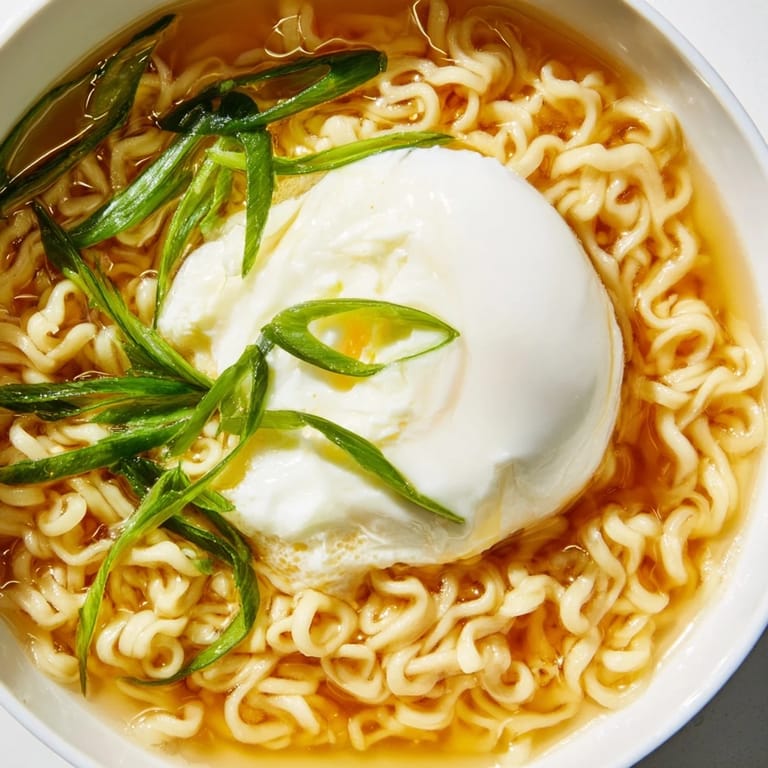
Save There's something about instant ramen that hits differently when you're tired, hungry, and have exactly ten minutes before everything needs to happen. One late night, I cracked an egg into the simmering broth almost by accident—I was reaching for something else—and watched it cook into this silky, golden cloud that made the whole bowl feel intentional. That one small gesture turned a weeknight survival meal into something I actually wanted to eat.
I made this for my roommate one morning after she'd had a rough day at work, and she sat at the kitchen counter watching the egg cook, asking questions about the technique. By the time I slid the bowl in front of her, she was smiling at the steam rising off it. Food doesn't have to be complicated to matter.
Ingredients
- Instant ramen noodles (1 package): Use whatever flavor you have on hand—the butter and egg work with all of them, but spicy varieties add nice depth.
- Water (2 cups): Tap water is fine; this isn't fancy, and it doesn't need to be.
- Ramen seasoning packet: The one that comes in the box is doing most of the heavy lifting here, so don't skip it.
- Unsalted butter (1 tablespoon): This is non-negotiable—it melts into the broth and creates a richness that tastes impossible for such a simple ingredient.
- Large egg (1): The bigger the egg, the more yolk you get, which matters when that yolk is your sauce.
- Scallion (1, thinly sliced): Adds a sharp, fresh brightness that cuts through the richness and makes the whole thing feel finished.
- Chili flakes or chili oil (optional): A pinch wakes everything up if you're in the mood for heat.
- Soy sauce (optional): A splash adds depth if the ramen packet feels too one-note to you.
Tired of Takeout? 🥡
Get 10 meals you can make faster than delivery arrives. Seriously.
One email. No spam. Unsubscribe anytime.
Instructions
- Get the water moving:
- Bring 2 cups of water to a rolling boil in a small saucepan—you want it actively boiling so the noodles cook evenly and quickly.
- Cook the noodles:
- Add the whole package of ramen and stir gently so nothing sticks to the bottom. Follow the package timing, usually 2 to 3 minutes, and taste one strand around the 2-minute mark to catch it before it gets mushy.
- Make space for the egg:
- When the noodles are almost tender, turn the heat down to low—you want just a gentle simmer, not a rolling boil. This keeps the egg from getting tough and weird.
- Slip the egg in:
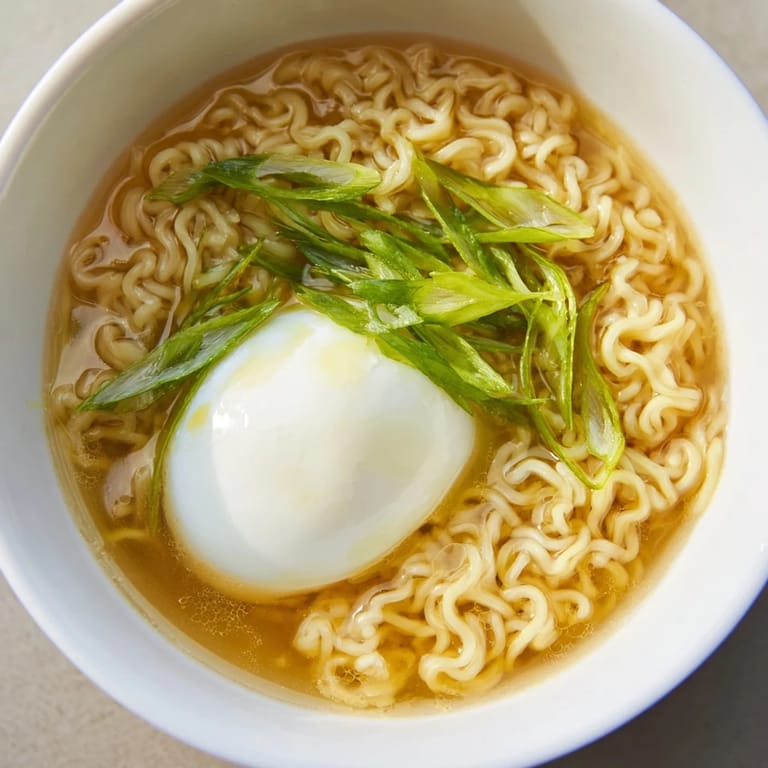
- Crack the egg directly into the simmering broth without breaking the yolk if you can help it. Cover the pot and let it sit undisturbed for 1 to 2 minutes, until the white just sets but the yolk stays soft and glistening.
- Finish with butter and seasoning:
- Stir in the seasoning packet and butter until they dissolve and coat everything. The butter should look like it's melted into the broth, not floating on top.
- Transfer and garnish:
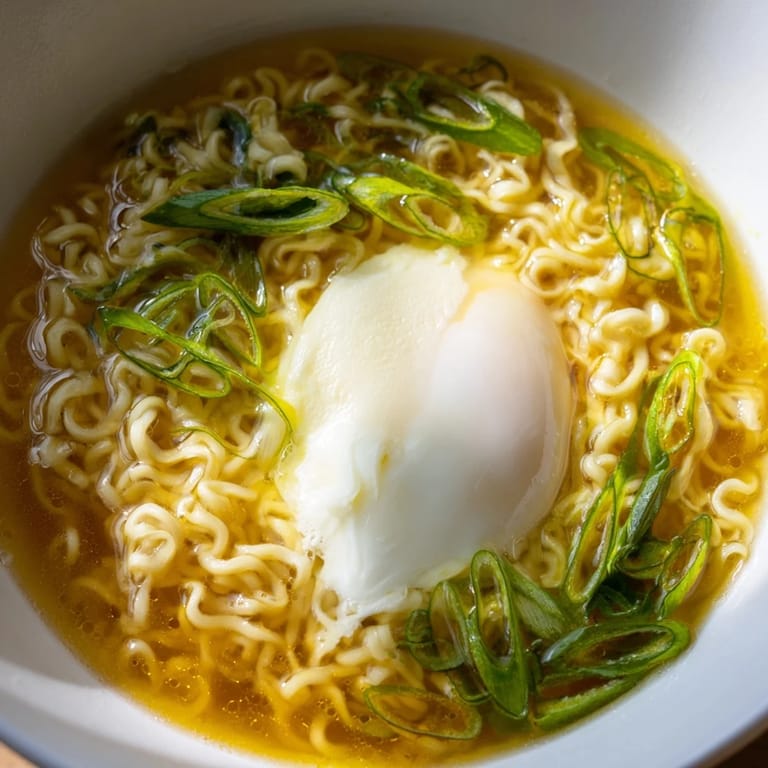
- Carefully pour everything—noodles, broth, egg—into a bowl and scatter the sliced scallions on top. Add chili flakes or a splash of soy sauce if you want it.
 Pin it
 There was a night when I served this to someone who'd only ever eaten ramen straight from the package, no additions, no thought. Watching them taste it—really taste it—and realize that butter and egg and a pinch of heat had changed everything, I understood why home cooking matters. It's not about complexity; it's about paying attention.
When the Yolk Is Everything
That soft, cooked yolk isn't a garnish—it's the whole sauce. As you eat, it breaks apart and mixes into the broth, coating the noodles with a creamy richness that makes every bite taste intentional. If you accidentally cook the yolk all the way through, the noodles will taste flatter, thinner somehow. The yolk is where the richness lives, so protecting it from hard-boiling is worth the attention.
Texture and Heat
The magic of this bowl happens in the contrast—soft, slippery noodles against the slight chew of raw scallion, warm broth against cold air, the richness of butter and egg against the sharp heat of chili. If you want it spicy, add the flakes after you've tasted it plain, so you're controlling how much heat is actually there. Some nights you want comfort, other nights you want something that wakes you up.
Variations Worth Trying
I've made this with spinach wilting into the hot broth, with a handful of frozen corn that pops with sweetness, with thin-sliced mushrooms that absorb all the flavor. Each addition changes the meal slightly without making it complicated or long. Once you understand the base—noodles, butter, egg, heat—you can build around it however your mood or your fridge suggests.
- A drizzle of toasted sesame oil instead of chili oil brings a nutty, complex note that makes it taste more deliberate.
- If you have fresh ginger or garlic, a tiny amount grated into the broth just before the egg goes in adds a sharpness that cuts through the richness.
- Leftover cooked vegetables—nearly anything works—can be stirred in at the very end to warm through without getting mushy.
 Pin it
 This is the kind of recipe that reminds you that good food doesn't require hours or fancy techniques. It's just attention, a few good ingredients, and permission to make something simple taste like it matters.
Frequently Asked Questions
- → How do I achieve a silky soft egg in the broth?
Crack the egg directly into simmering broth and cover the pot. Cook gently for 1-2 minutes until the white sets but the yolk remains soft.
- → Can I customize the added flavors?
Yes, adding chili flakes, soy sauce, or toasted sesame oil enhances the flavor profile and adds depth to the dish.
- → What can I add for extra nutrition?
Incorporate vegetables such as spinach, corn, or mushrooms to boost flavor and nutrients.
- → Is the butter essential for this dish?
Butter adds a creamy richness that elevates the broth, but it can be omitted or substituted with a plant-based alternative if preferred.
- → How long does preparation take?
From start to finish, this meal takes about 10 minutes, making it a quick and satisfying option.