 Save
Save My neighbor handed me a container of leftovers one Tuesday evening, steam still rising from the lid, and said, "Try this—it's my go-to when I need dinner in twenty minutes." One bite and I understood why she made it twice a week. The ginger hit first, bright and warm, followed by that umami-rich soy glaze clinging to every strand of noodle. I was in the kitchen the next day recreating it, tweaking the ratios until it tasted exactly like that first spoonful.
I made this for a friend who claimed they couldn't cook, handed them a spoon halfway through the cooking process, and watched their face light up when they tasted what they'd just helped create. They made it three times that week and sent me photos of each attempt. That's when I realized this dish has a way of making people feel capable in the kitchen.
Ingredients
- Wheat noodles (350 g): The foundation matters here—lo mein gives you silky strands, ramen noodles add chew, and even spaghetti works if that's what you have; the key is cooking them just until they bend without snapping.
- Neutral oil (4 tbsp): This carries the aromatics without competing with the ginger and garlic, so skip the olive oil even if it's your usual go-to.
- Scallions (4, plus 1 for garnish): Separate the white and green parts—this isn't fussy cooking, it's actually smart because the whites need time to soften while the greens stay bright and fresh.
- Fresh ginger (2 tbsp minced): Don't even think about using ground ginger; fresh ginger is doing the heavy lifting here and you'll taste the difference immediately.
- Garlic cloves (2, minced): Mince it fine so it distributes evenly and doesn't end up as unpleasant little chunks.
- Red chili (1 small, optional): A quiet player that adds complexity without necessarily making the dish spicy—taste as you go.
- Soy sauce (4 tbsp): The backbone of the glaze; don't skimp on quality here because you taste it directly.
- Dark soy sauce (1 tbsp, optional): Adds depth and a mahogany color that makes the dish look as good as it tastes.
- Oyster sauce (1 tbsp): Use the vegan version if needed—it adds that savory umami punch that makes people ask what your secret ingredient is.
- Brown sugar (1 tbsp): Balances the salt with just enough sweetness to keep things interesting.
- Rice vinegar (1 tbsp): The brightness that keeps the dish from feeling heavy, even though it's noodles and oil.
- Toasted sesame oil (1 tsp): Drizzle it in at the end; toasted sesame oil is a flavor bomb and a little goes a long way.
- Water (2 tbsp): Loosens the glaze so it coats evenly instead of pooling at the bottom.
- Toasted sesame seeds (1 tsp for garnish): Toast them yourself if you can—the aroma alone makes your mouth water.
- Fresh cilantro (optional): A gentle green note that adds a fresh finish if you're into it.
Tired of Takeout? 🥡
Get 10 meals you can make faster than delivery arrives. Seriously.
One email. No spam. Unsubscribe anytime.
Instructions
- Get the noodles going:
- Fill a pot with salted water and bring it to a rolling boil—don't shortcut this step because proper boiling makes the difference between gummy noodles and ones with actual texture. Cook according to the package directions until they're just barely tender, then drain and rinse them under cold water for about ten seconds to stop them cooking further.
- Mix your glaze:
- Grab a small bowl and whisk together the soy sauce, dark soy sauce if you're using it, oyster sauce, brown sugar, rice vinegar, sesame oil, and water. Taste it straight from the spoon—it should be salty, slightly sweet, and a little tangy all at once.
- Build the flavor foundation:
- Heat your oil in a large skillet or wok over medium heat until you can smell it warming through. Add the white parts of your scallions along with the ginger, garlic, and red chili, then stir constantly for about a minute until everything becomes fragrant but hasn't started to brown—this is where the magic aromatics release into the oil.
- Bring the noodles home:
- Add your cooked noodles to the skillet and toss everything together so the aromatic oil coats each strand. Work quickly and keep tossing so nothing sticks to the bottom.
- Add the glaze and let it sing:
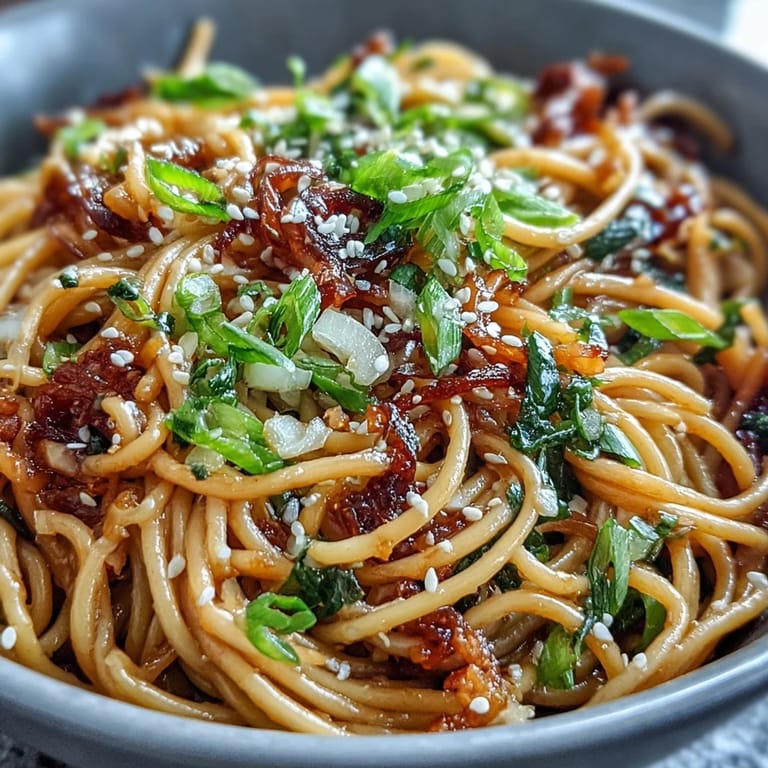
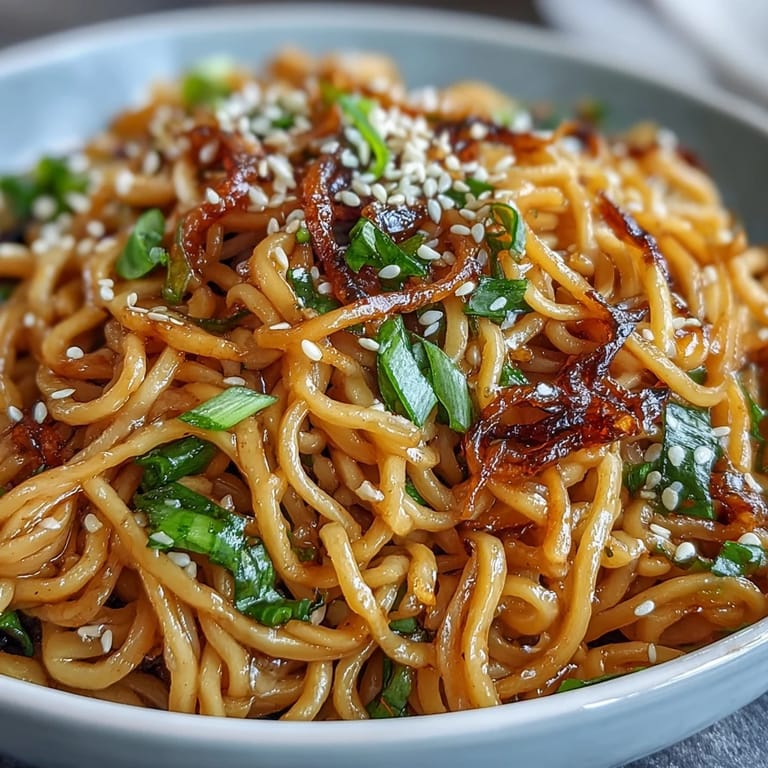
- Pour that soy glaze over everything and toss constantly for two to three minutes, watching as it gets absorbed and the noodles take on that glossy, mahogany sheen. The noodles should be steaming and smell completely incredible at this point.
- Finish with brightness:
- Remove the skillet from heat and scatter in the green parts of your scallions, tossing gently so they just barely warm through and stay fresh-looking. Don't overthink this—you're done.
- Plate and garnish:
- Divide the noodles among bowls and top each portion with a scatter of toasted sesame seeds, a few slices of fresh scallion green, and cilantro leaves if that's your style.
 Pin it
 There's a moment during the stir-frying when the kitchen fills with the smell of toasted ginger and hot oil, and that's when I know this dish has already won. It's a small thing, but it's the moment you realize you're making something that tastes like restaurant food while wearing comfortable clothes in your own kitchen.
The Secret to Silky Noodles
Rinsing the noodles after cooking isn't just about stopping them from cooking further—it actually removes excess starch that would make them clump together. I learned this the hard way when I skipped it once and ended up with a dense block instead of separated strands. Now I make it part of my rhythm, and it's saved me more than once.
Why Fresh Ginger Changes Everything
Ground ginger tastes like memory; fresh ginger tastes like now. When you mince fresh ginger, you're releasing oils that make the entire dish brighter and more alive. The first time I understood this was when a friend brought her grandmother's recipe that insisted on nothing but fresh, and I tasted the difference immediately—there's no substitute for that sharp, warming quality that fresh ginger brings.
Making It Your Own
This recipe is more of a starting point than a strict formula, and I've learned that's where the fun lives. Add roasted mushrooms for umami depth, scatter in some snap peas for crunch, or top it with a fried egg if you want something richer. The ginger-scallion base is so solid that it plays well with almost anything you want to toss in.
- Sautéed mushrooms add earthiness that makes the dish feel more substantial without weighing you down.
- A side of pickled cucumbers cuts through the richness and adds a palate-cleansing sharpness that keeps you coming back for bites.
- If you love heat, finish with a drizzle of chili oil right before serving instead of trying to cook the spice into the dish.
 Pin it
 This dish has become my answer to "what should we make for dinner" because it's honest food that tastes like you spent more time on it than you actually did. Once you make it a few times, your hands remember the motions and the kitchen remembers the smell.