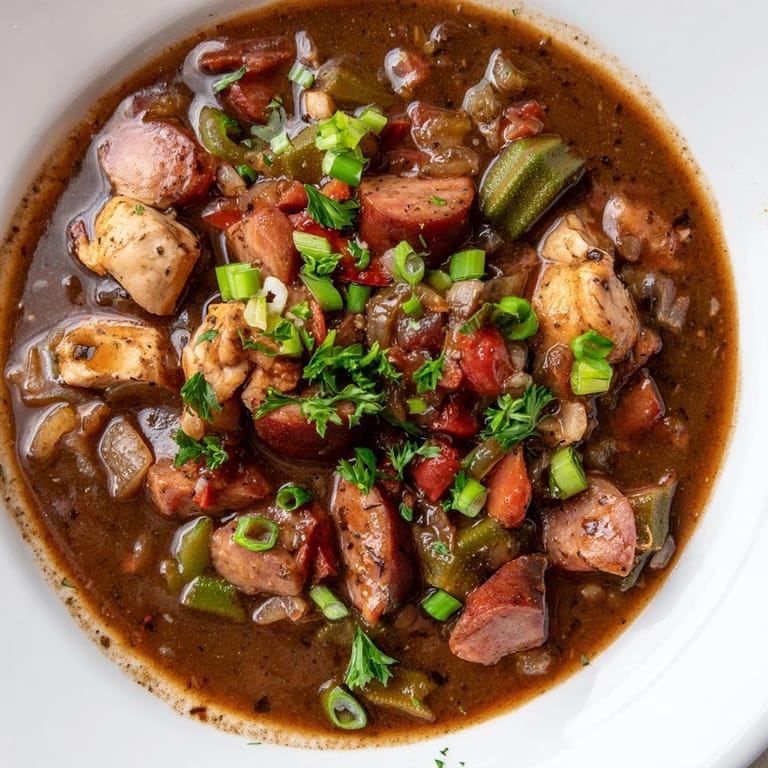
 Save
Save My first real gumbo came together by accident on a humid afternoon when my neighbor stopped by with a bag of fresh okra from her garden. I'd never made it before, only eaten it at crawfish boils and family gatherings, but watching her describe the dark roux and the way it all comes together felt like she was handing me a piece of her kitchen wisdom. That day taught me that gumbo isn't just a recipe—it's a conversation between ingredients, time, and a little bit of patience.
I made this for my book club once, serving it over rice in mismatched bowls, and nobody touched dessert because they were too busy asking for seconds. One person had never tried okra before and was skeptical, but after that first spoonful, she understood why this soup has been feeding people in Louisiana for generations.
Ingredients
- Boneless, skinless chicken thighs (350 g): Thighs stay tender through the long simmer, unlike breasts, and they give the broth a subtle richness that matters more than you'd think.
- Smoked andouille sausage (225 g): This is the backbone of flavor, smoky and spiced—don't skip it or substitute with regular sausage if you can help it.
- Fresh okra (250 g): It thickens the gumbo as it cooks and adds a subtle earthiness; frozen works in a pinch but fresh is worth the hunt.
- The holy trinity—onion, bell pepper, celery: Every Creole cook starts here, and there's a reason it works so well together.
- All-purpose flour and vegetable oil (60 g each): These make the roux, the foundation that holds everything else up.
- Chicken stock (1.5 liters): Use good stock if you can; it's the quiet ingredient that changes everything.
- Bay leaves, thyme, smoked paprika, and cayenne: These seasonings build layers of flavor as the gumbo simmers, so don't leave any out.
- Worcestershire sauce and hot sauce: A touch of each adds complexity and heat without overwhelming the dish.
Tired of Takeout? 🥡
Get 10 meals you can make faster than delivery arrives. Seriously.
One email. No spam. Unsubscribe anytime.
Instructions
- Make your roux, the patient way:
- Heat the oil in a large pot over medium heat, then whisk in the flour slowly. You're looking for a deep chocolate brown color, and this takes 15–20 minutes of stirring—don't rush it, and definitely don't let it burn or you'll start over. The smell shifts from raw to nutty to toasted, and that's your signal you're getting close.
- Build your base:
- Add the chopped onion, bell pepper, and celery to the roux and let them soften for 3–4 minutes, then stir in the garlic. This is where your kitchen starts to smell like something real is happening.
- Brown the meat:
- Add the sausage and chicken pieces and let them cook for about 5 minutes until lightly browned on the edges. Don't worry about cooking them all the way through; they'll finish in the broth.
- Add the okra:
- Stir in the sliced okra and cook for another 3–4 minutes. If you're using frozen okra, make sure it's thawed and drained first.
- Bring it all together:
- Add the tomatoes, stock, bay leaves, thyme, paprika, cayenne, Worcestershire sauce, salt, and pepper. Bring everything to a boil, then lower the heat and let it simmer gently for 45–50 minutes, stirring now and then so nothing sticks to the bottom.
- Finish and serve:
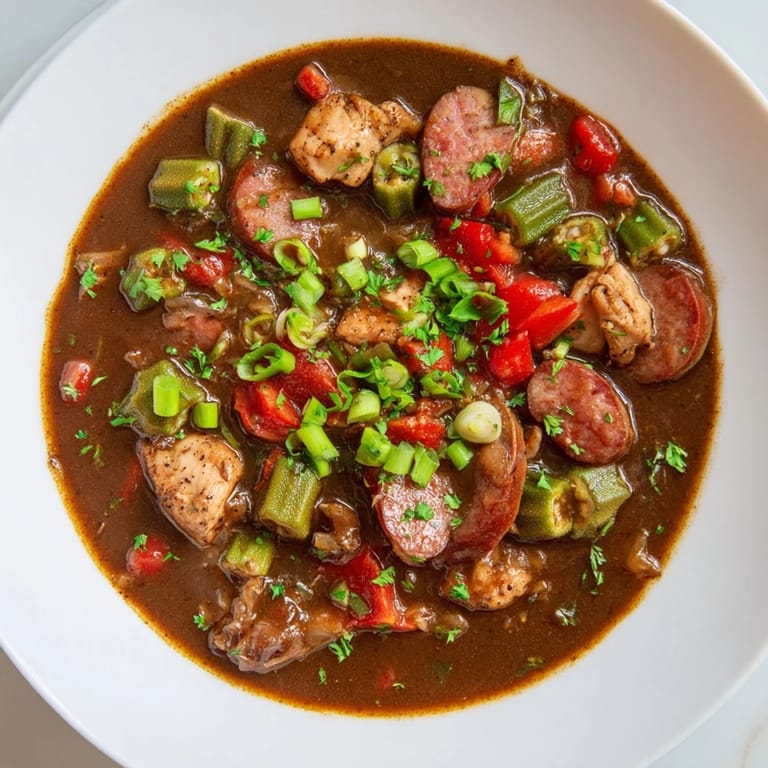
- Remove the bay leaves, taste, and adjust the seasoning. If you want it thicker, sprinkle in filé powder off the heat (never boil filé or it gets stringy and weird). Serve over white rice with spring onions and parsley on top.
 Pin it
 There's something about ladling a bowl of gumbo that feels ceremonial, like you're sharing something that took real work and love. The steam rises up, and you can smell every layer—the roux, the sausage, the okra—and it suddenly feels like home, even if you've never been to Louisiana.
Why Dark Roux Matters
A dark roux is patient work, but it's the difference between soup and gumbo. The longer you cook flour and oil together, the deeper the flavor gets, but it's a tightrope—too light and you miss the nutty, almost chocolatey notes that make gumbo so addictive, and too dark and you've got burnt bitterness. I learned to watch the color shift and trust my nose, and once you nail that dark roux, everything else just falls into place.
The Okra Question
Fresh okra can seem intimidating because of its slimy reputation, but that sliminess is actually what thickens your gumbo naturally. Slicing it releases those juices, and by the time the soup has simmered for nearly an hour, the okra has softened into the broth and become part of the magic. If you're using frozen okra, thaw it completely and squeeze out the water before adding it, or you'll dilute your beautiful broth.
Serving and Variations
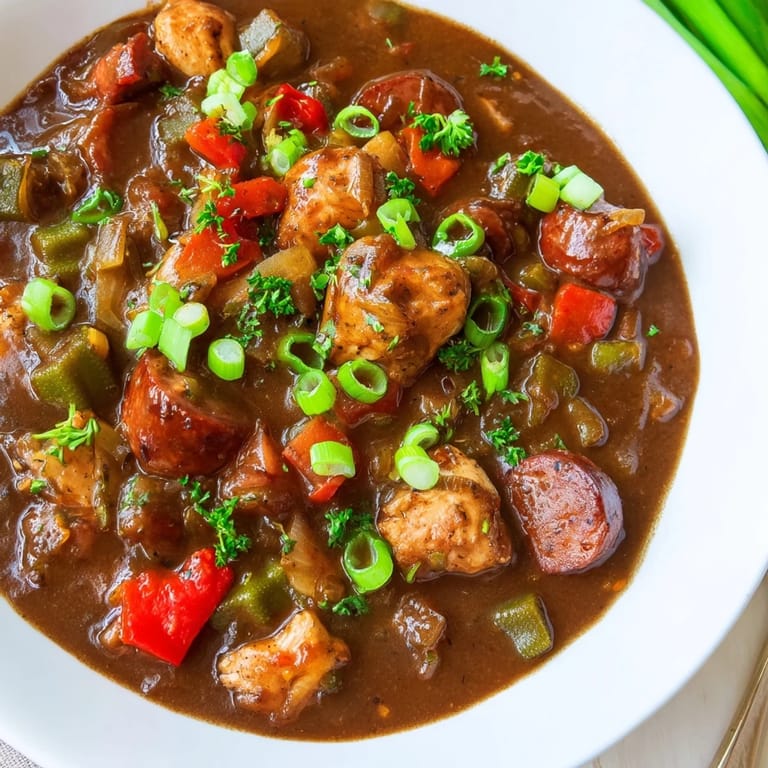
Gumbo is best served over a scoop of hot white rice, which soaks up the broth like nothing else can. A handful of sliced spring onions and fresh parsley scattered on top adds brightness to all that richness, and a shake of hot sauce at the table lets everyone adjust the heat to their liking. If you ever want to swap the chicken and sausage for shrimp or crab, add them in the last 10 minutes of cooking so they don't turn rubbery, and if you're making a gluten-free version, use a 1-to-1 flour blend for the roux and check your sausage and stock ingredients carefully for hidden gluten.
- Serve with crusty French bread to soak up every last drop of broth.
- A splash of hot sauce on the side lets everyone customize their heat level.
- Leftover gumbo tastes even better the next day as the flavors meld together.
 Pin it
 Gumbo is one of those dishes that connects you to people and places, and every time you make it, you're adding your own story to something much older than yourself. Make it for people you care about and let it do what it does best—bring everyone to the table and keep them there.
Frequently Asked Questions
- → What is the purpose of the dark roux in the gumbo?
The dark roux creates a deep, nutty flavor and thickens the broth, giving the gumbo its signature rich texture and color.
- → Can I use frozen okra instead of fresh?
Yes, frozen okra can be used; just thaw and drain it well before adding to prevent excess moisture in the dish.
- → How can I make the gumbo spicier or milder?
Adjust the cayenne pepper and hot sauce to your preferred heat level, adding more for spiciness or less for a milder taste.
- → Is filé powder necessary for the gumbo?
Filé powder is optional and adds a unique thickening and flavor. It is traditionally sprinkled in at the end off heat for depth.
- → What is a good substitute for andouille sausage?
Any smoked sausage can substitute for andouille, maintaining that smoky element essential to the dish's flavor.
- → How long should the gumbo simmer for best flavor?
Simmering uncovered for about 45–50 minutes allows the flavors to meld and the broth to develop its rich character.