 Save
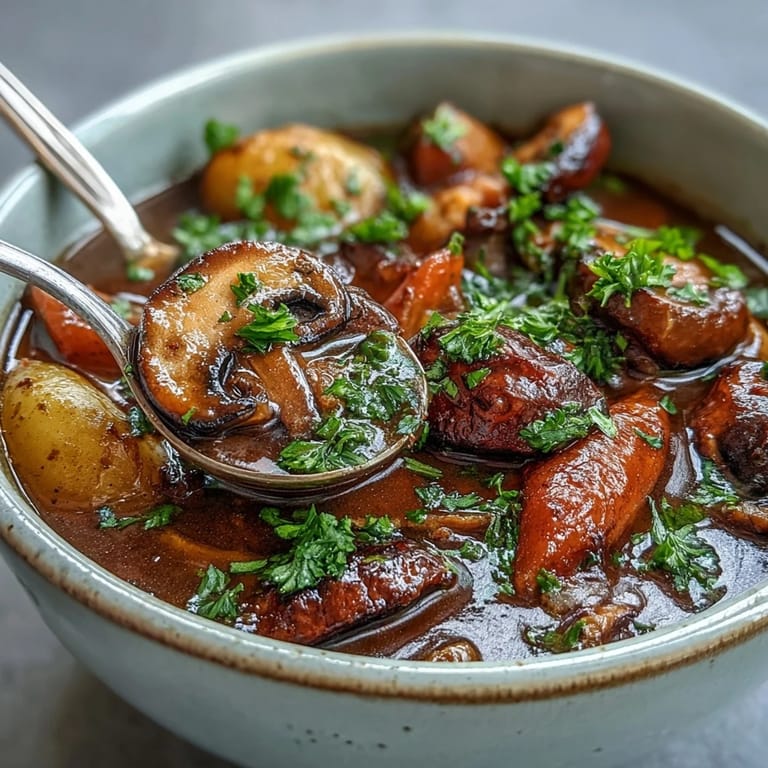
Save There's something about a pot of stew that fills your kitchen with the kind of warmth you can feel before you even taste it. I stumbled onto this vegan Irish stew quite by accident, actually—I'd planned to make the traditional version with Guinness, but found myself out of it on a cold Tuesday evening with hungry friends arriving in an hour. The mushrooms I had on hand seemed like an obvious solution, and by the time that first spoonful hit my lips, I realized I'd discovered something even better than what I'd originally intended. The earthiness of the mushrooms, the tender vegetables, and that impossibly rich broth proved that comfort food doesn't need animal products to feel genuinely nourishing.
I made this for my neighbor last winter after she mentioned missing proper Irish stew since going vegan. Watching her face light up on that first taste—the surprise, then the genuine contentment—that's when I knew this recipe was something special. She's made it three times since, and now her family requests it instead of their old traditional version. That moment taught me that the best recipes aren't about staying faithful to tradition; they're about capturing the feeling tradition gives us.
Ingredients
- Cremini or portobello mushrooms (400 g): These are your stew's soul—they break down into tender, meaty bits that absorb all the broth flavors while releasing their own deep earthiness.
- Soy sauce (2 tbsp for mushroom meat): This isn't just seasoning; it's the savory anchor that makes mushrooms taste almost indistinguishable from traditional meat.
- Smoked paprika (1 tsp): A small amount goes a long way here, adding that subtle smokiness that makes people ask if you've hidden Guinness somewhere.
- Olive oil (3 tbsp for base): Use good quality oil—it becomes the fat that carries all those vegetable and herb flavors throughout the stew.
- Yellow onion (1 large): This is your flavor foundation; chop it generous and let it soften completely before adding anything else.
- Garlic (2 cloves): Fresh garlic makes all the difference, so don't reach for the jarred version—the perfume of fresh cloves is what makes your kitchen smell alive.
- Carrots and parsnips (3 each): The carrots add sweetness while parsnips bring earthiness; together they create layers of flavor that unfold as you eat.
- Potatoes (3 medium): Cut them into chunks roughly the size of walnuts so they absorb broth without turning to mush.
- Celery (2 stalks): This adds a subtle aromatics complexity that rounds out the overall taste without being noticeable as celery.
- Vegetable broth (1.2 L): Quality matters here—a flavorful broth lifts the entire stew; watery broth means a watery result.
- Tomato paste (2 tbsp): This deepens the color and adds a subtle richness that makes the broth feel less like vegetable stock and more like something cooked for hours.
- Fresh thyme and rosemary: These two herbs together create that unmistakable Irish stew aroma; if using dried, use half the amount as fresh.
- Bay leaves (2): They infuse the broth with a gentle herbal note—remember to fish them out before serving.
- Flour or cornstarch (2 tbsp): This creates a gentle thickening that makes the stew clingy and comforting rather than brothy.
- Fresh parsley (2 tbsp): Save this for garnish—a bright shower of green right before serving brings the whole dish to life.
Tired of Takeout? 🥡
Get 10 meals you can make faster than delivery arrives. Seriously.
One email. No spam. Unsubscribe anytime.
Instructions
- Build Your Mushroom Meat:
- Heat olive oil in a large skillet over medium-high heat, then add your chopped mushrooms along with soy sauce, smoked paprika, and black pepper. You'll hear them start to sizzle and release their moisture—let this happen for 8 to 10 minutes, stirring occasionally, until the mushrooms darken and most of their liquid evaporates into a concentrated, glossy coating. This step is essential because it concentrates all the mushroom flavor into something genuinely meaty.
- Start Your Aromatic Base:
- In a large pot, warm 3 tablespoons of olive oil over medium heat. Add your chopped onion and minced garlic, stirring them together until they soften and become translucent, roughly 5 minutes—you're building the flavor foundation that everything else will rest on.
- Add Your Root Vegetables:
- Stir in carrots, parsnips, potatoes, celery, and rutabaga if you're using it. Give them 5 minutes of cooking time, stirring occasionally, so they soften slightly and start to mingle with the onion and garlic.
- Deepen the Flavor:
- Add tomato paste, thyme, rosemary, bay leaves, and a generous pinch of salt and pepper. Stir everything together, letting the tomato paste coat all the vegetables and release its deeper notes into the oil.
- Build the Broth:
- Pour in your vegetable broth and bring everything to a boil. Once you see the rolling boil, reduce the heat to low, cover the pot, and let it simmer gently for 30 minutes until all your vegetables are tender enough to break apart with a wooden spoon.
- Bring Back the Mushroom Meat:
- Return your cooked mushroom meat to the pot, stirring it in so it distributes evenly throughout the stew and every spoonful has that savory richness.
- Create Your Thickener:
- In a small bowl, whisk together flour or cornstarch with 2 tablespoons of water until completely smooth with no lumps—this slurry is what transforms your stew from soup-like to properly thick and clingy.
- Thicken and Finish:
- Pour your slurry into the simmering stew and stir constantly for 5 to 10 minutes, watching as the broth gradually becomes opaque and clings slightly to each vegetable. The stew should move slowly when you tilt the pot.
- Taste and Adjust:
- Remove bay leaves and taste carefully, adjusting salt and pepper until it tastes deep and satisfying. This is your moment to make it exactly how you want it.
- Serve with Pride:
- Ladle into bowls and shower each serving with fresh parsley for color and brightness that cuts through the rich broth beautifully.
 Pin it
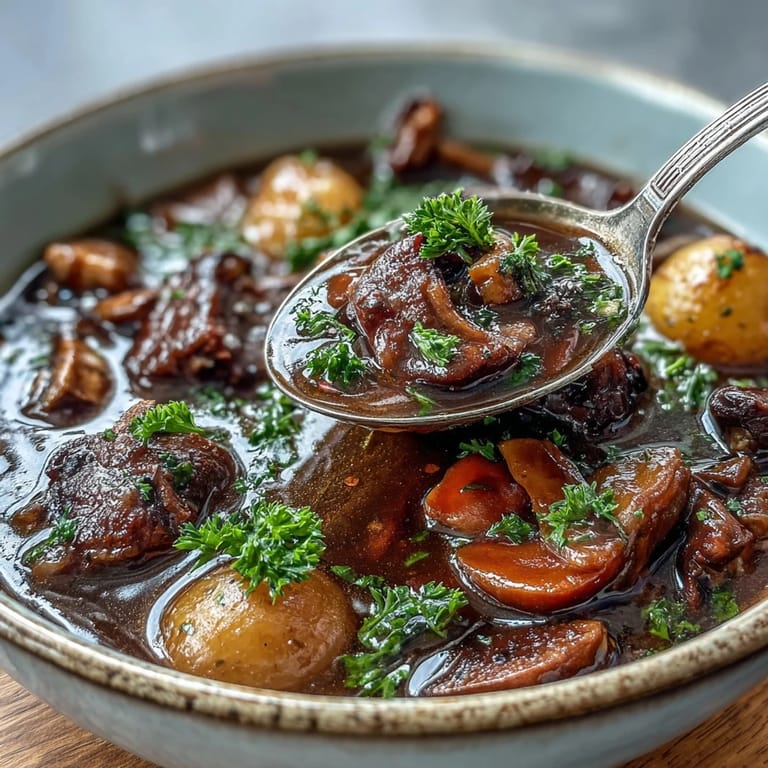
 There's a particular magic that happens when people realize their stew is vegan only after they've already finished their bowl and asked for seconds. It shifts something in how they think about plant-based cooking—not as compromise, but as genuine possibility. That's when this recipe stops being just dinner and becomes proof of something.
When to Add Extra Richness
If you want the stew to taste even more complex and sophisticated, right before serving, stir in a splash of vegan Worcestershire sauce or a teaspoon of marmite dissolved into a tablespoon of broth. This isn't about making it taste more like meat; it's about adding another layer of umami depth that makes people pause mid-bite, trying to figure out what makes this taste so satisfying.
Flavor Variations Worth Trying
Swap regular potatoes for sweet potatoes if you want the stew to take on a warmer, slightly sweeter character—this feels especially right in autumn when the first cool nights arrive. You could also add a rutabaga for its subtle peppery earthiness, or leave it out entirely if you prefer a simpler vegetable profile. The beauty of this stew is that it adapts to whatever vegetables are calling to you.
Serving Suggestions and Pairings
Crusty bread is absolutely essential—not optional, but truly necessary. You need something to soak up every drop of that incredible broth, and good bread does exactly that. Pour your stew into a wide bowl, tear chunks of bread, and use each piece to catch vegetables and broth together. If you're thinking about wine, a robust red like a vegan Merlot brings out the earthiness of the mushrooms and herbs without competing for attention. This is also the kind of stew that's even better the next day, once all the flavors have had time to really know each other.
- Make a double batch and freeze half for nights when you need comfort but not effort.
- Serve with a simple green salad to cut through the richness and bring brightness to the meal.
- This stew reheats beautifully on the stovetop over low heat, never harsh or broken.
 Pin it
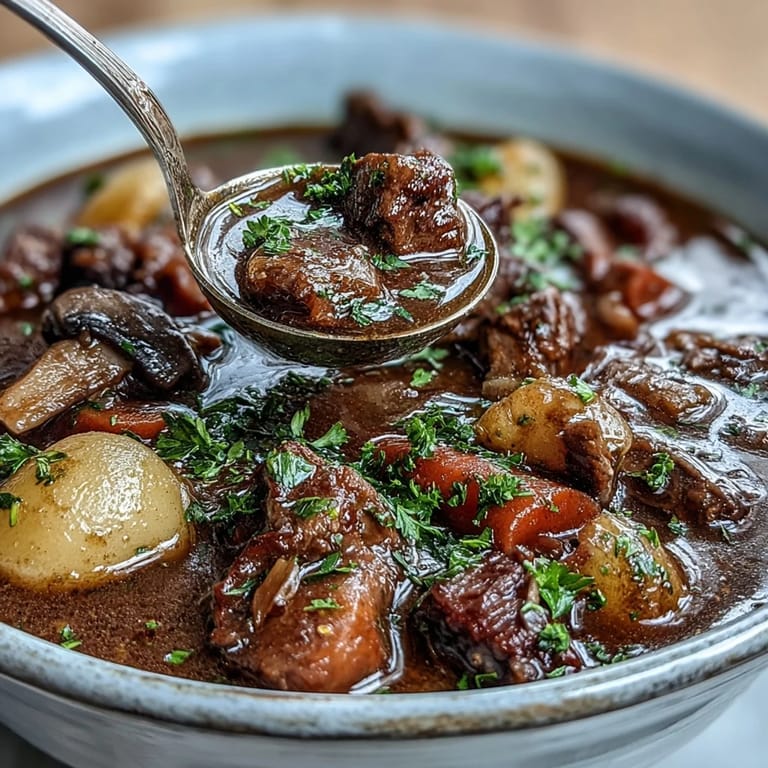
 This stew taught me that the most satisfying dishes are the ones that don't try to convince you they're something they're not. Make it, serve it, and let people discover on their own what they're eating.
Frequently Asked Questions
- → What type of mushrooms work best for the mushroom meat?
Cremini or portobello mushrooms are ideal due to their meaty texture and rich flavor, which mimic the desired depth in the dish.
- → How is the stew thickened without traditional thickeners?
A slurry made from flour or cornstarch mixed with water is stirred in during the last simmer to gently thicken the broth without altering its flavor.
- → Can the rutabaga be omitted or substituted?
Yes, rutabaga is optional and can be replaced with turnip or omitted altogether depending on preference and availability.
- → What are good seasoning alternatives for a similar flavor profile?
Fresh or dried thyme, rosemary, and bay leaves provide aromatic depth. Smoked paprika adds a subtle smoky note enhancing the mushroom meat.
- → Is this stew suitable for special diets?
This dish is vegan, dairy-free, and nut-free. Using gluten-free soy sauce and cornstarch ensures suitability for gluten-sensitive individuals.
- → What are recommended serving suggestions?
Serve hot, garnished with fresh parsley, alongside crusty bread to complete the meal and enhance the hearty experience.