 Save
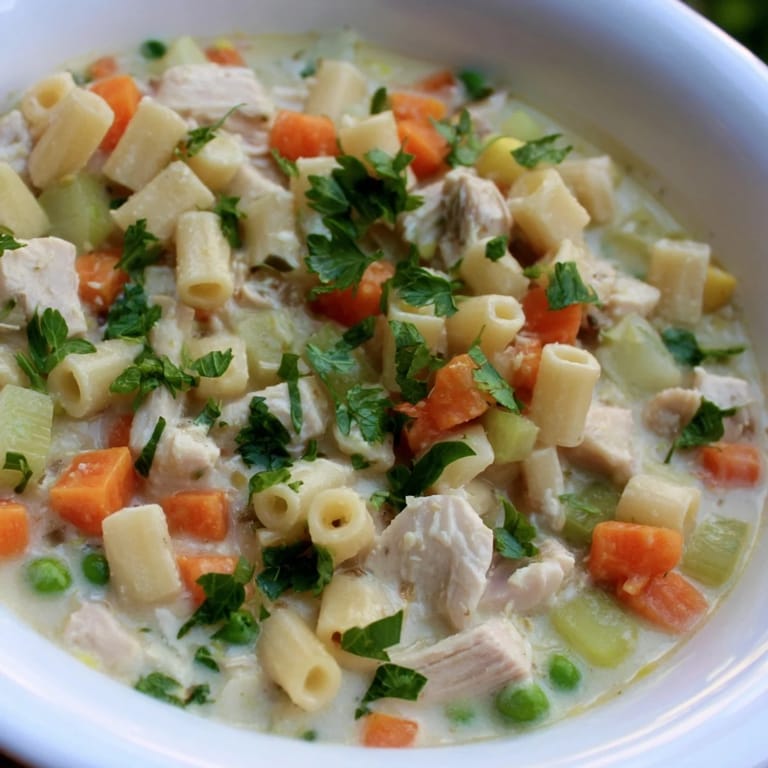
Save There's something about a bowl of chicken pot pie soup that takes me back to watching my neighbor Mrs. Chen ladle soup into mismatched bowls on a rainy Tuesday afternoon. She'd made it for my family after my dad had surgery, and I realized then that the best comfort food isn't about perfection—it's about the warmth spreading through your chest as you eat. This version skips the fussy pastry crust and goes straight to what matters: tender chicken, soft vegetables, and that velvety broth that feels like a hug from the inside.
I made this for my sister the winter she was studying for her bar exam, bringing a pot over to her apartment and watching her eyes light up when she realized she wouldn't have to think about dinner. She ate three bowls that night, and I swear it was the most relaxed I'd seen her in months. That's when I knew this recipe had staying power—when it could do more than feed someone, it could give them permission to rest.
Ingredients
- Cooked chicken breast (2 cups, shredded or diced): Use a rotisserie chicken from the store if you're short on time—it's not cheating, it's being smart about your energy.
- Carrots and celery (1 cup each, diced): These two are the flavor foundation; don't skip them just because they seem boring.
- Frozen peas (1 cup): They thaw gently in the hot broth and add a pop of sweetness and color.
- Yellow onion (1 small, diced): Dicing it finely helps it melt into the broth rather than sit as chunks.
- Garlic (2 cloves, minced): Fresh garlic makes all the difference—jarred will leave your soup tasting a little flat.
- Fresh parsley (2 tablespoons, chopped): Save some for the garnish; that fresh green note at the end changes everything.
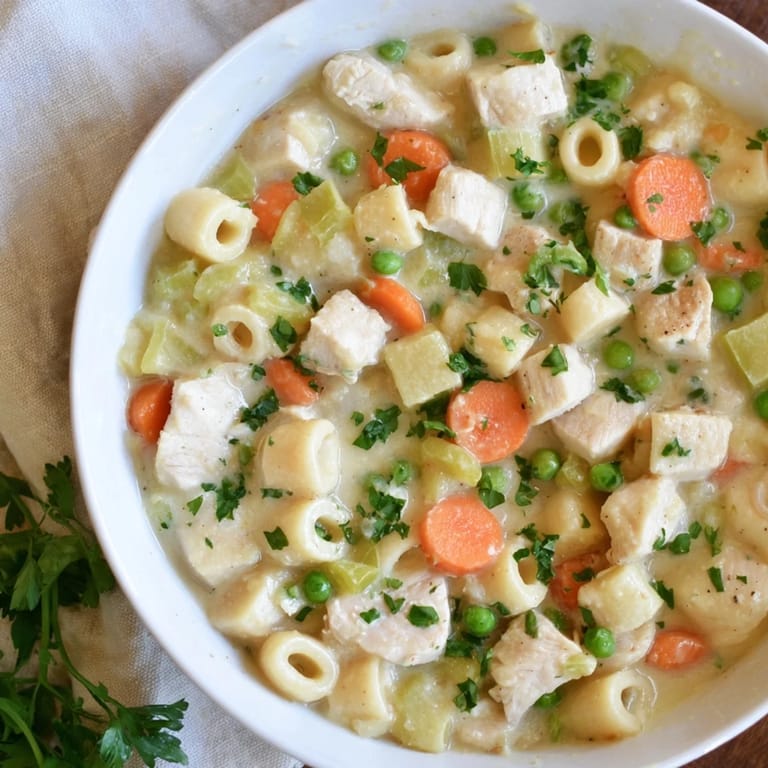
- Ditalini pasta (1 cup uncooked): These small tubes catch the broth like little flavor pockets, but small shells or elbow pasta work too.
- Low-sodium chicken broth (4 cups): Low-sodium lets you control the salt and stops the soup from tasting aggressively salty by the last spoonful.
- Whole milk and heavy cream (1 cup and 1/2 cup): This combination gives you richness without being overwhelming—use what you have if you need to adjust the ratio.
- Unsalted butter (2 tablespoons): It's your cooking base and carries the flavors of the vegetables as they soften.
- All-purpose flour (2 tablespoons): This thickens the broth and gives the soup body; cook it out first to eliminate any pasty taste.
- Salt, black pepper, dried thyme, and dried sage: Thyme is essential, sage is optional but lovely—taste as you go and trust your palate.
Tired of Takeout? 🥡
Get 10 meals you can make faster than delivery arrives. Seriously.
One email. No spam. Unsubscribe anytime.
Instructions
- Melt butter and build your base:
- Warm the butter in your pot over medium heat, then add the diced onion, carrots, and celery. You'll know they're ready when the onion turns translucent and the kitchen smells like home cooking—about 5 minutes.
- Toast the garlic and flour:
- Stir in the minced garlic and let it warm through for a minute, then sprinkle the flour over everything and stir constantly for 2 minutes. This cooks out the raw flour taste and starts building the body of your soup.
- Whisk in the broth and cream:
- Pour the chicken broth in slowly while whisking to prevent lumps from forming, then add the milk and cream. Bring the whole thing to a gentle simmer—you want movement, not a rolling boil.
- Add pasta and seasonings:
- Stir in the ditalini, thyme, sage if you're using it, salt, and pepper. Let it simmer uncovered for about 10 minutes, stirring occasionally, until the pasta is tender but still has a slight resistance when you bite it.
- Finish with chicken and peas:
- Add your shredded chicken and frozen peas, then simmer for another 3 to 5 minutes until the peas are bright green and tender and the soup has thickened into something creamy and luxurious.
- Taste, adjust, and serve:
- This is your moment—taste a spoonful and decide if it needs more salt, pepper, or herbs. Stir in the fresh parsley, ladle into bowls, and garnish with extra parsley if you want it to look as good as it tastes.
 Pin it
 I learned the importance of tasting at the end when I served a batch to my brother and watched him reach for the salt shaker. Now I taste before I serve, remembering that one spoonful takes just a second and keeps the whole dish from feeling underseasoned. That small habit has made every version I make taste the way it should.
Why This Soup Hits Different Than a Regular Pot Pie
The traditional pot pie has you making pastry, waiting for it to rest, rolling it out, and hoping it browns evenly. This soup gives you all those comforting flavors—the savory broth, the tender vegetables, the creamy richness—without any of the fuss. You get that same feeling of being cared for, just faster. It's the smart move when you want the outcome without the labor.
Stretching It or Making It Your Own
This recipe is flexible enough to work with what you have on hand. If you've got a leek, slice it and add it to the vegetables. If you have fresh thyme instead of dried, use half as much and add it toward the end so the flavor stays bright. Some people add a splash of dry white wine with the broth for extra depth, and some stir in a teaspoon of Dijon mustard right before serving. The bones of the recipe are strong enough to hold whatever you want to improvise.
Serving and Storage
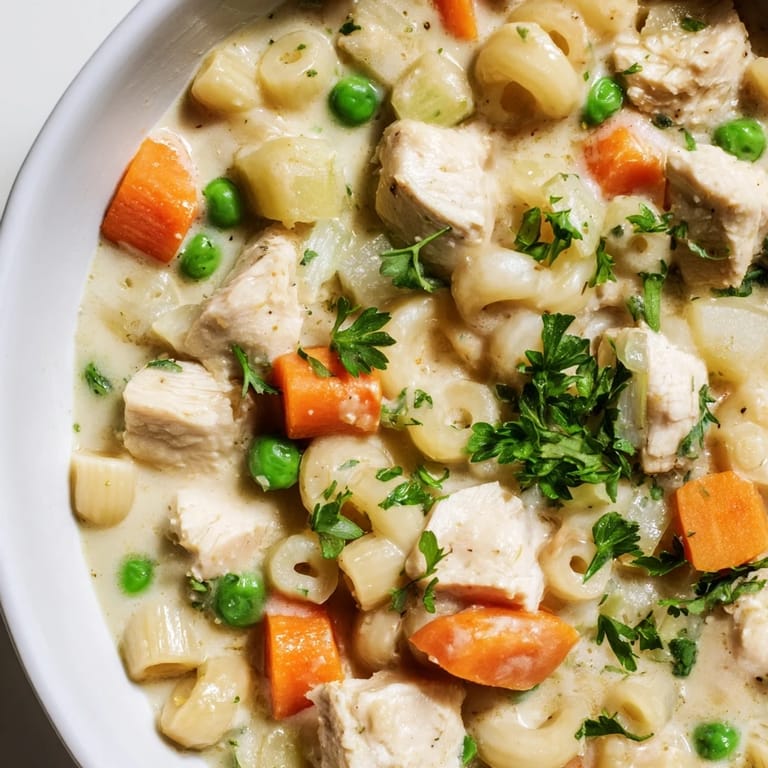
Serve this soup in shallow bowls with crusty bread on the side for soaking up every last drop. Leftovers keep beautifully in the refrigerator for 3 days and actually taste better the next day as the flavors meld. Reheat gently over low heat with a splash of milk if the soup has thickened too much, stirring often so the bottom doesn't scorch.
- Make it gluten-free by swapping in gluten-free flour and pasta without changing anything else.
- A rotisserie chicken from the store saves you 20 minutes and tastes just as good as homemade.
- This soup freezes beautifully for up to 3 months—portion it into containers and thaw overnight in the fridge before reheating.
 Pin it
 This soup has fed my family through cold snaps, quiet Sundays, and moments when we needed something that tasted like love. It's the kind of dish that doesn't ask for much but gives back everything.
Frequently Asked Questions
- → What type of pasta works best in this dish?
Ditalini pasta is ideal as its small size holds the creamy broth well and cooks evenly along with the other ingredients.
- → Can I make this dish gluten-free?
Yes, substitute the all-purpose flour with a gluten-free alternative and use gluten-free pasta to maintain texture and flavor.
- → Is it possible to prepare this with leftover chicken?
Absolutely. Using shredded or diced cooked chicken, such as rotisserie chicken, makes preparation quicker and just as flavorful.
- → What herbs complement the flavors in this dish?
Thyme and sage (optional) blend well with the creamy broth and chicken, while fresh parsley adds a bright finishing touch.
- → How can I adjust the thickness of the broth?
The flour added after sautéing vegetables helps thicken the broth. For a thinner consistency, reduce flour or add more broth or milk.