 Save
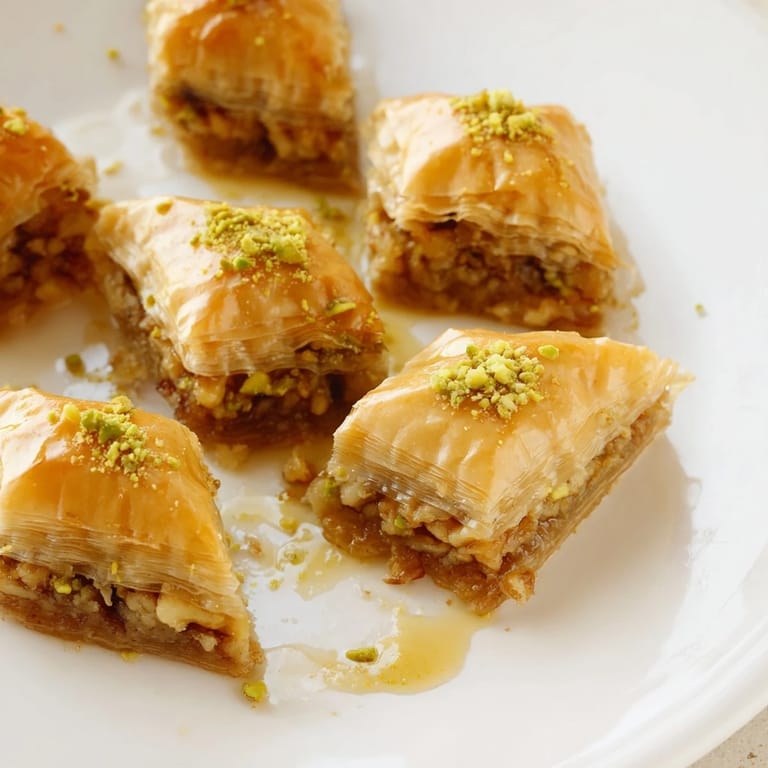
Save The first time I really understood baklava was watching my neighbor's grandmother assemble it in her kitchen, her weathered hands moving with such practiced ease that she barely looked down. She didn't measure anything, just knew by feel when the nut mixture was right and when the phyllo layers had enough butter between them. That afternoon, the smell of honey and cinnamon filled the hallway, and I realized this wasn't just a dessert—it was patience made edible, each crispy, golden piece a small reward for doing things slowly and deliberately.
I made this for a small dinner party once, nervous about whether I could pull off something so traditionally important. By the time I poured that warm honey syrup over the hot pastry straight from the oven, the entire apartment smelled like a Middle Eastern spice market, and I knew something good was happening. My friend Sarah grabbed one piece while it was still warm and burned her tongue, then immediately reached for another—that moment told me everything about whether this recipe works.
Ingredients
- Walnuts: Use about 200 grams finely chopped; they're the backbone of baklava and give you that earthy richness that honey enhances rather than covers.
- Pistachios: Around 120 grams adds brightness and a subtle vegetal note that keeps things interesting—don't skip them just because they cost more.
- Almonds: 60 grams of these mild-mannered nuts round out the flavor and add textural variety without competing for attention.
- Phyllo dough: One pound, thawed slowly in the refrigerator overnight if you have time; rushing this causes cracking and frustration.
- Unsalted butter: 225 grams melted, kept warm as you work so it brushes on smoothly and every layer gets that golden, crispy treatment.
- Honey: 340 grams of good quality honey makes the whole thing sing—cheap honey tastes thin and one-note by comparison.
- Cinnamon stick and ground cinnamon: Together they create layers of warmth; the stick infuses the syrup while the ground spice lives in the nuts.
- Lemon juice and zest: These prevent the sweetness from becoming cloying and add a subtle brightness that makes you want another piece.
Tired of Takeout? 🥡
Get 10 meals you can make faster than delivery arrives. Seriously.
One email. No spam. Unsubscribe anytime.
Instructions
- Set up and warm the oven:
- Preheat to 350°F and grease your baking dish thoroughly with butter so nothing sticks when you're trying to cut. Have all your ingredients measured and within arm's reach because phyllo waits for no one.
- Mix your filling:
- Combine the chopped nuts, sugar, and ground cinnamon in a bowl, tossing everything together so the sweetness and spice distribute evenly. Taste a tiny bit if you want—it should smell warm and inviting.
- Prepare the phyllo:
- Unroll it gently and drape a barely damp towel over the stack; this keeps the sheets pliable without making them soggy. Work methodically, because rushing phyllo is how you end up with torn sheets and regrets.
- Build the first layer:
- Lay down one sheet of phyllo, brush it with melted butter using broad, confident strokes, then repeat until you have eight buttered layers. Your brush should glide, not drag; if it's catching, your butter might be too cool.
- Add the first nut layer:
- Sprinkle about a third of your nut mixture evenly over the phyllo, using your fingers to distribute it so every bite will have nuts. Don't pile it on too thick or the layers won't stay crisp.
- Build the middle section:
- Layer five more sheets, buttering each one, then add another third of the nuts. Repeat this process one more time, ending with five buttered sheets and your final nut layer.
- Finish with the top:
- Layer the remaining eight to ten sheets on top, buttering each one so your finished baklava has a gorgeous golden crust. The weight of these layers will help compress everything slightly, which is exactly what you want.
- Cut before baking:
- Using a sharp knife, cut the baklava into diamonds or squares while it's still in the pan; this is far easier than trying to cut it after baking. Make confident cuts; hesitation leads to crumbling phyllo.
- Bake until golden:
- Slide everything into the oven for 45 minutes until the top is deeply golden and you can hear it crackling slightly when you open the door. If the edges start getting too dark before the center is done, loosely cover with foil.
- Make the syrup while baking:
- Combine honey, water, sugar, lemon juice, zest, and cinnamon stick in a saucepan and bring to a boil, then let it simmer gently for 10 minutes. The smell alone will make you impatient for the baklava to finish baking.
- The critical moment—syrup meets baklava:
- Remove the baklava from the oven and immediately pour the warm syrup slowly over the entire hot pastry, letting it soak into every cut. This is why you baked it—the contrast between hot pastry and warm syrup is what makes the magic happen.
- Cool and patience:
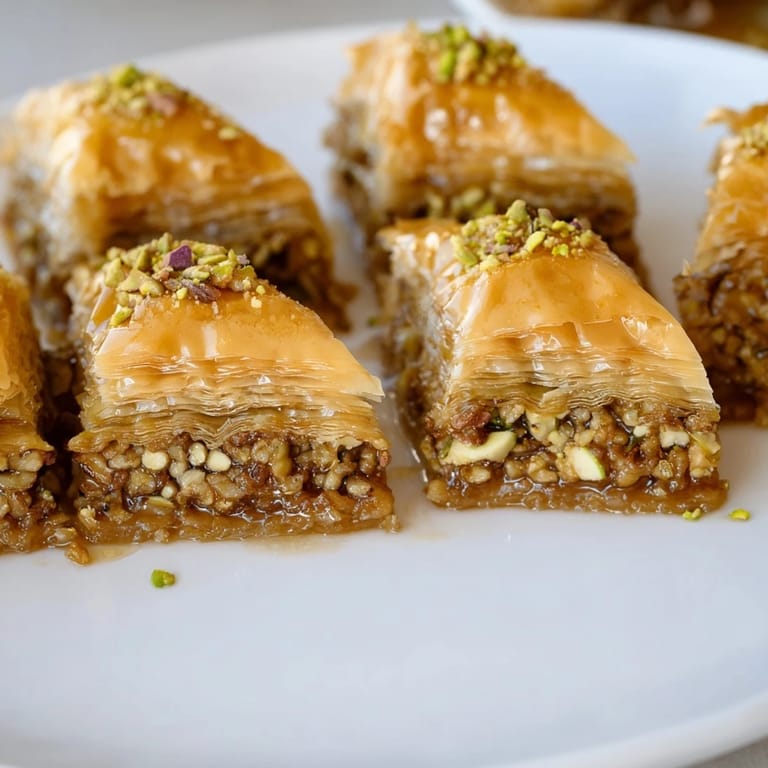
- Let everything cool completely at room temperature for at least four hours so the syrup soaks all the way through and the layers set properly. I know it smells incredible, but this waiting is non-negotiable.
 Pin it
 There's something almost ceremonial about serving baklava that's been sitting for hours, the way each piece is still crispy on the outside but tender and honey-soaked within. I realized this dish teaches you that the best things in cooking often require you to stop and wait, to trust that time and heat and sweetness will do their work without your constant attention.
Why Phyllo Dough Matters
Phyllo is technically just flour, water, and a bit of oil, but it transforms into something almost magical when you layer it and bake it with butter. The key is respecting how delicate it is—those paper-thin sheets want to stay flexible until they hit the heat, at which point they shatter and crisp in ways that no thicker pastry ever could. Once you understand that baklava's magic comes from the contrast between crispy exterior and honey-soaked interior, you'll stop worrying about making it perfect and start focusing on making it simple.
The Honey Syrup Secret
The syrup is where baklava stops being just pastry and starts being a complete dessert experience. Honey alone would be one-note, but combined with lemon, cinnamon, and just enough water to make it flow, it becomes something that tastes sophisticated without being fussy. I learned this the hard way when I made baklava with plain honey once and wondered why everyone politely ate one piece instead of reaching for seconds.
Storage and Serving Ideas
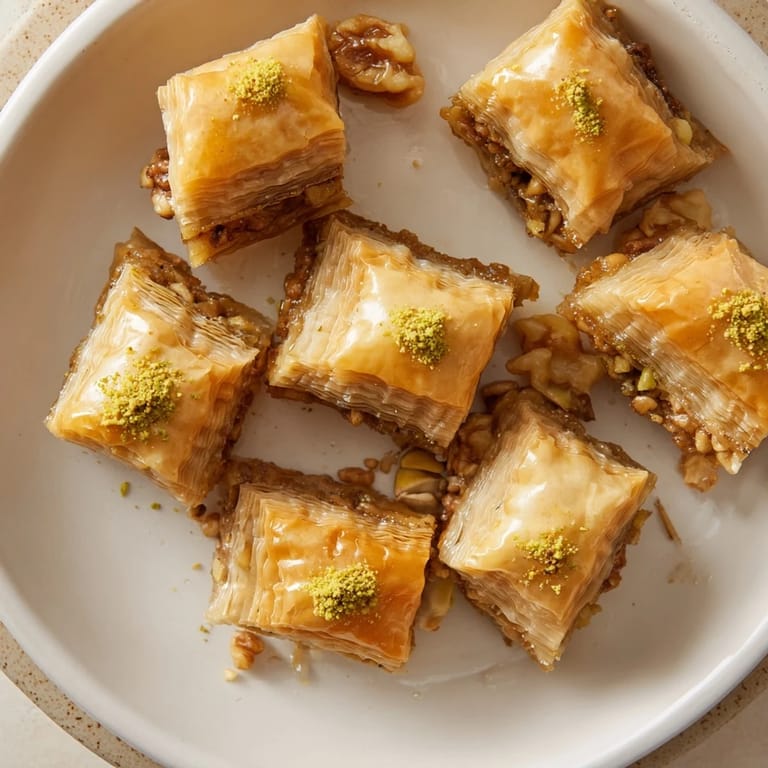
Baklava actually improves over the first few days as the honey continues to soak deeper and the flavors meld together, so making it ahead is not a shortcut—it's the smarter way to cook.
- Keep it covered loosely at room temperature, and it will stay crisp and delicious for up to a week.
- Serve it with strong Turkish coffee or black tea, which cuts through the sweetness and makes the whole experience feel intentional.
- Never refrigerate baklava; cold temperatures make the phyllo tough and the honey stiff in a way that defeats the whole purpose.
 Pin it
 Making baklava connects you to something old and beautiful, a dessert that has been made essentially the same way for centuries because it simply works. Whether you're baking it for people you love or just for yourself, this recipe delivers that rare combination of impressive and achievable.
Frequently Asked Questions
- → What nuts are used in this dessert?
Walnuts, pistachios, and almonds are finely chopped and combined with cinnamon and sugar for a flavorful filling.
- → How is the honey syrup made?
The syrup is prepared by boiling honey, water, sugar, lemon juice, lemon zest, and a cinnamon stick, then simmering to develop aroma.
- → How should the pastry be layered?
Phyllo sheets are brushed with melted butter and layered alternately with nut mixture in several sections, finishing with multiple sheets on top.
- → When is the syrup applied during preparation?
Immediately after baking, warm syrup is slowly poured over the hot pastry to soak in gradually as it cools.
- → How long should the dessert rest before serving?
Allow at least four hours for the syrup to fully absorb, ensuring crisp yet moist layers and enhanced flavor.
- → Can the flavor be adjusted?
Yes, for a lighter taste, some honey can be replaced with orange blossom water to introduce a floral note.