 Save
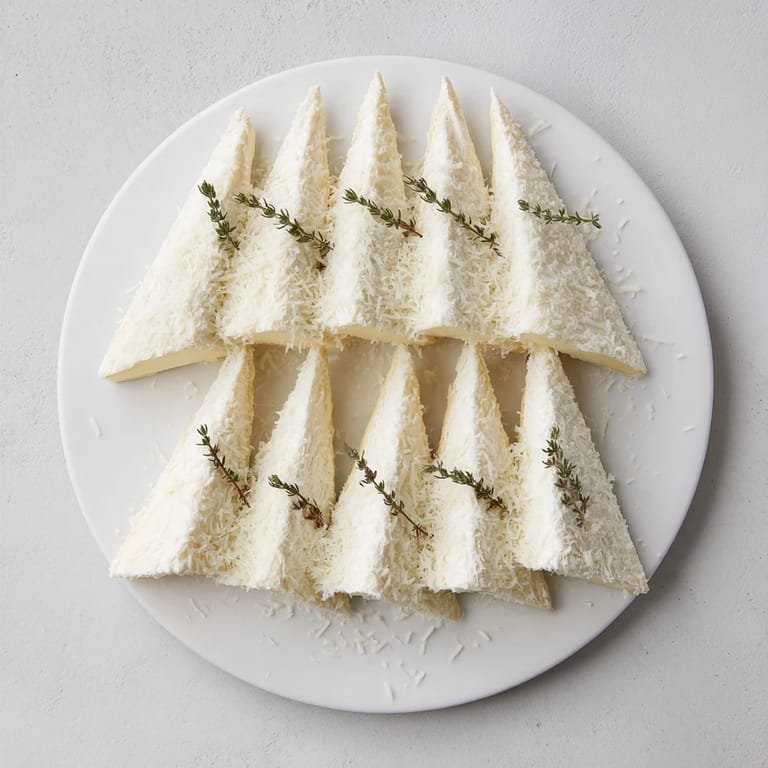
Save There's a moment every winter when I realize I've been thinking too hard about entertaining. A friend texted asking what I'd bring to a holiday gathering, and I found myself staring at the cheese board fixings in my kitchen—wedges of Brie, a block of Parmesan, fresh thyme—and suddenly pictured them arranged like a landscape. The Snowcapped Range was born from that split second of playfulness, the kind that makes people smile before they even taste anything.
I brought these to a casual dinner party on a snowy evening, and they became the thing everyone reached for first. Someone asked if I'd made them that morning, and when I said "about fifteen minutes before I left," the whole table looked at me differently. Food doesn't need hours of labor to feel special.
Ingredients
- Brie cheese, well chilled (400 g): This is your mountain. Cold Brie cuts cleanly without tearing, so chill it for at least an hour before slicing—warm cheese becomes a mess.
- Parmesan cheese, finely grated (40 g): The snow that transforms the whole presentation. If you grate it yourself rather than using pre-grated, it'll taste sharper and look more natural clinging to the peaks.
- Fresh thyme sprigs (optional): A whisper of green that suggests a real landscape. If you have it, use it; if not, the peaks stand beautifully on their own.
Tired of Takeout? 🥡
Get 10 meals you can make faster than delivery arrives. Seriously.
One email. No spam. Unsubscribe anytime.
Instructions
- Chill and Prepare:
- Take your Brie out of the fridge 5 minutes before you start—cold enough to cut cleanly but not so cold it's brittle. Have your knife ready and your platter nearby; once you start cutting, you'll want to work smoothly.
- Create Your Peaks:
- Slice the Brie into 16 triangular wedges, aiming for roughly equal sizes. A sharp knife is non-negotiable here; a dull blade will drag and mangle the edges. Think clean, confident strokes.
- Build the Range:
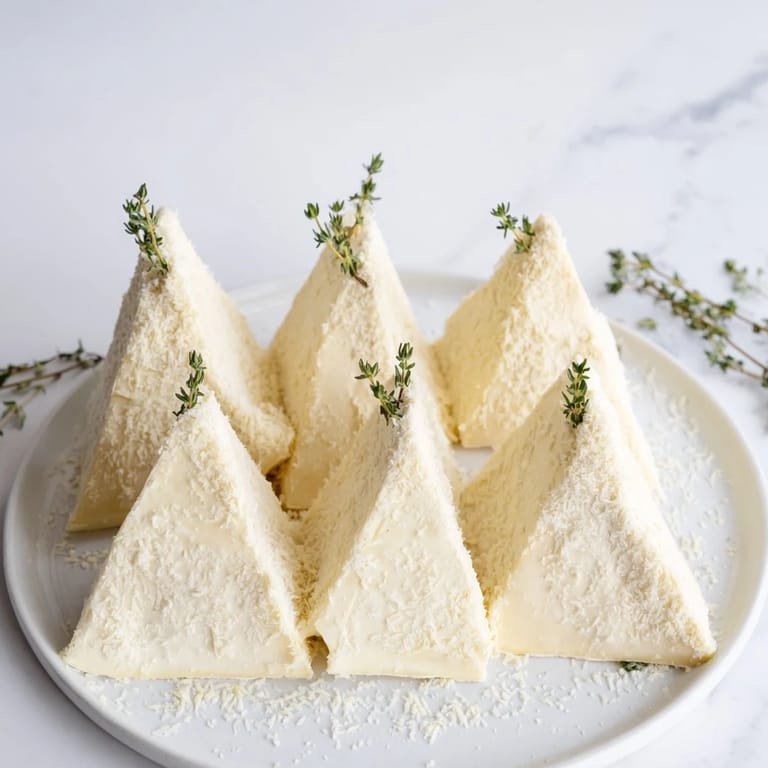
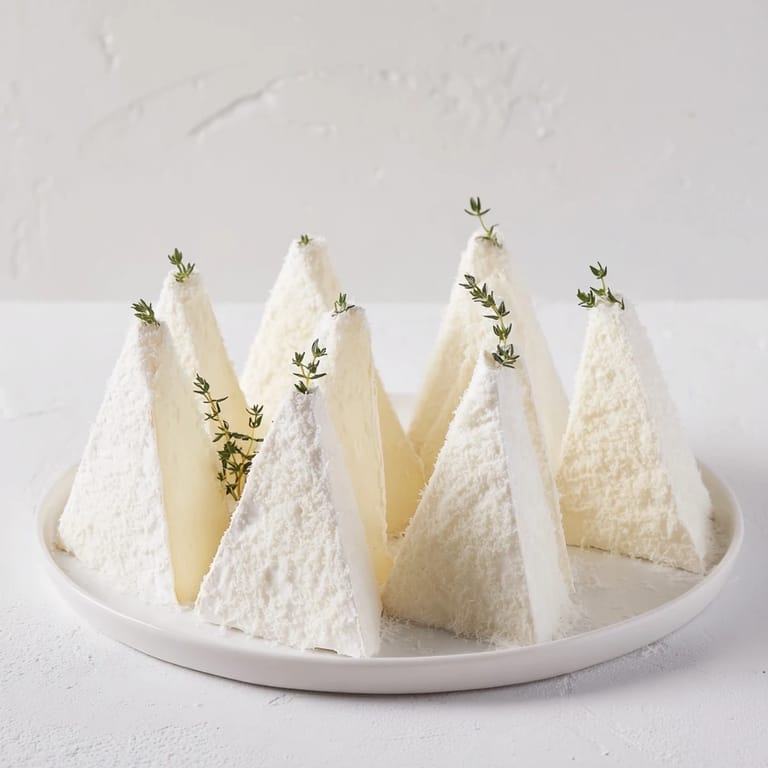
- Stand each wedge upright on your platter with the pointed end facing up, like actual mountain peaks. Space them close enough to read as a unified landscape but far enough that they're not touching.
- Dust with Snow:
- Generously dust the tops with grated Parmesan. Don't be timid—let it accumulate like real snow on a ridge. This is where the magic of the name comes in.
- Add Life:
- Tuck sprigs of thyme around the base or between the peaks if you're using it. Serve immediately with crackers or thin baguette slices.
 Pin it
 What surprised me most was watching people approach this dish with reverence before tasting it. Someone said it looked "too pretty to eat," and then ate three wedges in a row. That's when I understood the real magic: pretty food that tastes wonderful gives people permission to be a little delighted.
Why Temperature Matters
Cheese is honestly the most forgiving ingredient until suddenly it isn't. Warm Brie smears, cold Brie shatters, and chilled Brie—the sweet spot—cuts like soft butter. I learned this the hard way with a block of Camembert that spent three minutes too long in a warm kitchen. Now I pull it from the fridge right before I'm ready to slice, and every cut is clean.
Variations That Still Feel Special
Once you understand the structure, this dish becomes a canvas. Swap the Brie for Camembert if you want something earthier, or use a triple-cream cheese if you want pure indulgence. The Parmesan snow works with almost anything, as does a light scatter of fresh herbs like tarragon or chives. The technique is what makes it feel intentional; the specific cheeses are just the details you get to play with.
Serving and Pairing Wisdom
This appetizer is honest about what it is: a moment of textural contrast and visual fun before something more substantial. It doesn't ask you to do much, and it doesn't need much. Serve it with simple crackers or thin slices of baguette, and pair it with something chilled and light—a Chardonnay or a dry sparkling wine. The beauty of restraint is that people taste what's actually there.
- Assemble this no more than 15 minutes before serving so the Parmesan snow doesn't dissolve into the Brie.
- If your party is larger than eight, the proportions stay the same; just multiply everything accordingly.
- Save this idea for moments when you want something that looks like you tried without the actual labor.
 Pin it
 This is the kind of dish that feels like a small act of kindness—something that costs almost nothing but changes the mood of a gathering. Once you've made it once, you'll find reasons to make it again.
Frequently Asked Questions
- → How should Brie be prepared for clean cuts?
Ensure the Brie is well chilled before slicing to achieve clean, uniform triangular wedges.
- → What is the purpose of the Parmesan dusting?
Grated Parmesan creates a snowy effect on the Brie wedges, enhancing both texture and visual appeal.
- → Can I substitute the Brie with another cheese?
Yes, Camembert or triple-cream cheese can be used for a richer and creamier variation.
- → Is toasting Parmesan necessary?
Toasting Parmesan is optional but adds a nutty depth of flavor when cooled before dusting.
- → What pairs well with this cheese arrangement?
Serve with crackers or baguette slices, and complement with chilled Chardonnay or sparkling wine.