 Save
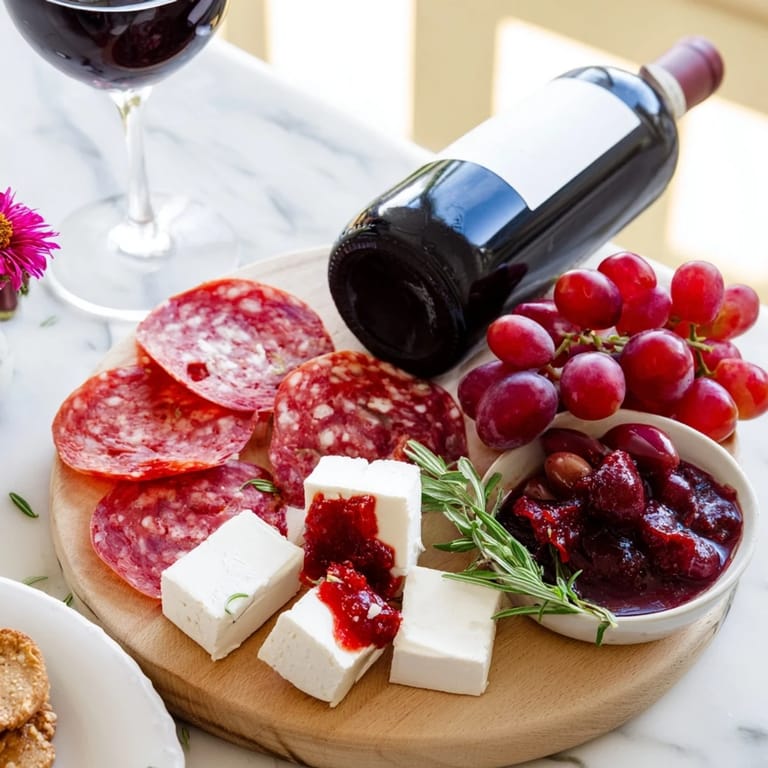
Save I still remember the evening I discovered the magic of wine-stained ingredients. A friend brought a bottle of Pinot Noir to my kitchen, and we were playing with how to make a simple cheese board feel like something from a Tuscan villa. That's when it hit me—what if everything on the board whispered of wine? Not just paired with it, but actually transformed by it. The drunken goat cheese, the wine-soaked grapes, even the olives swimming in red wine brine. When I arranged it all around an empty wine bottle like a centerpiece, something clicked. Suddenly, we weren't just serving cheese. We were telling a story.
I made this board for my sister's engagement party, and watching people's faces light up when they realized every single element had been kissed by wine—it was like witnessing a small magic trick. Someone asked, 'How did you get the grapes to taste like that?' and I loved having a simple answer that felt so luxurious.
Ingredients
- Drunken goat cheese, 200 g, sliced: This is your creamy anchor. The red wine soak softens it slightly and adds a subtle tartness. Buy it already wine-soaked from a specialty counter if you can find it—it saves a step and tastes incredible.
- Red Wine BellaVitano or similar hard cheese, 150 g, cubed: These firm, aged cheeses stand up beautifully to wine infusion and add textural contrast. The cubes hold their shape and look elegant on the board.
- Red wine-cured salami, 100 g, thinly sliced: The wine curing adds depth and a subtle sweetness. If you can't find wine-cured, regular salami works, but the specialized version elevates the whole experience.
- Prosciutto, 80 g, torn into ribbons: Tear it by hand just before serving—it stays more delicate that way and catches the light beautifully on your board.
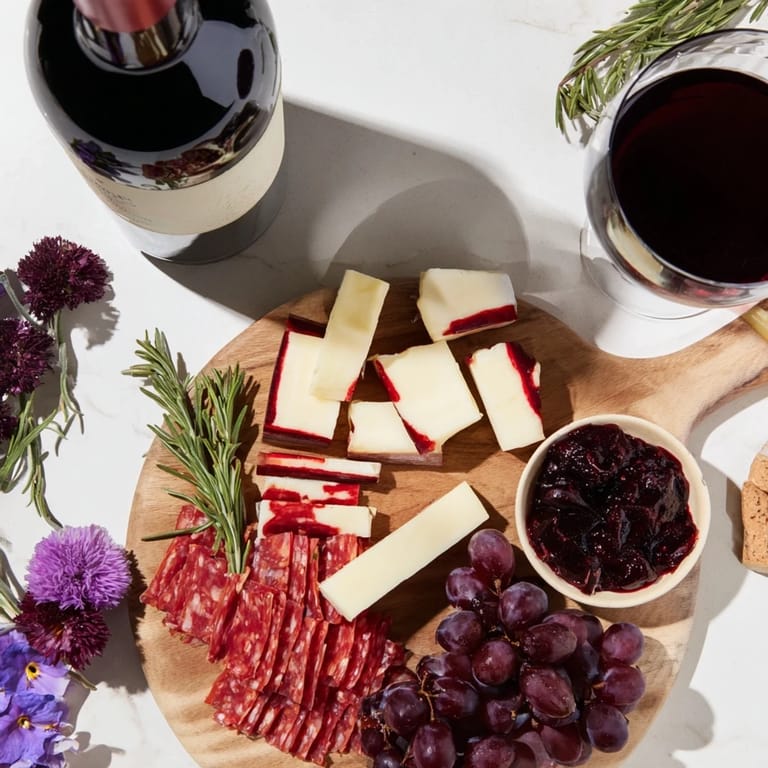
- Red wine jelly, 1/2 cup: This is the glossy jewel of the board. Homemade is worth it, but quality store-bought works in a pinch. It adds visual drama and a bright, winey pop of flavor.
- Red wine-poached grapes, 1/2 cup: These little flavor bombs are the secret weapon. The wine soak concentrates their sweetness while adding sophistication. They're soft enough to pop between your teeth but structured enough not to roll everywhere.
- Red wine-infused dried cherries, 1/4 cup: Chewy, concentrated, and deeply flavored. These add a jewel-like pop of color and a concentrated burst of fruitiness.
- Red wine-marinated olives, 1/3 cup: Whether kalamata or green, the wine brine adds layers to their natural briny character. Pit them beforehand if you're worried about your guests.
- Baguette, 1 small, sliced: Toast the slices lightly if you want them to hold up better, or leave them soft if you're serving immediately. The slight sourness of a good baguette balances all the richness.
- Red wine and rosemary crackers, 1 cup: These echo the wine theme and add a textural contrast. Their herbiness prepares the palate for each new cheese or meat.
- Fresh rosemary sprigs and edible flowers: These aren't just decoration—the rosemary releases its oils as people handle the board, filling the air with Mediterranean aroma. Edible flowers add color and a whisper of elegance.
Tired of Takeout? 🥡
Get 10 meals you can make faster than delivery arrives. Seriously.
One email. No spam. Unsubscribe anytime.
Instructions
- Set the stage with your centerpiece:
- Take that empty wine bottle—label removed or left on if it's pretty—and place it dead center on your wooden board. This becomes your anchor, the thing that pulls the entire composition together. If the bottle feels wobbly, nestle it into a small ring or use museum putty underneath. You want it stable and proud.
- Build your cheese foundation:
- Start with the drunken goat cheese slices and wine-soaked hard cheese cubes arranged in a loose circle around the base of the bottle. Let some pieces lean against the bottle like they're seeking its warmth. This creates height variation and makes the whole board feel alive rather than flat.
- Add the proteins with intention:
- Fan out the thinly sliced salami in little overlapping piles—think of how a dealer spreads cards. The prosciutto ribbons can be gathered and loosely twisted, almost like edible silk. These elements should feel like they're nestled into the composition, not just scattered on top.
- Place your glossy gems:
- Spoon the red wine jelly into a small shallow bowl and nestle it among the cheeses. This becomes a focal point of color and shine. Scatter the poached grapes in small clusters—maybe 3 or 4 grapes together—so they catch the light. The dried cherries go in their own little pile, creating pockets of deep burgundy color.
- Bring in the marinated olives:
- Use a small bowl for these too, or scatter them directly. Their briny, wine-dark appearance adds earthiness and sophistication. Leave a tiny spoon or pick nearby so guests know these are meant to be spooned onto crackers.
- Frame everything with bread and crackers:
- Arrange baguette slices and crackers in gentle arcs, almost like you're creating pathways around the board. They should feel accessible but not dominant—this is a cheese board's moment to shine, not the bread's.
- Garnish with grace:
- Tuck fresh rosemary sprigs into gaps and between cheeses. If using edible flowers, scatter them last where they'll catch eyes—perhaps near the wine jelly or clustered with the grapes. Add them just before serving so they stay fresh and vibrant.
- The reveal:
- Step back and look at your board. It should feel abundant but not crowded, sophisticated but not fussy. There should be visual pathways that guide the eye around the composition, and every element should have its moment to shine.
 Pin it
 At my sister's party, a guest who'd never tasted wine-soaked cheese stood frozen, staring at the board for a full moment. When she finally tried a piece of the drunken goat cheese with a wine-poached grape and a sliver of salami, her eyes closed. 'This tastes like a memory,' she said. That's when I realized this board isn't just about feeding people—it's about creating a moment where every flavor tells part of the same beautiful story.
The Art of Wine-Infused Ingredients
Working with wine-infused ingredients taught me that wine doesn't just add flavor—it transforms texture and intensity. When grapes are poached in wine, their skin becomes slightly more delicate, and the flesh concentrates into something almost like jam. When cheese soaks in wine, the alcohol softens the structure while the tannins add complexity. And olives in wine brine become vehicles for carrying wine's sophistication straight to your palate. The key is understanding that you're not trying to taste 'wine' on everything—you're trying to create a whisper of it, a sophistication that people feel rather than identify.
Building Your Perfect Board
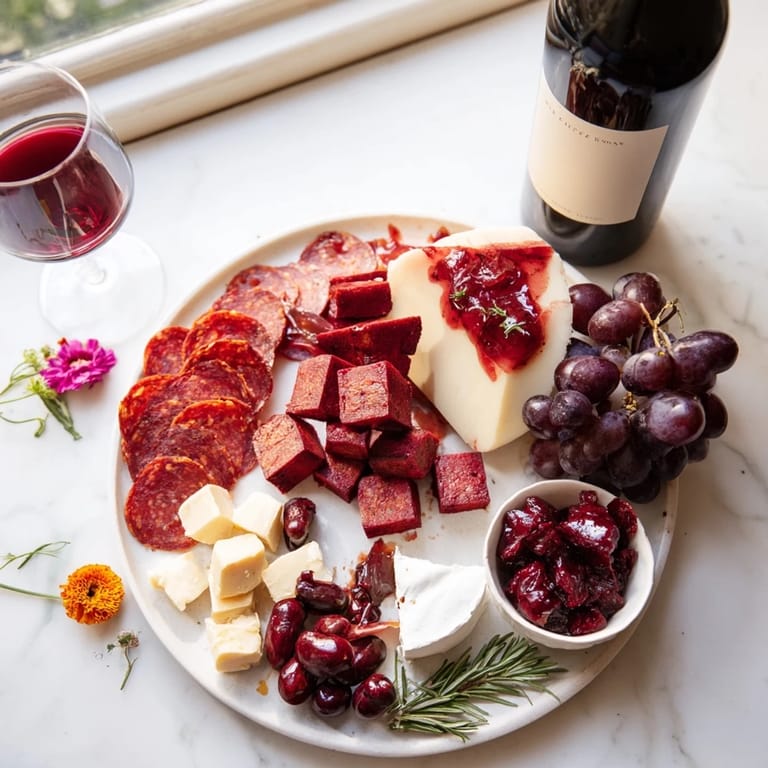
The secret to a board that looks professionally styled is understanding composition. Odd numbers feel more natural—three of this, five of that. Create height variation by using small bowls and stacked cheeses. Leave some empty space; a crowded board loses its elegance. And always, always consider color contrast. The deep burgundy of wine-poached grapes looks stunning next to pale goat cheese. The translucent salami catches light differently than opaque cheese. Think of it like painting, and your ingredients are your palette.
Wine Pairing and Serving Suggestions
This board practically demands a wine pairing. The wine-infused elements create a loop—serve it with the same style of wine you used to create it. A Pinot Noir is perfect; it's fruit-forward enough to complement the poached grapes and sophisticated enough to stand up to the aged cheeses. Merlot works beautifully too if you prefer something slightly rounder. But here's what I learned: the best moment to introduce wine is actually right as people are discovering the board. There's something magical about watching someone taste wine-soaked cheese while holding a glass of the same wine.
- Serve the wine at slightly cooler than room temperature to make the contrasts sing
- If someone asks about vegetarian options, just remove the salami and prosciutto—nobody will notice they're missing
- This board is perfect for 6 people as written, but you can scale it up beautifully by simply doubling quantities and using a larger board
 Pin it
 This board changed how I think about entertaining. It's not complicated, but it feels like it is—and that's the whole beautiful secret. Make it for someone you want to impress, or make it for yourself because you deserve something this stunning.
Frequently Asked Questions
- → How do I prepare the red wine-poached grapes?
Simmer seedless red grapes in dry red wine with sugar and a cinnamon stick for 10 minutes, then cool before serving.
- → Can this board be made vegetarian?
Yes, simply omit the cured meats and add extra cheeses or nuts for variety.
- → What cheeses work best stained with red wine?
Soft cheeses like drunken goat and hard varieties soaked in red wine such as BellaVitano pair beautifully.
- → How should I arrange the ingredients for best presentation?
Arrange cheeses and meats around a central empty wine bottle, adding small clusters of fruits, olives, and crackers for visual appeal.
- → What pairs well as accompaniment on this board?
Red wine jelly, marinated olives, poached grapes, and rosemary crackers complement the infused cheeses and meats perfectly.