 Save
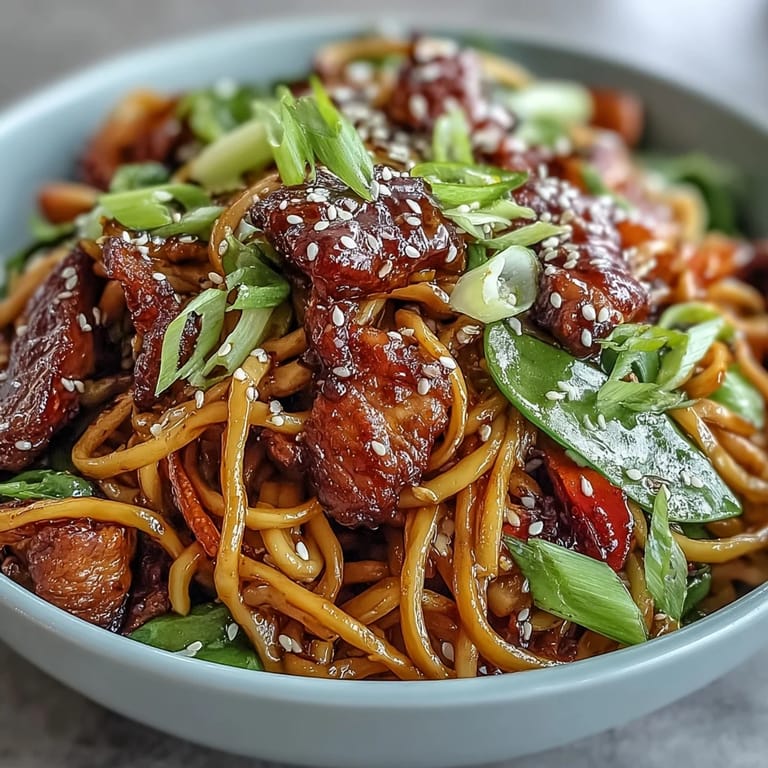
Save There's something almost meditative about the sound of a hot wok hitting the stovetop—that sharp sizzle that tells you everything's about to happen fast. I discovered this pork noodle stir-fry on a Wednesday evening when I had forty minutes and absolutely no plan, only a package of noodles and some pork in the fridge that needed rescuing. What emerged was something so balanced, so quick, and somehow so comforting that it became my go-to answer whenever someone asks what I'm making for dinner on a busy night. The magic isn't in complexity; it's in understanding that crisp vegetables and tender pork need only good timing and a sauce that knows what it's doing.
I made this for my neighbor one night after she mentioned stress-eating takeout every Thursday, and watching her face light up when she tasted it was worth more than any fancy plating could offer. She kept asking if the pork was supposed to be this tender, and I realized that's the moment you know you've got it right—when people are genuinely surprised by simplicity done well. Now she texts me photos of her attempts, and somehow that's become our thing.
Ingredients
- Pork loin or tenderloin, thinly sliced (400 g): Slice against the grain so each piece stays tender even after a quick sear; the thinner you go, the faster it cooks and the better it absorbs the marinade.
- Soy sauce (1 tbsp for marinade, 3 tbsp for sauce): This is your umami backbone, so don't skimp on quality—I learned this the hard way after one batch tasted thin and flat.
- Cornstarch (1 tsp): This tiny amount creates a silky texture on the pork and helps the sauce cling to everything; it's the difference between mushy and perfect.
- Egg noodles or rice noodles (250 g): Egg noodles have more body and soak up sauce beautifully, but rice noodles work if you prefer something lighter.
- Red bell pepper, julienned: The sweetness balances the salty sauce, and cutting it into thin strips means it stays crisp rather than turning mushy.
- Carrot, julienned: Raw carrot keeps its snap when added to the hot wok for just a few minutes, giving you texture that matters.
- Sugar snap peas, halved (100 g): These stay bright green and satisfying firm if you don't overcook them; they're worth seeking out for this dish.
- Spring onions, sliced: Add them at the very end so their fresh bite doesn't get lost in the heat.
- Garlic and ginger (2 cloves, 1 tbsp grated): Fresh is absolutely essential here; dried versions won't give you that aromatic punch that makes this feel special.
- Oyster sauce (2 tbsp): This adds depth and a hint of sweetness that soy sauce alone cannot achieve, even though it's subtle.
- Hoisin sauce (1 tbsp): A little goes a long way, lending richness and slight fermented complexity.
- Sesame oil (1 tsp): A small drizzle at the end lifts everything, but use it sparingly or it can overpower.
- Brown sugar (1 tsp): Just enough to round out the sauce without making it sweet.
- Vegetable oil (2 tbsp): High heat cooking demands an oil with a high smoke point; stick with vegetable, peanut, or canola.
- Sesame seeds and fresh coriander for garnish: These finish the dish with visual appeal and a final layer of flavor that guests notice even if they can't quite name it.
Tired of Takeout? 🥡
Get 10 meals you can make faster than delivery arrives. Seriously.
One email. No spam. Unsubscribe anytime.
Instructions
- Coat the pork in its quiet marinade:
- Slice your pork against the grain into thin, even pieces so they cook uniformly. Toss with soy sauce and cornstarch in a bowl and let it sit for ten minutes—this short window is enough for the meat to absorb flavor without getting tough.
- Get your noodles ready:
- Cook them according to package directions while your marinade is working, then drain and set aside. This timing trick means they'll be ready exactly when you need them, never sitting around getting gummy.
- Build your sauce:
- Mix soy sauce, oyster sauce, hoisin, sesame oil, brown sugar, and water in a small bowl. Whisk it smooth so everything combines evenly and there are no pockets of overly salty or sweet sauce.
- Sear the pork until golden:
- Heat one tablespoon of oil in your wok over high heat until it shimmers, then add the pork in a single layer. Let it sit for a moment before stirring so it actually browns rather than steams, which took me three attempts to understand. Cook for two to three minutes until the edges are caramelized, then move it to a plate.
- Cook the vegetables until they're just right:
- Add the remaining oil and immediately add garlic and ginger, letting them bloom for about thirty seconds until fragrant. Then add bell pepper, carrot, and sugar snap peas, stirring constantly for three to four minutes—you want them tender but still bright and crisp, not soft and dull.
- Bring it all together:
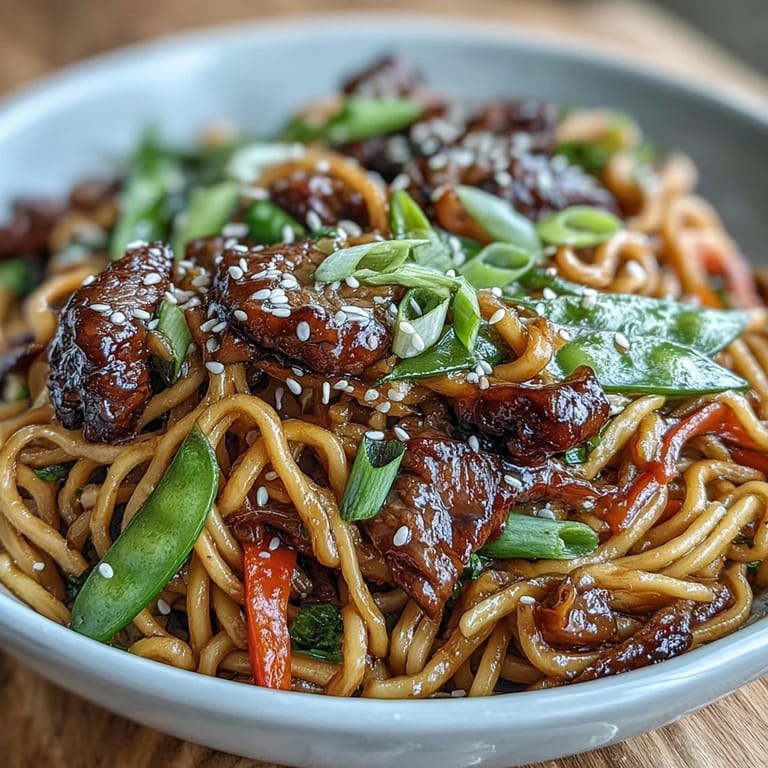
- Return the pork to the wok, add the cooked noodles and your mixed sauce, then toss everything together for two to three minutes until the noodles are well coated and heated through. This is the moment where you taste and adjust; if it needs more soy sauce or sesame oil, now's the time.
- Finish with a flourish:
- Add the spring onions, toss once, and remove from heat immediately. The residual heat will warm them just enough while preserving their fresh bite.
 Pin it
 I remember my daughter watching me make this one evening and asking why I kept the heat so high, and when I explained that the pan had to be almost angry for the pork to brown properly, she understood something about cooking that no lecture could have taught her. That's when I realized this recipe was less about feeding people quickly and more about teaching that sometimes speed and care aren't opposites—they're the same thing.
The Secret Behind Restaurant-Quality Results
The difference between home cooking and takeout often comes down to one thing: not being afraid of heat. I used to cook stir-fries at medium-high, thinking I was being careful, and everything came out soft and steamed. The moment I turned the heat up to high and let that wok get properly hot, everything changed—the pork developed a golden crust, the vegetables stayed crisp, and the sauce reduced to coat everything in a glossy sheen. It sounds dramatic, but it's true: proper heat is the element that makes this feel like restaurant food made at home.
Making It Your Own Without Losing Balance
Once you understand the bones of this recipe—quick-cooking protein, vegetables with varied textures, a balanced sauce—you can play with what you've got. Chicken breaks down faster than pork, so reduce the cooking time slightly; shrimp needs even less time; tofu can be pressed and treated like the pork. Mushrooms, bok choy, baby corn, or broccoli all work beautifully as long as you respect the principle that harder vegetables go in first, tender ones go in last. The sauce ratio should stay roughly the same—three parts salty (soy and oyster), one part sweet (hoisin and brown sugar), a kiss of sesame oil, and enough water to make it flow.
When This Dish Saves the Day
There's a particular Wednesday-night energy to this stir-fry—it shows up when you need dinner to be reliable, delicious, and finished before anyone gets hangry. I've made it after soccer practice, after working late, after a day when the only victory was surviving until dinner. It never disappoints, and somehow it feels both simple enough for a random Tuesday and special enough that people leave the table actually satisfied rather than just filled.
- If you have leftover sauce, keep it in the fridge for a week and use it on roasted vegetables or as a dipping sauce for dumplings.
- Toast your sesame seeds in a dry pan for thirty seconds before sprinkling them on—it wakes up their nutty flavor.
- Have everything prepped before you turn on the heat; once the wok gets hot, there's no time to be chopping.
 Pin it
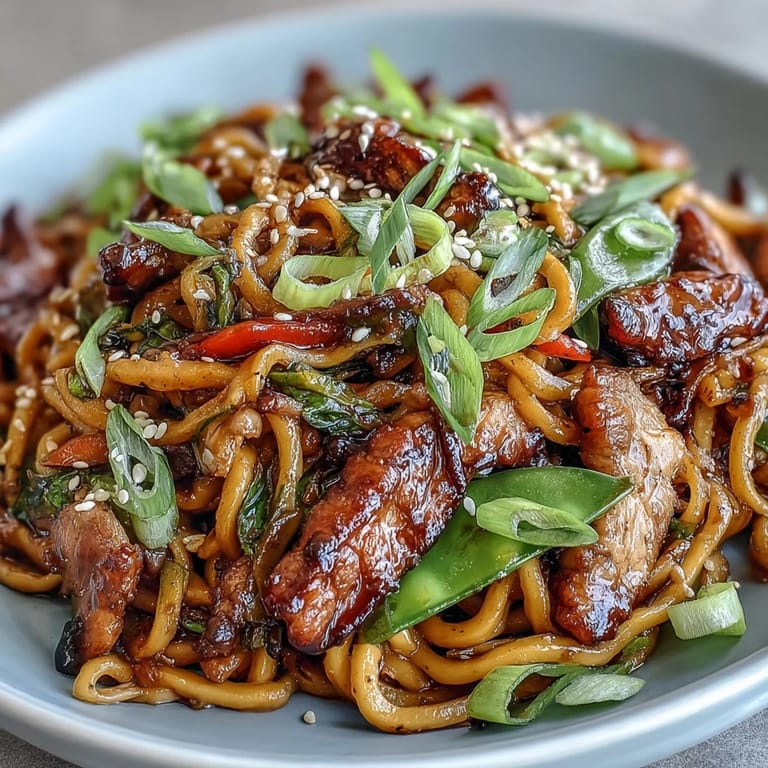
 This recipe has become my answer to the question I ask myself most nights: what can I make that's quick, good, and won't feel like a compromise? It's proven itself enough times now that I've stopped looking for alternatives. That's the highest compliment a weeknight dinner can earn.
Frequently Asked Questions
- → Can I substitute the pork with another protein?
Absolutely! Chicken, shrimp, or tofu work wonderfully as alternatives. Adjust cooking times accordingly—chicken needs 4-5 minutes, shrimp 2-3 minutes, and tofu 3-4 minutes until golden.
- → What type of noodles work best for this stir-fry?
Egg noodles or rice noodles are ideal choices. You can also use udon, lo mein, or even soba noodles. Just follow the package instructions for cooking times and drain well before adding to the wok.
- → How do I prevent the noodles from sticking together?
After draining the cooked noodles, toss them with a small amount of sesame or vegetable oil. This prevents clumping and makes them easier to incorporate into the stir-fry.
- → Can I make this dish gluten-free?
Yes! Use tamari instead of soy sauce, gluten-free noodles like rice noodles, and substitute oyster sauce with a gluten-free version or mushroom-based alternative. Always verify labels to ensure all ingredients are certified gluten-free.
- → What vegetables can I add or substitute?
Feel free to add mushrooms, baby corn, bok choy, broccoli florets, or snow peas. Most crisp vegetables work well—just ensure they're cut into similar sizes for even cooking.
- → How do I achieve the best wok flavor?
Use high heat and ensure your wok is very hot before adding ingredients. Cook in batches if needed to avoid overcrowding, which causes steaming instead of stir-frying. This technique creates that characteristic smoky, caramelized flavor.