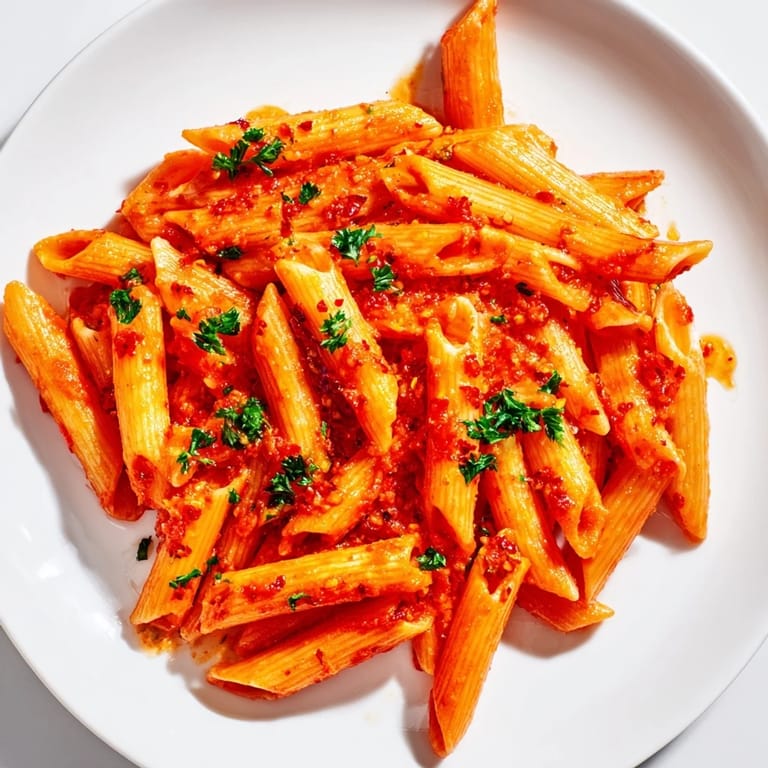
 Save
Save There's something about the smell of garlic hitting hot olive oil that makes you stop whatever you're doing. I learned that lesson on a Tuesday night when I was still figuring out how to cook something more interesting than pasta with jarred sauce. A friend mentioned arrabbiata—just garlic, chili, tomatoes, nothing else—and I was skeptical until I tasted it. The heat wasn't aggressive, it was alive, waking up your mouth in the best way. Now, whenever I make it, I'm transported back to that kitchen moment when I realized the simplest dishes often taste the most unforgettable.
I made this for my roommate one night when she was having a rough week, and she sat at the counter watching the tomatoes bubble in the pan. She asked why I wasn't adding cream or butter, and I explained that wasn't the point—the olive oil does all the work. By the time we ate, she'd stopped complaining about her day. Sometimes a bowl of properly made pasta is worth more than a long conversation.
Ingredients
- Penne rigate (400 g): The ridges catch the sauce better than smooth pasta, so each bite tastes intentional rather than slippery.
- Extra virgin olive oil (3 tbsp): This isn't the time to use the cheap stuff—good olive oil is half the dish here, so choose one that tastes peppery or grassy when you taste it straight.
- Garlic cloves (4 large, thinly sliced): Slicing rather than mincing means you get chewy, sweet bits of garlic throughout instead of tiny sharp pieces.
- Red chili flakes (1–2 tsp): Start with one teaspoon if you're uncertain, you can always add more but you can't take heat away.
- Peeled whole tomatoes (800 g): Two cans are better than a jar of sauce because you control the texture and there are no hidden ingredients lurking around.
- Sea salt (1 tsp): Taste as you go because the pasta water adds salt too, and seasoning is personal.
- Black pepper (1/2 tsp): Fresh from the grinder tastes sharper and more alive than pre-ground.
- Fresh flat-leaf parsley (2 tbsp, chopped): This brightens everything at the end, cutting through the richness just enough.
- Extra virgin olive oil (for drizzling): The finishing drizzle is when you use your best oil, the one that makes you close your eyes a little.
Tired of Takeout? 🥡
Get 10 meals you can make faster than delivery arrives. Seriously.
One email. No spam. Unsubscribe anytime.
Instructions
- Get Your Water Going:
- Fill a large pot with water and add enough salt that it tastes like the sea, then bring it to a rolling boil. This is your foundation—bland pasta water means a bland dish.
- Start the Sauce Base:
- While the water heats, warm the olive oil in your skillet over medium heat. When it shimmers, add the sliced garlic and chili flakes and listen for the gentle sizzle; this should take about a minute and smell incredible.
- Toast and Combine:
- The garlic should be golden and fragrant but not brown or bitter. Add the crushed tomatoes, salt, and pepper, stirring gently to combine everything.
- Let It Bubble:
- Simmer uncovered for 12 to 15 minutes, stirring every few minutes so nothing sticks to the bottom. The sauce will thicken slightly and the raw tomato taste will mellow into something rounded and warm.
- Cook the Pasta:
- Add the penne to your boiling water and cook according to package directions until it's al dente—tender enough to bite easily but still with a tiny bit of resistance. Before draining, grab a mug and scoop out at least half a cup of the starchy pasta water.
- Bring It All Together:
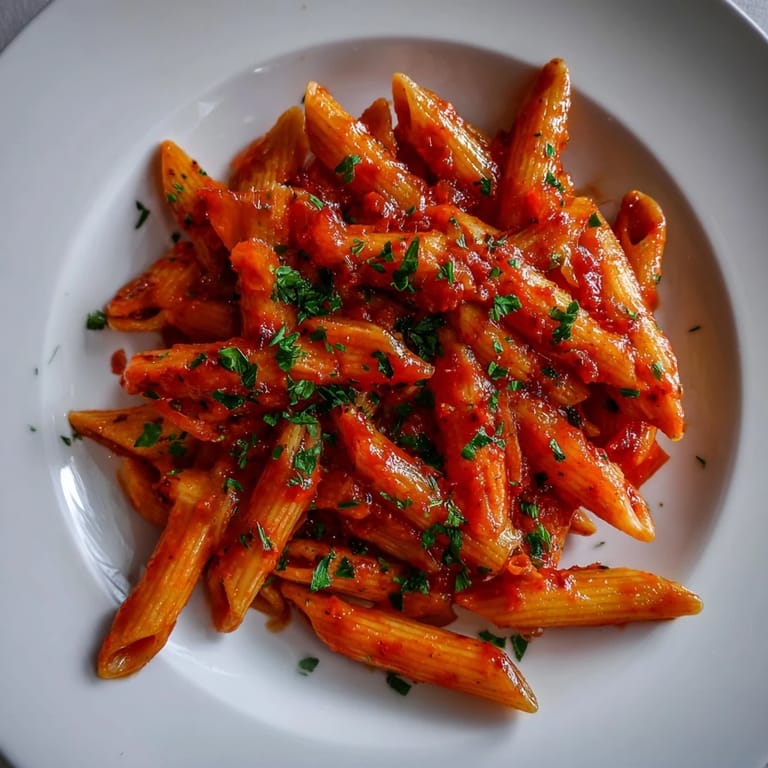
- Drain the pasta and add it directly to the simmering sauce. Toss everything together, adding splashes of pasta water until the sauce clings to each piece instead of pooling at the bottom. This is the moment where everything harmonizes.
- Finish and Serve:
- Remove from heat, stir in the parsley, and drizzle with your best olive oil. Serve immediately in warm bowls.
 Pin it
 I once made this for a date who said she didn't eat spicy food, so I dialed it back to half a teaspoon of chili. She took one bite and asked why it was so boring, then grabbed the chili flakes from the cabinet and added more herself. It taught me that people's taste preferences are often just assumptions they've never tested. She became my cooking partner after that night.
The Magic of Simplicity
This dish works because it respects each ingredient instead of hiding behind a dozen others. The tomatoes aren't competing with cream or cheese; the garlic isn't drowned in a flour roux. You taste each element clearly, and somehow together they become greater than their parts. It's the kind of cooking that teaches you more about technique than recipes with longer ingredient lists ever could.
Heat as Flavor
Chili flakes add more than just spiciness here—they add depth, a warmth that builds as you eat instead of a sharp jab. The key is infusing them into the oil before adding the tomatoes so they release their flavor slowly and evenly. This is why you sauté them gently and watch carefully; it's not about reaching a certain temperature, it's about coaxing flavor out thoughtfully.
The Serving Ritual
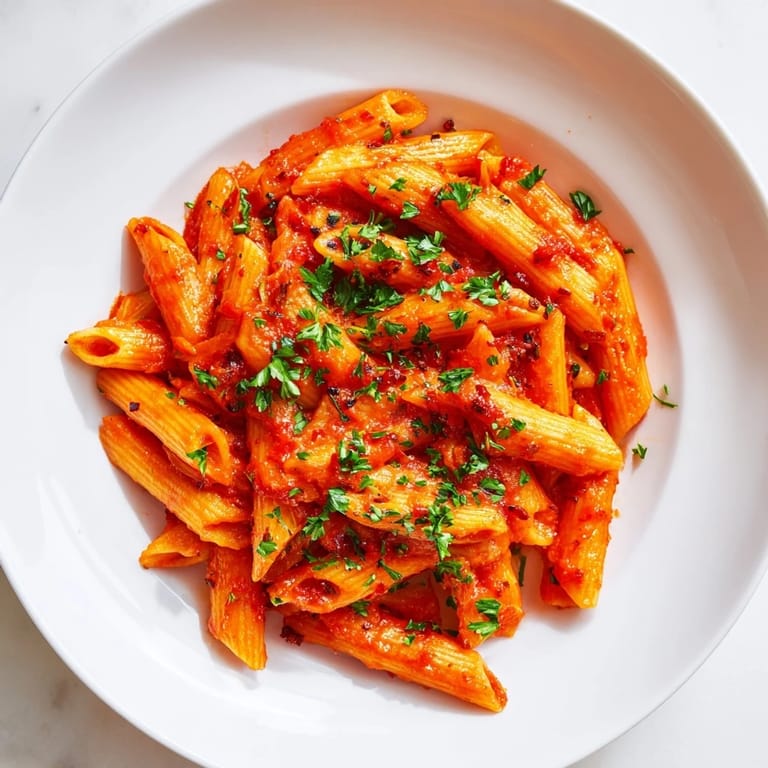
Arrabbiata deserves to be eaten hot and immediately, straight from the skillet into a warm bowl. I learned this the hard way when I tried to plate it fancy and let it sit while I fussed with garnish—by the time we ate, it had cooled and turned sticky instead of silky. Now I heat my bowls first and serve as soon as the parsley hits the pan.
- A squeeze of fresh lemon or a splash of quality vinegar on top adds brightness if the dish tastes too heavy to you.
- Some people add a tiny pinch of sugar if the tomatoes are particularly acidic, but taste first before adjusting.
- If you have leftovers, reheat them gently with a splash of water or broth, never a microwave alone.
 Pin it
 This recipe reminded me that the most memorable meals often come from the fewest ingredients, treated with respect and attention. Every time you make it, you'll find something new about your own taste or a detail you want to tweak.
Frequently Asked Questions
- → How can I adjust the spice level in this dish?
You can vary the amount of red chili flakes to suit your heat preference. Reducing the chili flakes softens the spice, while adding more intensifies the kick.
- → What type of pasta works best?
Penne rigate is ideal as its ridged surface captures the sauce well, but other tubular pastas like rigatoni can also be used.
- → Can I make the sauce ahead of time?
Yes, the tomato sauce can be prepared in advance and gently reheated before combining with the pasta for convenience.
- → What’s the role of reserved pasta water in this dish?
Adding reserved pasta water helps loosen the sauce and ensures it coats the pasta evenly, enhancing texture and flavor integration.
- → Are there any suggested accompaniments?
This dish pairs wonderfully with a crisp Italian white wine like Verdicchio or a light red such as Chianti for a balanced meal.