 Save
Save My grandmother would make these kahk cookies every year during family celebrations, and the kitchen would fill with the scent of butter and sesame before anyone else woke up. I watched her work the dough with such ease, as if her hands already knew exactly how soft it needed to be. Years later, when I finally made them myself, I understood why she never rushed—these cookies demand patience and gentleness, just like most things worth having.
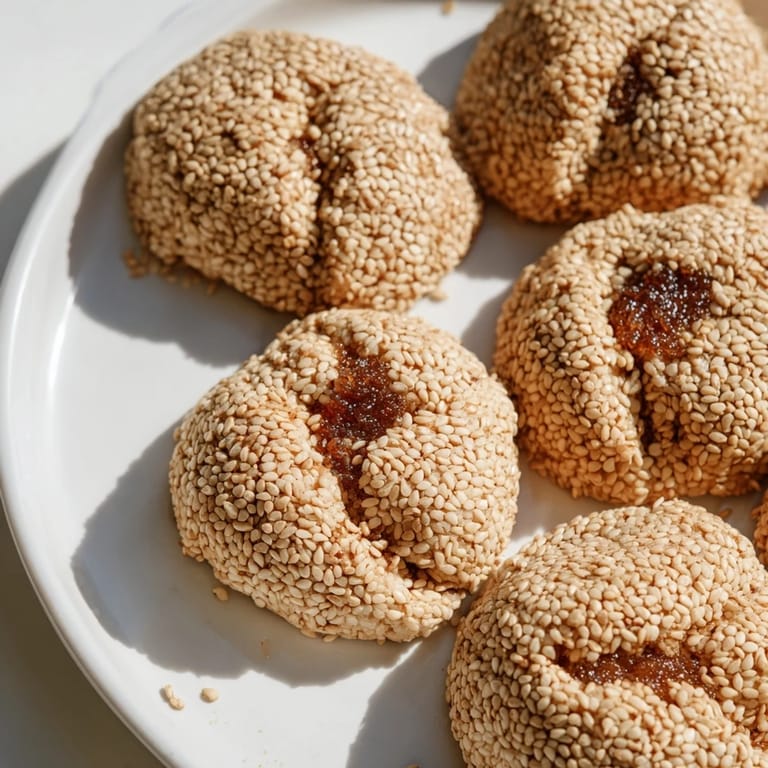
I brought these to a friend's apartment once, just a small batch I'd made on a whim, and watched her face shift the moment she bit through the sesame crust into that soft, buttery dough and the date paste underneath. She went quiet for a second, which felt like the highest compliment. Now whenever I make them, I think of that moment and how food can be a small conversation between people.
Ingredients
- All-purpose flour, 3 cups: This is your foundation, so don't sift it obsessively—just spoon it into your measuring cup and level it off gently or you'll end up with too much.
- Unsalted butter, 1 cup softened: Room temperature butter is non-negotiable here; it creams into that powdered sugar and becomes light and almost cloud-like, which is what gives these cookies their tender texture.
- Powdered sugar, 1/2 cup: It dissolves into the butter without any graininess, creating a silky base that carries the vanilla beautifully.
- Milk, 1/4 cup plus more as needed: Add it slowly because every kitchen is different in humidity and flour absorbency; you want dough that's soft but not sticky.
- Baking powder, 1/2 teaspoon and salt, 1/4 teaspoon: These are quiet ingredients but they lift the dough just enough so the cookies stay tender instead of dense.
- Vanilla extract, 1 teaspoon: It's a small amount but it rounds out the sweetness and makes the butter sing.
- Medjool dates, 1 cup pitted and chopped: Their natural sweetness and slight caramel notes are what make the filling so compelling without needing extra sugar.
- Unsalted butter, 2 tablespoons for filling: This emulsifies the dates into a paste and adds richness that balances the dough.
- Ground cinnamon, 1/2 teaspoon: It's warm and grounding, transforming the dates from just sweet to something with character.
- Ground cardamom, 1/4 teaspoon optional: If you use it, you'll taste why it's traditional—it adds something floral and slightly smoky that lingers beautifully.
- Sesame seeds, 1/2 cup untoasted: Untoasted seeds have a gentler flavor that doesn't overpower, and they press into the dough while it's still soft, which means they stay put.
Tired of Takeout? 🥡
Get 10 meals you can make faster than delivery arrives. Seriously.
One email. No spam. Unsubscribe anytime.
Instructions
- Prepare your space:
- Preheat the oven to 350°F and line your baking sheet with parchment paper so your cookies won't stick and you won't worry halfway through baking.
- Cream the butter and sugar:
- Beat them together until they look pale and almost fluffy, like soft clouds—this takes about 2-3 minutes and it's worth not rushing because this is where the tender crumb comes from.
- Build the dough:
- Add the vanilla, then mix in your dry ingredients gently, and slowly drizzle in milk until the dough comes together soft and pliable. If it feels slightly sticky, that's okay; kahk dough should be tender, not stiff.
- Make the date paste:
- Heat your chopped dates and butter together over low heat, stirring constantly until everything softens and becomes paste-like, about 4-5 minutes. Stir in your spices and let it cool while you work with the dough.
- Shape and fill:
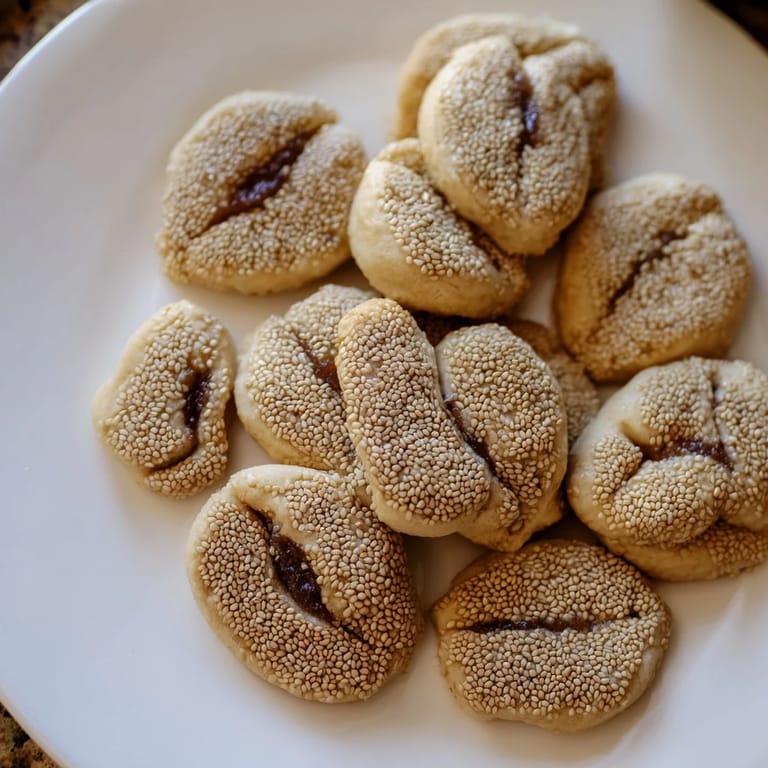
- Divide the dough into 24 equal pieces—I find portioning into rough balls first makes it easier—then flatten each one into a small disk in your palm and add about a teaspoon of filling in the center. Fold the dough over and seal it gently, rolling it back into a ball with your hands.
- Coat with sesame:
- Pour sesame seeds onto a small plate and roll each ball gently so the seeds stick to the outside. Press lightly so they adhere but don't crush the cookie.
- Create the signature pattern:
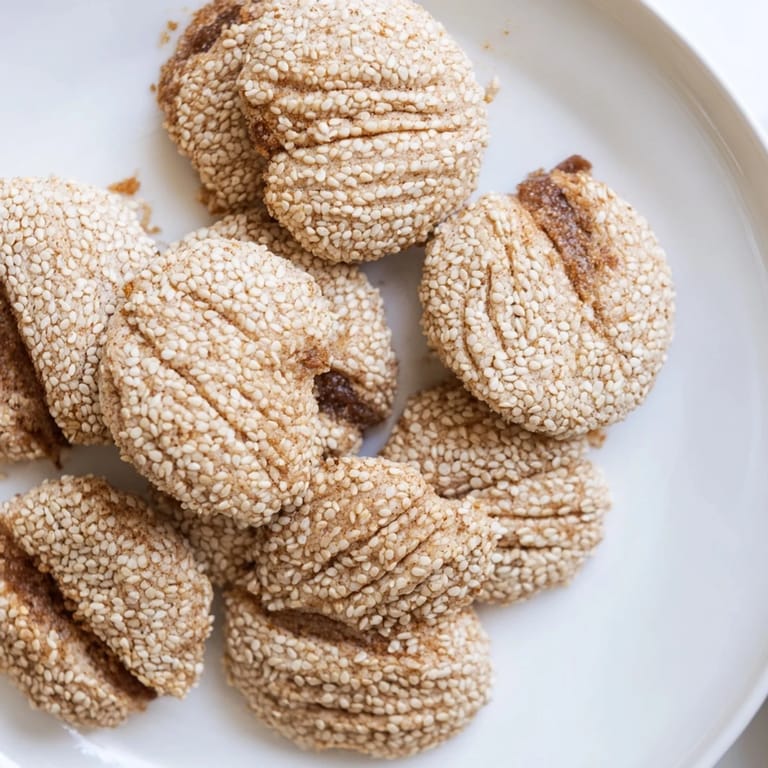
- Place each cookie on your baking sheet and use a fork or cookie mold to gently flatten it slightly and create those traditional decorative lines or crosshatch marks. This isn't just for looks; it signals that you've made something intentional and traditional.
- Bake until golden:
- Bake for 18-20 minutes—and here's the thing no one tells you: the bottoms should be golden but the tops stay pale, which means you're pulling them out at exactly the right moment. Overbaked kahk becomes dry, underbaked is doughy.
- Cool with patience:
- Let them cool completely on a wire rack before you touch them, even though the smell will drive you crazy and you'll want to break into one immediately.
 Pin it
 There's something about kahk cookies that transforms them from a recipe into a ritual. When someone from your culture offers you one, it's not just a cookie—it's an acknowledgment, a connection to something that goes back generations. Making these reminds me that cooking isn't always about perfection; it's about honoring what came before.
The Texture That Matters
The first time I made these, I overworked the dough trying to make it perfect, and they came out slightly tough instead of melting-in-your-mouth tender. The second time I barely mixed anything and they were soft but fragile. What I learned is that gentle hands make all the difference—you're folding flavors together, not kneading bread. The dough should feel like soft leather, responsive to your touch but not sticky.
When to Serve Them
These are best the day they're made, but they actually keep for a week in an airtight container, becoming slightly softer as they sit. I've found they're perfect alongside strong coffee in the morning or with mint tea in the afternoon when someone stops by unexpectedly and you want to offer them something that says you care without saying it out loud.
Variations and Personal Touches
The traditional version is perfect as-is, but I've added walnuts to the filling before when I wanted something with a slight crunch, and it changes the whole character in a good way. Some people brush the cooled cookies with a light honey glaze, others dust them with powdered sugar, and none of these are wrong—they're just different conversations with the same recipe.
- Try adding 1/4 cup finely chopped walnuts or pistachios to the date filling for texture and depth.
- These freeze beautifully for up to three months, so make a double batch when you have the time.
- If you don't have a cookie mold, a fork works just fine for creating that distinctive pattern.
 Pin it
 These cookies are a love letter to patience and tradition, the kind of thing that tastes even better when you've made them yourself. Share them widely and watch what happens.
Frequently Asked Questions
- → What gives Kahk their tender texture?
The combination of softened butter and powdered sugar creamed together helps create a delicate, tender dough.
- → How is the sweet date filling prepared?
Chopped Medjool dates are gently cooked with butter, cinnamon, and optional cardamom until a soft paste forms.
- → Why are sesame seeds used as coating?
Sesame seeds add a nutty flavor and crunchy texture that complement the soft dough and sweet filling.
- → Can the dough be stored before baking?
Covering and resting the dough briefly helps it stay pliable and easy to shape, but it’s best baked fresh.
- → What variations can enhance these cookies?
Adding finely chopped walnuts to the date filling provides extra crunch and depth of flavor.
- → How should Kahk be served?
They are delicious when cooled completely and enjoyed with warm beverages like coffee or mint tea.