 Save
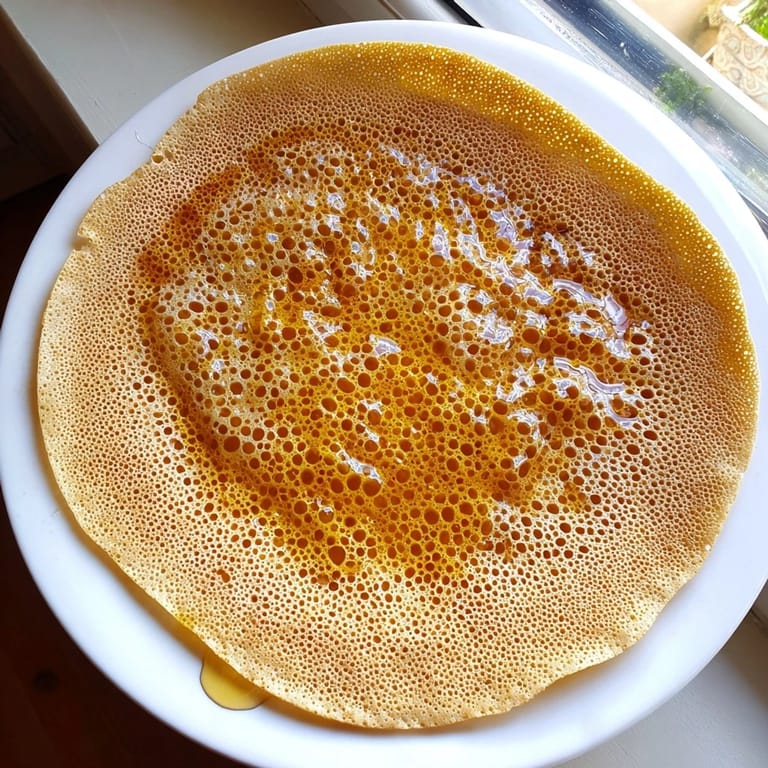
Save I first tasted baghrir at a neighbor's weekend brunch, served warm on a ceramic plate with butter pooling in every tiny crater. The texture was nothing like any pancake I'd known—soft, airy, and riddled with holes that soaked up honey like a sponge. I asked for the recipe that same afternoon, and she laughed, saying it was easier than it looked. She was right.
The first time I made baghrir for my family, my youngest kept calling them magic pancakes because of the way the holes appeared on their own. My partner stood by the stove, sneaking bites straight from the pan before I could even plate them. That morning, the kitchen smelled like warm honey and toasted semolina, and everyone lingered at the table longer than usual. It became our Sunday ritual after that.
Ingredients
- Fine semolina: This gives baghrir its signature texture and slight chew, don't substitute with coarse semolina or the holes won't form properly.
- All-purpose flour: Balances the semolina and helps the batter hold together without becoming dense.
- Warm water: Activates the yeast and keeps the batter smooth, too hot will kill the yeast, too cold and it won't bubble.
- Active dry yeast: The magic behind those thousand holes, make sure it's fresh or the surface will stay flat.
- Baking powder: Works with the yeast to create lift and that airy crumb.
- Granulated sugar: Just a touch to feed the yeast and add a hint of sweetness.
- Salt: Brings out the flavor and balances the sweetness of the honey.
- Unsalted butter: Melts into the honeycomb craters and adds richness, salted butter works too if that's what you have.
- Honey: The classic finish, choose a floral or wildflower variety for the best flavor.
Tired of Takeout? 🥡
Get 10 meals you can make faster than delivery arrives. Seriously.
One email. No spam. Unsubscribe anytime.
Instructions
- Mix the dry ingredients:
- Whisk together semolina, flour, sugar, yeast, baking powder, and salt in a large bowl until evenly combined. This step ensures the yeast distributes well and the batter rises evenly.
- Add the water:
- Pour in warm water gradually while whisking constantly to avoid lumps. The batter should be smooth, pourable, and slightly thinner than American pancake batter.
- Rest the batter:
- Cover the bowl with a clean towel and let it sit at room temperature for 30 minutes. You'll notice tiny bubbles forming on the surface, that's when you know it's ready.
- Heat the pan:
- Set a nonstick skillet over medium heat and let it warm for a minute or two. Do not add oil or butter, baghrir cooks best on a dry surface.
- Cook the crepes:
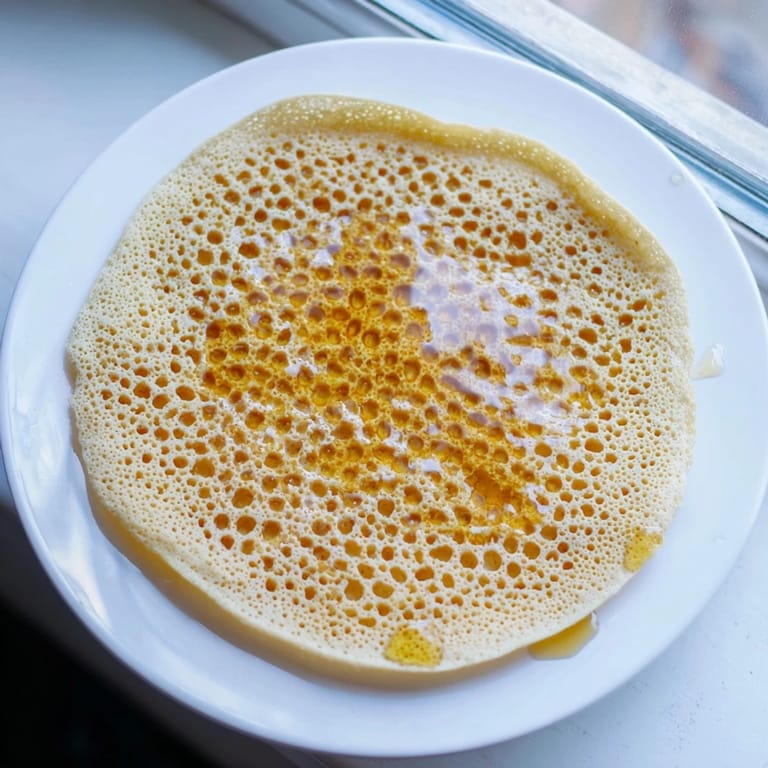
- Ladle about a quarter cup of batter into the center and tilt the pan gently to spread it into a round. Watch as holes begin to form across the top, cook until the surface is completely dry and matte, about 2 to 3 minutes, then remove without flipping.
- Prepare the topping:
- Melt butter and honey together in a small saucepan over low heat, stirring until smooth. Drizzle generously over each warm baghrir and serve immediately.
 Pin it
 One evening, I made a double batch and brought half to a friend recovering from surgery. She called me later that night to say it was the first thing that tasted like comfort in weeks. We didn't talk about the recipe or the technique, just how good it felt to eat something warm and sweet made by someone who cared. That's when I realized baghrir wasn't just breakfast, it was a way to show up for people.
How to Store and Reheat
Baghrir is best eaten fresh, but leftovers keep well in an airtight container in the fridge for up to two days. To reheat, wrap them in a damp paper towel and microwave for 20 seconds, or warm them in a dry skillet over low heat. The texture won't be quite as soft as when they're first made, but the flavor holds up beautifully.
Serving Suggestions
While honey and butter are traditional, I've also served baghrir with almond butter, orange blossom syrup, and even a sprinkle of cinnamon sugar. My favorite variation involves folding them into quarters and dipping them in strong mint tea. They're also wonderful alongside fresh fruit, yogurt, or a handful of toasted pistachios for crunch.
Troubleshooting and Tips
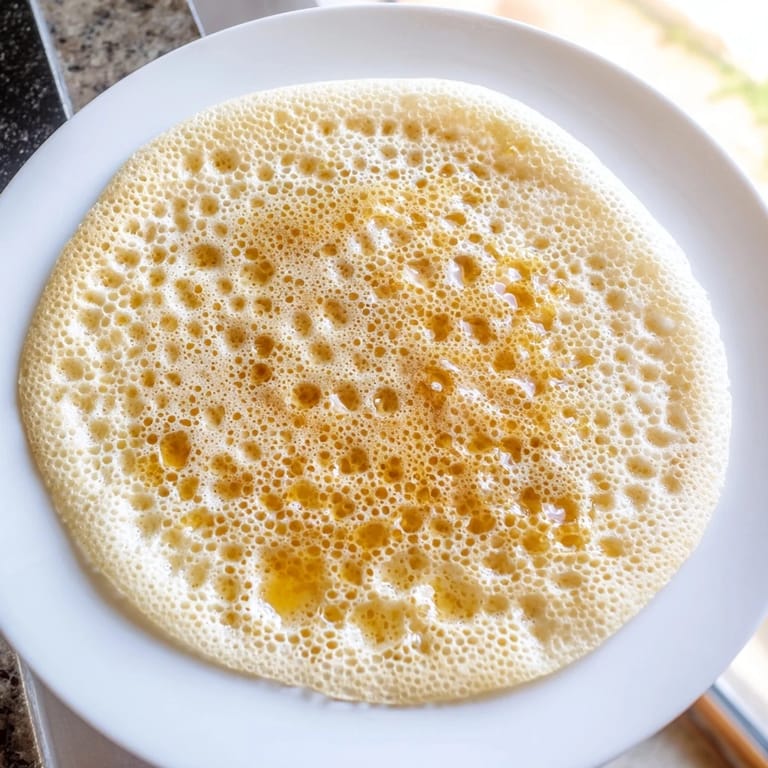
If your baghrir isn't forming holes, the batter is likely too thick or the yeast wasn't active. Make sure your water is warm, not hot, and give the batter the full resting time. If the crepes are sticking, your pan might not be hot enough or you may have accidentally greased it.
- Stir the batter gently before pouring each crepe, it settles as it sits.
- Use a ladle or measuring cup for consistent sizing and even cooking.
- Keep finished baghrir warm under a clean towel while you cook the rest of the batch.
 Pin it
 There's something deeply satisfying about watching those tiny craters form on their own, like the batter knows exactly what to do. Make this once, and it'll become part of your rotation, I promise.
Frequently Asked Questions
- → What gives Baghrir its honeycomb texture?
The texture comes from the batter's resting period and the yeast, which creates bubbles that form small holes during cooking without flipping.
- → Can I substitute semolina with another flour?
Using fine semolina is key to the characteristic texture, but a semolina-flour blend helps retain the light, spongy feel.
- → Why do I not flip Baghrir while cooking?
Baghrir is cooked on one side only to allow the top to dry and the honeycomb holes to form properly without disrupting the texture.
- → How should I adjust batter consistency if too thick?
Add small amounts of warm water after resting to achieve a smooth, pourable batter.
- → What is the best serving suggestion for Baghrir?
Serve warm with a drizzle of melted butter and honey, enhancing the crepe's soft texture and subtle flavors.