 Save
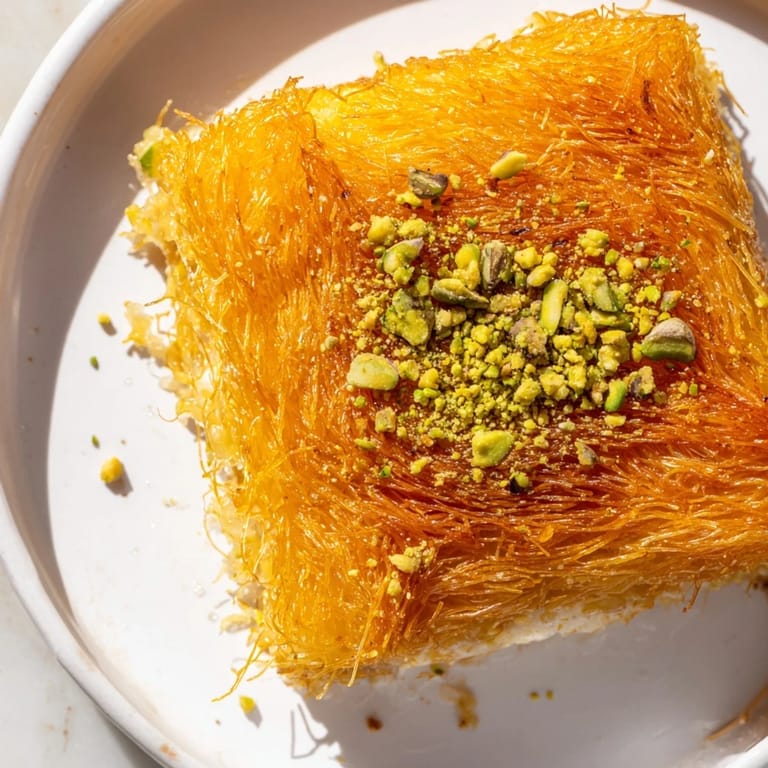
Save The first time I tasted knafeh was at my neighbor's kitchen table on a late afternoon, the aroma of orange blossom and caramelized butter drifting through open windows. She pulled it from the oven with such ceremony, the golden pastry crackling softly as she inverted it onto a plate, and I understood immediately why this dessert matters so much in Lebanese kitchens. There's something almost magical about watching that stretchy cheese emerge from beneath a crispy, honeyed shell. I spent the next hour watching her work, asking questions between bites, and she finally handed me her notes. Now whenever I make it, I feel like I'm continuing a conversation across her kitchen and mine.
I made this for the first time when my sister was visiting, and she walked into the kitchen just as I poured the syrup over the hot knafeh. The look on her face when she smelled it was unforgettable, and we barely let it cool before diving in. We sat there with tiny forks, breaking off pieces and passing them back and forth, debating whether to save some for later (we didn't). It became the thing she asked me to make every time she comes home.
Ingredients
- Akawi cheese (400 g): This is the heart of the dish, mild and perfect for stretching. If you can't find it, unsalted mozzarella works, though Akawi's delicate flavor is worth seeking out at Middle Eastern markets. The soaking is non-negotiable—it removes salt that would overwhelm the dessert.
- Ricotta cheese (200 g): This adds creaminess and helps balance the Akawi's texture, creating that ideal pulling consistency.
- Kataifi pastry (250 g): Those hair-thin shredded strands are what gives knafeh its signature crunch. Make sure to thaw it gently so the strands don't clump together.
- Unsalted butter (100 g), melted: This coats every strand and creates the golden, crispy exterior. Don't skip the melting step—cold butter won't coat evenly.
- Granulated sugar (250 g): Combined with water and lemon juice, this becomes a light syrup that soaks into the hot pastry without making it soggy.
- Water (180 ml): The base for your syrup, kept minimal so the honey flavors shine.
- Lemon juice (1 tbsp): A small amount balances the sweetness and keeps the syrup from tasting cloying.
- Orange blossom water (1 tbsp): This is what transforms the syrup into something unforgettable. Use a good quality version—it makes all the difference.
- Rose water (1 tbsp): A whisper of floral flavor that adds depth and sophistication to the syrup.
- Finely chopped pistachios (2 tbsp): The garnish that adds a subtle crunch and gorgeous color contrast against the golden pastry.
- Honey (1 tbsp, optional): A final drizzle that catches the light and adds richness if you want it.
Tired of Takeout? 🥡
Get 10 meals you can make faster than delivery arrives. Seriously.
One email. No spam. Unsubscribe anytime.
Instructions
- Preheat and prep your workspace:
- Set your oven to 180°C and gather all your tools. Having everything ready means you can work smoothly when the timing matters most.
- Soak and prepare the Akawi cheese:
- If using Akawi, soak it in fresh water for several hours or overnight, changing the water every hour. This removes the salt that would overwhelm the delicate dessert. Pat it dry and shred or slice it thinly. If using mozzarella, just pat it dry and shred it.
- Mix the cheese filling:
- Combine your shredded or sliced cheese with ricotta in a bowl and set it aside. Keep it cool while you prepare the pastry layer.
- Coat the kataifi with butter:
- Place the thawed kataifi in a large bowl, gently separating the strands with your fingers so they don't clump. Pour the melted butter over the top and toss gently, using two forks or your fingers to coat every strand evenly. This step determines your final crispiness.
- Build the base layer:
- Grease your 23 cm round baking dish well. Spread half the buttered kataifi evenly across the bottom, pressing gently to form a compact base that holds together.
- Add the cheese filling:
- Spread the cheese mixture evenly over the kataifi base, leaving a tiny border if you like. This is where the magic happens—the cheese will melt and create those beautiful stretchy strands.
- Top with the second layer:
- Add the remaining kataifi over the cheese, pressing gently so it holds together while still staying light and airy. You want crispy, not compressed.
- Bake until golden:
- Bake for 30 to 35 minutes until the top is deep golden brown and you can hear a slight crackling sound from the pastry. The aroma will be intoxicating.
- Make the syrup while it bakes:
- In a saucepan, combine sugar, water, and lemon juice. Bring to a boil, then lower the heat and simmer for 8 to 10 minutes until the syrup is slightly thickened but still pours easily. Remove from heat and stir in the orange blossom and rose water. Let it cool completely—the temperature difference matters.
- Invert and soak:
- Remove the knafeh from the oven and let it rest for just a minute so it's still hot but not unstable. Place a serving platter over the top and carefully invert it. The knafeh should release cleanly, revealing that gorgeous golden bottom.
- Pour the syrup immediately:
- Pour half the cooled syrup evenly over the hot knafeh, watching as it soaks into the pastry. The temperature contrast is what makes this work perfectly.
- Garnish and serve:
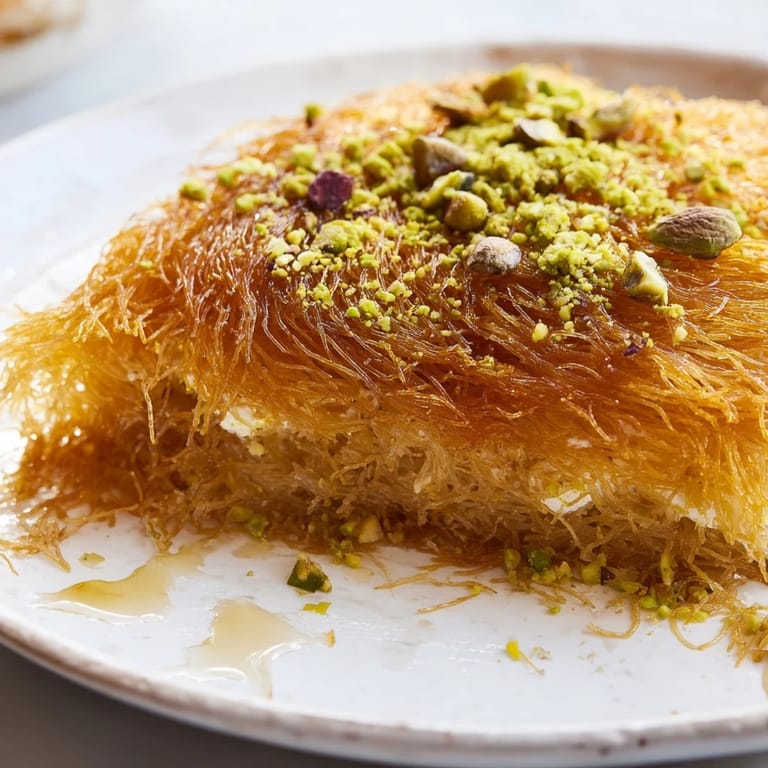
- Sprinkle the chopped pistachios over the top and drizzle with honey if you're using it. Serve warm, with extra syrup on the side for those who want more.
 Pin it
 There's a moment after you invert the knafeh and pour that first stream of syrup over it—the moment when the aromas combine and you realize you've just created something that tastes like celebration. It's in that small window of time that this dessert becomes more than ingredients; it becomes a gesture of generosity.
Why This Dessert Matters
Knafeh isn't just a dessert in Lebanese cooking; it's a statement. It shows up at weddings, at late-night gatherings, at moments when you want people to know you care. The technique is straightforward, but the impact is profound. Every layer serves a purpose, and when you understand why each element is there, the cooking becomes intentional rather than rote.
Mastering the Texture
The magic of knafeh lives in its contrasts—crispy against soft, sweet against floral, hot against cool syrup. Getting this balance right means respecting the timing at each stage. The kataifi needs enough butter to crisp but not so much that it becomes greasy. The syrup needs to be cool so it doesn't turn the pastry to mush when it hits the hot knafeh. The cheese needs to be the right temperature to stretch but not run everywhere. These details matter, and once you understand them, you can adjust the recipe to your own preferences.
Serving and Storage
Knafeh is meant to be eaten warm, within a few hours of baking if possible. The longer it sits, the softer the pastry becomes, which is still delicious but changes the experience. You can store leftovers loosely covered at room temperature for a day, or wrap and refrigerate for up to three days. To refresh it, warm it gently in a low oven. Pair it with Turkish coffee, strong black tea, or fresh mint tea—the bitter or herbal notes balance the sweetness beautifully.
- Make the syrup ahead of time; it keeps in the fridge for a week and actually improves as the flavors meld.
- If you prefer extra crunch, run the baked knafeh under the broiler for 1 to 2 minutes, watching carefully to avoid burning.
- Don't skip the cooling step for the syrup—it's what prevents the pastry from becoming soggy.
 Pin it
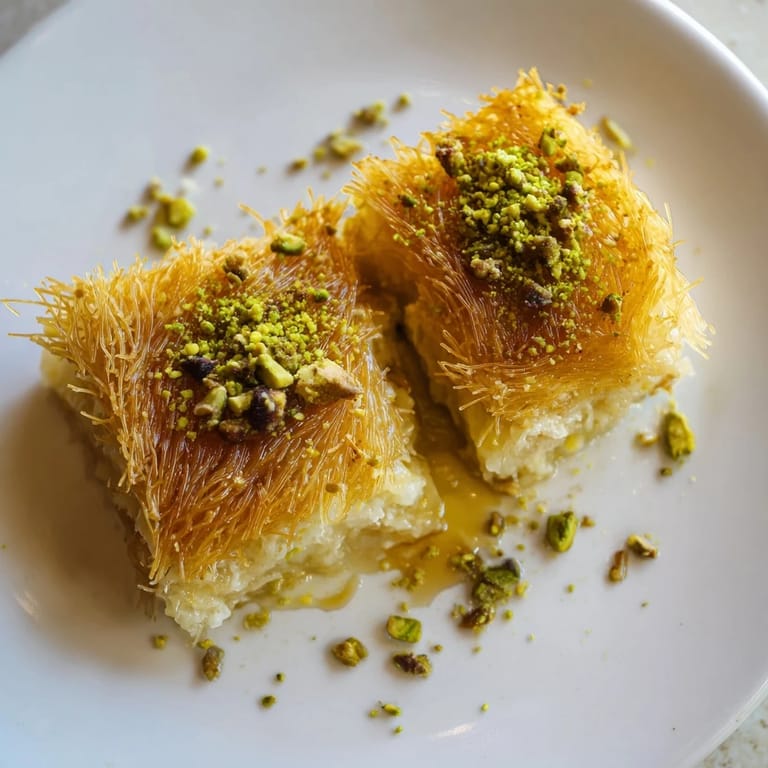
 Making knafeh teaches you something about patience and precision working together. Every time you pull it from the oven and hear that satisfying crackle, you're not just finishing a dessert—you're carrying forward a tradition and creating a moment worth remembering.
Frequently Asked Questions
- → What type of cheese is best for this dish?
Akawi cheese is traditional, but low-moisture mozzarella can be used as a substitute for a similar texture.
- → How is the shredded phyllo prepared?
The kataifi strands are gently separated and coated with melted butter to ensure crispiness when baked.
- → What flavors are used in the syrup?
The syrup is flavored with orange blossom water, rose water, and lemon juice for a fragrant, floral sweetness.
- → How do I achieve a crispier top layer?
After baking, broil the dish for 1–2 minutes to enhance the crunchiness of the kataifi topping.
- → Can this dish be served for special occasions?
Yes, its rich flavors and beautiful presentation make it ideal for celebrations and gatherings.
- → What are good beverage pairings?
Pairing with Turkish coffee or mint tea complements the dessert's rich and floral notes well.