 Save
Save The first time halloumi ever crossed my path was at a tiny neighborhood bistro where the owner insisted I try his grilling cheese.
I watched from the counter as he tossed thick slabs onto a hot plancha, the sizzle cutting through our conversation about his childhood in Cyprus. That golden crust arrived at my table steaming and impossibly squeaky between my teeth, and I spent the next three weeks hunting down halloumi at every market within driving distance.
I started making these bowls regularly during my first year of graduate school when I needed something substantial but refused to eat another sad desk dinner. My roommate would wander into the kitchen whenever she smelled searing cheese, and we ended up eating more bowls standing at the counter than we ever did at the actual table.
Ingredients
- 1 block halloumi cheese: This Cypriot cheese is built for high heat and keeps its shape when other cheeses would melt into oblivion
- 2 cups cooked white rice: A neutral base that lets the salty cheese and fresh vegetables shine without competing for attention
- 1/2 English cucumber: English cucumbers have thinner skins and fewer seeds, meaning less prep work and no bitter bites
- 1 cup cherry tomatoes: Mixed colors make the bowl feel like a celebration on a plate
- 1/4 small red onion: Thinly sliced so the bite is present but not overwhelming
- 1/4 cup Kalamata olives: These bring the briny Mediterranean soul that ties everything together
- 1 tablespoon fresh dill: Dill and halloumi are one of those matches that seems meant to be
- 1/2 cup prepared tzatziki sauce: The creamy cool element that balances the warm salty cheese
- 2 pita breads: Cut into wedges for scooping up every last bite
- 2 tablespoons olive oil: Helps achieve that gorgeous golden crust on the cheese
- Salt and black pepper: Because halloumi is naturally salty, taste before you season heavily
Tired of Takeout? 🥡
Get 10 meals you can make faster than delivery arrives. Seriously.
One email. No spam. Unsubscribe anytime.
Instructions
- Prep your vegetables:
- Thinly slice the cucumber and red onion, halve the cherry tomatoes, and pit the olives if they still have their stones. Set everything aside so you can focus on the halloumi when it hits the heat.
- Warm the pita:
- Give the pita bread a quick toast in a dry skillet or microwave until soft and pliable, then cut into wedges and keep them warm while you cook the cheese.
- Prep the halloumi:
- Slice the cheese into thick slabs about half an inch thick, then pat each slice completely dry with paper towels. This extra step is what keeps the cheese from sticking and helps develop that golden crust.
- Get the pan hot:
- Heat a large non stick or cast iron skillet over medium high heat, add the olive oil, and let it get hot but not smoking. The right temperature makes all the difference between golden and burnt.
- Sear the halloumi:
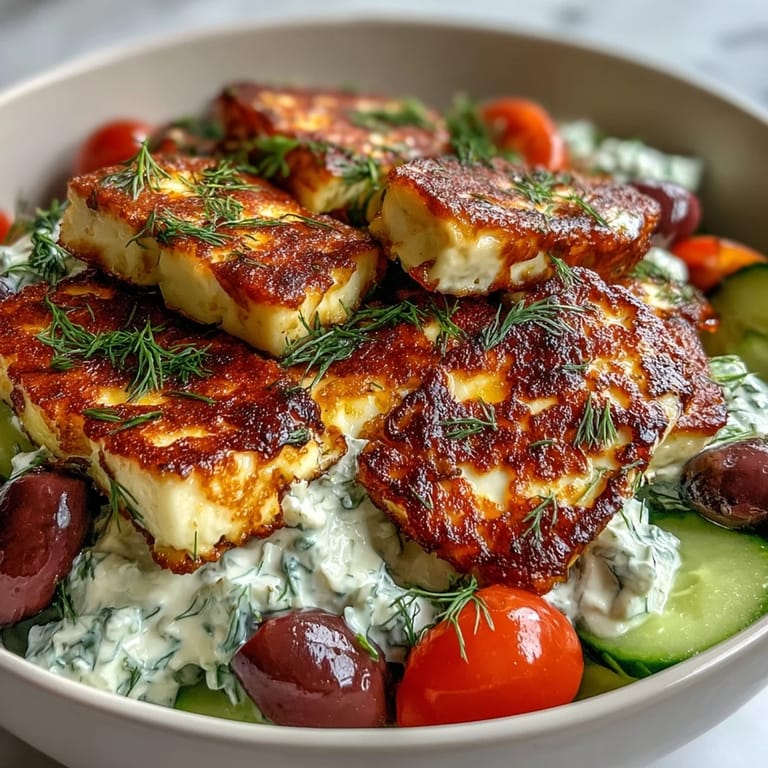
- Lay the halloumi in a single layer and cook undisturbed for 2 to 3 minutes until a deep golden brown crust forms. Resist the urge to peek or move the pieces around.
- Flip and finish:
- Carefully flip each slice and cook another 2 to 3 minutes until both sides are beautifully golden. Remove from the pan and set aside on a plate.
- Build your bowls:
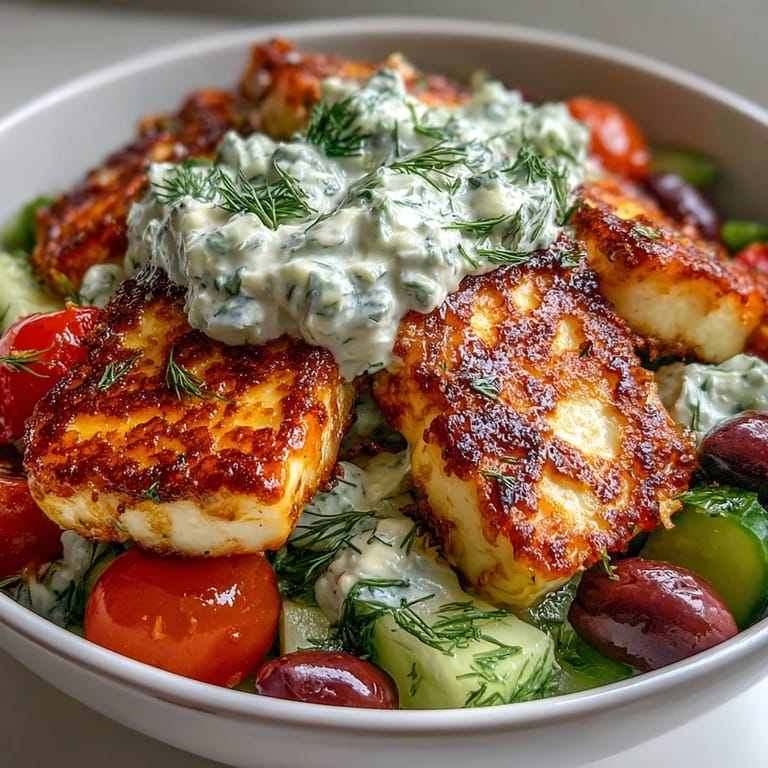
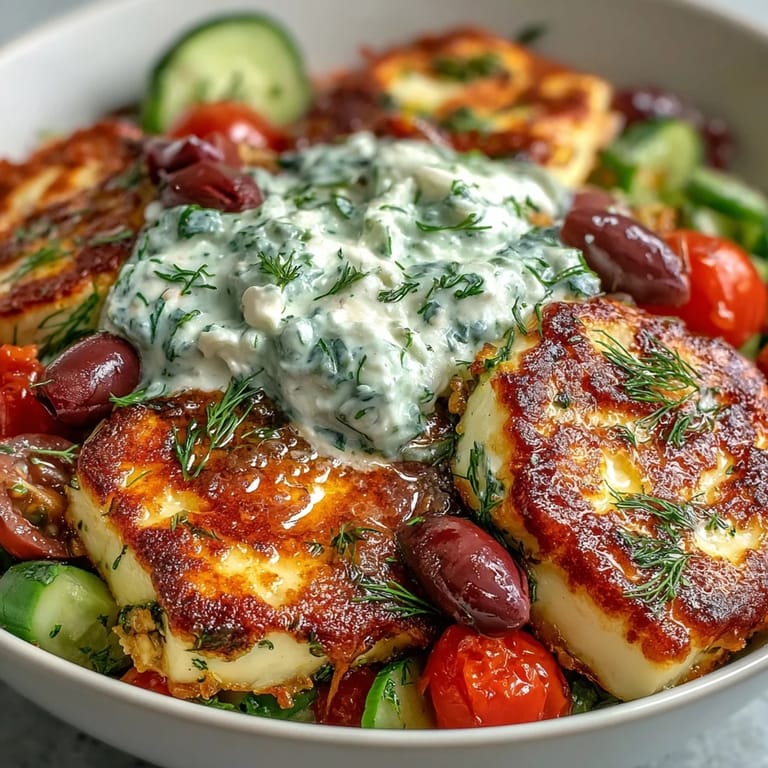
- Divide the rice between two large bowls, then arrange the seared halloumi, cucumber, tomatoes, red onion, and olives over the top in sections or scattered however looks beautiful to you.
- Add the finishing touches:
- Top each bowl with a generous dollop of tzatziki, scatter the fresh dill, and add a pinch of salt and pepper. Serve immediately with the warm pita wedges on the side.
 Pin it
 My mother in law still talks about the first time I made this for Sunday dinner, mostly because she had never seen her usually reserved husband get so excited about vegetables and cheese in a bowl. Now it is her requested meal whenever she visits, and I have learned to always keep an extra block of halloumi in the fridge.
Make Ahead Magic
The vegetables can be sliced and stored in the refrigerator up to a day ahead, but the halloumi is strictly a last minute affair. Serve it straight from the pan while the cheese is still warm and has that irresistible squeak.
Rice Alternatives
Brown rice, quinoa, or farro all work beautifully here and add different textures and nutrients to the bowl. Just make sure whatever grain you choose is fully cooked and fluffy before assembling.
Serving Suggestions
A squeeze of fresh lemon juice right before serving brightens everything and cuts through the richness. If you want to turn this into a heartier meal, add a handful of baby spinach or arugula to the base.
- Try crumbling some of the seared halloumi over the top for extra salty bites
- A drizzle of good olive oil right before serving adds luxurious depth
- Keep the tzatziki on the side so everyone can add their preferred amount
 Pin it
 There is something deeply satisfying about a meal that comes together this quickly but tastes like you spent all day thinking about it. Enjoy every warm salty bite.
Frequently Asked Questions
- → What makes halloumi different from other cheeses?
Halloumi has a high melting point, allowing it to hold its shape when heated and develop a golden crust while staying tender inside. This Cypriot cheese offers a satisfying salty-savory flavor that pairs perfectly with Mediterranean ingredients.
- → Can I prepare the components ahead of time?
Yes! The vegetables can be sliced and stored in the refrigerator up to a day in advance. Cook the rice beforehand and reheat when ready to serve. However, halloumi tastes best when freshly seared, so save that step for just before assembling.
- → What can I substitute for white rice?
Brown rice, quinoa, farro, or even bulgur work beautifully as whole-grain alternatives. For a lighter option, try cauliflower rice or serve the ingredients over mixed greens for a grain-free bowl.
- → How do I prevent halloumi from sticking to the pan?
Pat the halloumi slices thoroughly dry with paper towels before cooking and ensure your skillet is properly heated with enough olive oil. A well-seasoned cast iron or quality non-stick pan works best for achieving that perfect golden sear.
- → Is this bowl gluten-free?
As written, the pita bread contains gluten. To make it gluten-free, simply use gluten-free pita or omit the bread entirely. The halloumi and tzatziki are naturally gluten-free, though always check labels to confirm.
- → What other toppings could I add?
Consider adding baby spinach or arugula for extra freshness, roasted chickpeas for crunch, or grilled bell peppers. A drizzle of lemon juice or red wine vinegar brightens the flavors, while hummus makes an additional creamy layer.