 Save
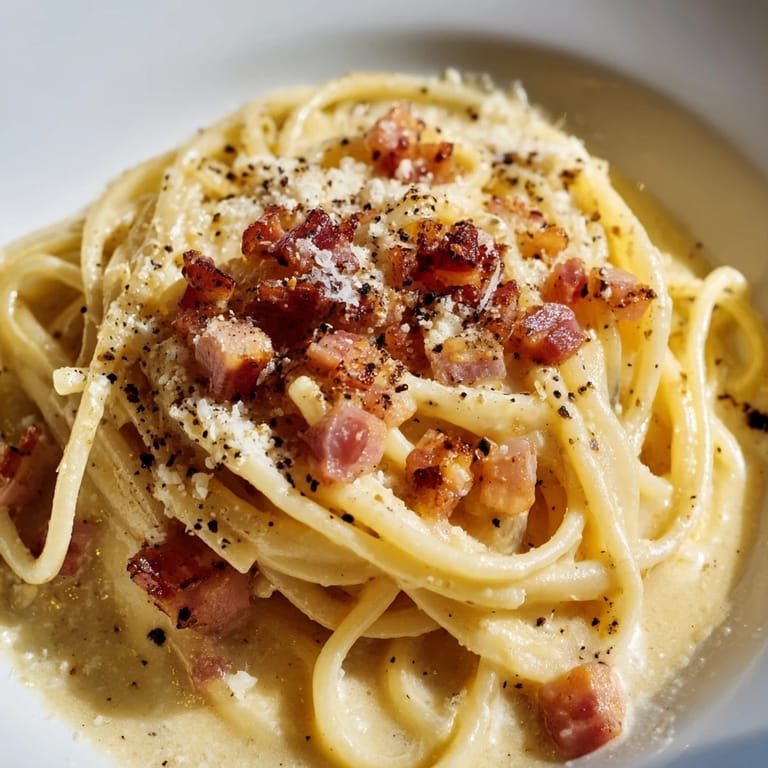
Save There's something almost magical about watching bacon fat transform into the base of a creamy sauce, especially when you're cooking on a weeknight with barely twenty minutes to spare. I discovered this version of carbonara during a phase when I was obsessed with the idea that restaurant-quality food couldn't happen in my kitchen, and then one evening, out of pure desperation and a craving for something rich, I threw together eggs, pasta water, and crispy bacon without overthinking it. The eggs never scrambled, the sauce came together like silk, and I realized I'd been overcomplicating Italian cooking all along. Now it's my go-to when someone's hungry and I'm short on time.
I made this for a friend who'd just moved into a tiny apartment with barely a functioning stove, and watching her face light up when she tasted it reminded me that the best meals aren't about complexity—they're about how they make you feel. She's made it probably fifty times since, and each time she texts me a photo with some variation I never thought of.
Ingredients
- 200 g dried spaghetti: Use a good quality pasta with some texture to it; the rougher surface grabs the sauce better than smooth pasta.
- 2 large eggs: These are your cream, so use room-temperature eggs if you can—they incorporate into a silkier sauce.
- 40 g freshly grated Parmesan: Grate it yourself and measure by weight if possible; pre-grated cheese has anti-caking agents that prevent the smooth sauce you're after.
- 1/4 tsp freshly ground black pepper: Grind it just before cooking so the flavor hits harder.
- 100 g bacon or pancetta, diced: Pancetta is traditional and slightly sweeter, but good bacon works wonderfully too—choose pieces with some meat on them, not just fat.
- Extra Parmesan and black pepper for serving: These aren't just garnish; they're part of the flavor equation.
Tired of Takeout? 🥡
Get 10 meals you can make faster than delivery arrives. Seriously.
One email. No spam. Unsubscribe anytime.
Instructions
- Boil the pasta:
- Bring a large pot of generously salted water to a rolling boil—it should taste like the sea. Cook the spaghetti until it's al dente, then scoop out about 80 ml of the starchy water before draining; this liquid is the secret ingredient that transforms eggs into sauce.
- Make the egg mixture:
- While the pasta cooks, whisk together the room-temperature eggs, grated Parmesan, and freshly ground black pepper in a bowl until completely combined. Don't rush this—you want it smooth and uniform.
- Render the bacon:
- In a large skillet over medium heat, cook the diced bacon until the edges are crispy and the fat is golden, about three to four minutes. The bacon should smell incredible at this point; that's your signal to move forward.
- Bring it together:
- Remove the skillet from heat, add the drained pasta to the bacon, and immediately pour in the egg mixture. Toss constantly and vigorously, adding pasta water one splash at a time as you go—this is the choreography that prevents scrambling and creates silk instead. Stop when the pasta is coated in a creamy sauce that clings to each strand.
- Serve right now:
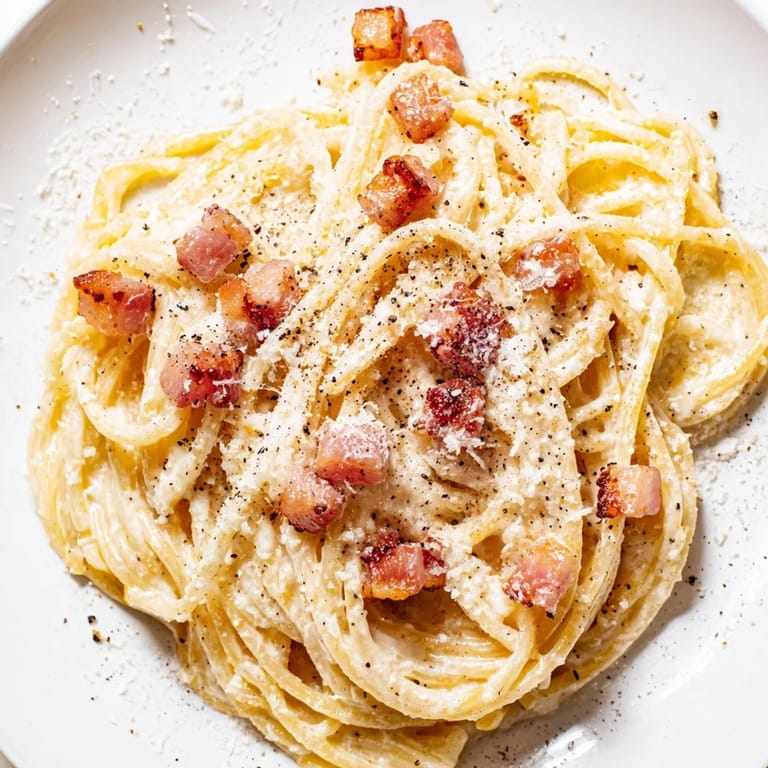
- Plate immediately into warm bowls and finish with a generous handful of Parmesan and a crack of fresh black pepper. Carbonara waits for no one.
 Pin it
 The first time I made this for my partner, he asked if I'd somehow snuck cream into the dish, and I'll never forget the moment I got to reveal that the magic was just eggs and pasta starch. It became the meal I'd make whenever we both had a rough day and needed comfort that didn't require effort.
Why This Works So Fast
Carbonara is efficient because every ingredient pulls double duty: the bacon cooks while the pasta boils, the pasta water serves as both a cooking liquid and a flavor anchor, and the eggs become sauce instead of needing to build one separately. There's no long simmer, no cream reduction, no waiting around—just quick, decisive movements that add up to something elegant.
The Authenticity Question
Roman cooks would recognize this recipe immediately, though they might use different proportions or add a pinch of guanciale instead of bacon. What matters is understanding the technique: emulsifying eggs with starchy water to create something creamy without cream, letting good ingredients shine without fuss, and respecting the speed of it. Perfection here lives in simplicity, not in following rules about which village made it first.
Variations and Timing
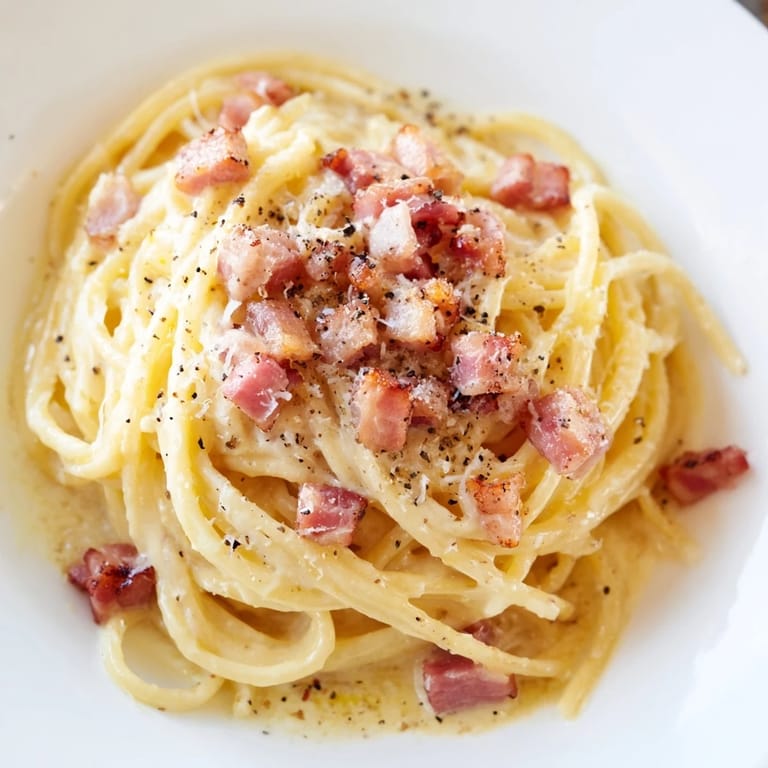
Once you understand how this works, you can adapt it slightly without breaking the fundamentals. Some people add a minch of minced garlic to the bacon, though remove it before tossing so it doesn't burn. Others swap Pecorino Romano in place of Parmesan for a sharper, more authentically Roman bite. The structure stays the same: bacon for salt and smoke, eggs for creaminess, Parmesan for umami, and pasta water for binding it all together into something greater than its parts.
- Add a clove of minced garlic to the bacon as it cooks, then fish it out before the pasta goes in.
- Switch to Pecorino Romano if you want a sharper, saltier version that tastes more like Rome.
- If you're nervous about the eggs, whisk in a splash of pasta water while you're mixing them to give yourself more margin for error.
 Pin it
 This is the kind of recipe that becomes a secret weapon in your cooking life, the one you reach for when you want to feel capable in the kitchen without spending hours there. Make it once and you'll understand why it's endured for generations.
Frequently Asked Questions
- → How do I avoid scrambling the eggs in the sauce?
Remove the skillet from heat before mixing in the egg mixture and toss quickly while adding reserved pasta water gradually to create a silky sauce.
- → Can I substitute bacon with another meat?
Pancetta is a great alternative offering similar flavor and texture for this dish.
- → What type of cheese works best here?
Freshly grated Parmesan is traditional, but Pecorino Romano can be used for a sharper taste.
- → Why is reserved pasta water added to the sauce?
It helps loosen the sauce and creates a creamy, silky texture that clings to the pasta.
- → Can I add garlic for extra flavor?
Yes, adding minced garlic while frying bacon enhances depth, just remove it before mixing the pasta.