 Save
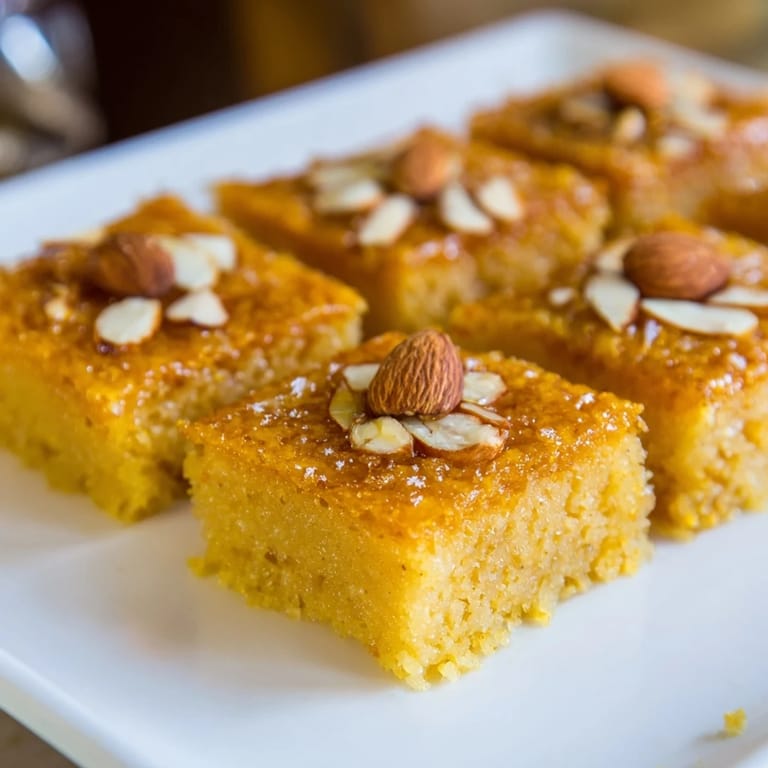
Save My first basbousa came from watching my neighbor pull a golden square from her oven, steam rising with the smell of toasted coconut and butter. She cut it carefully along scored lines and poured syrup that pooled into every crevice, creating this miraculous moistness that no cake I'd made before could achieve. That moment—seeing how syrup transforms dry semolina into something tender and alive—changed how I thought about Middle Eastern sweets. Now when I make it, I chase that exact memory of golden edges and that first bite where syrup and coconut meet.
I made this for my sister's book club once, nervous because it felt too simple, too humble. But watching everyone go quiet after the first bite, then reaching for seconds without asking—that's when I understood why this dessert has survived centuries. It's not showing off; it's the kind of quiet excellence that belongs on every table.
Ingredients
- Fine semolina: The backbone here—use the fine variety, not coarse, or you'll get a gritty texture instead of tender crumb.
- Desiccated coconut, unsweetened: This is essential; sweetened coconut makes the cake cloyingly sweet and masks the nutty flavor.
- Plain yogurt: Brings moisture and a subtle tang that balances the sweetness.
- Melted butter or ghee: Ghee adds deeper flavor, but butter works beautifully if that's what you have.
- Whole blanched almonds: Each one becomes a golden anchor point and adds elegance without effort.
- Rose or orange blossom water: Optional but worth seeking out—one teaspoon transforms the syrup from good to transportive.
Tired of Takeout? 🥡
Get 10 meals you can make faster than delivery arrives. Seriously.
One email. No spam. Unsubscribe anytime.
Instructions
- Mix the dry base:
- Combine semolina, sugar, coconut, baking powder, and salt in a large bowl. The mixture should smell toasted and nutty, which means your coconut is fresh.
- Add the wet ingredients:
- Pour in yogurt, melted butter, and vanilla, then stir until you have a thick, cohesive batter that holds together like wet sand. This is the moment the dry semolina drinks in moisture and begins its transformation.
- Spread and score:
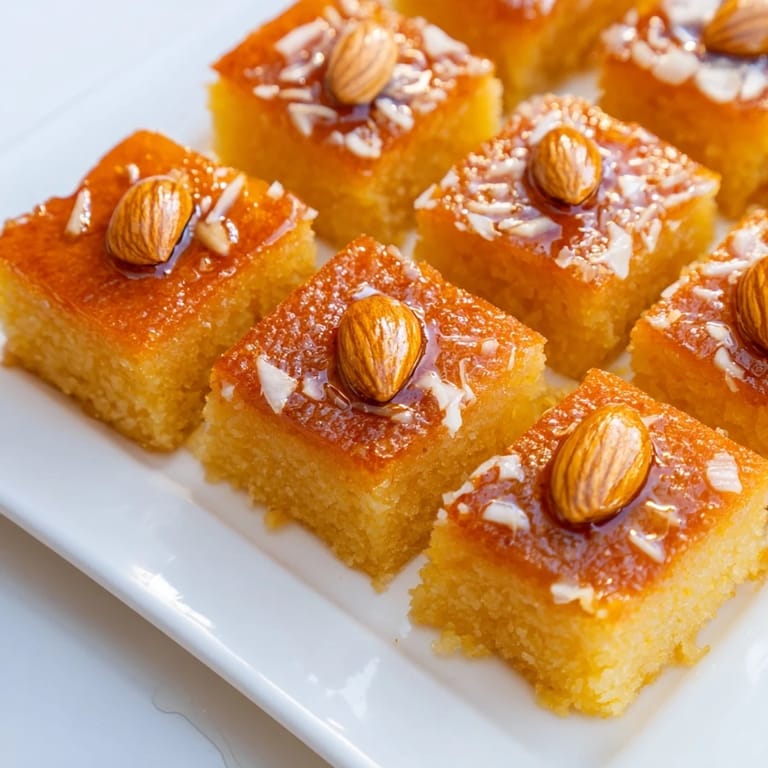
- Press the batter firmly and evenly into your greased pan—use your fingers or the back of a spatula to smooth it level. With a sharp knife, score deeply into 12 squares or diamonds, then place one almond in the center of each piece as your guide.
- Bake until golden:
- Bake at 350°F for 30–35 minutes until the top is deep golden brown and a toothpick comes out clean. You want the edges to be slightly darker—that's where the magic happens.
- Make the syrup while baking:
- In a saucepan, combine sugar, water, and lemon juice. Bring to a boil, then lower heat and simmer for 8–10 minutes until it coats the back of a spoon lightly. Remove from heat, stir in rose or orange blossom water if using, and let it cool to warm, not hot.
- The crucial syrup pour:
- The moment basbousa comes out of the oven, immediately pour the warm syrup evenly over the hot cake. You'll hear it sizzle slightly as the cake drinks it in—this is the entire point.
- Cool, cut, and serve:
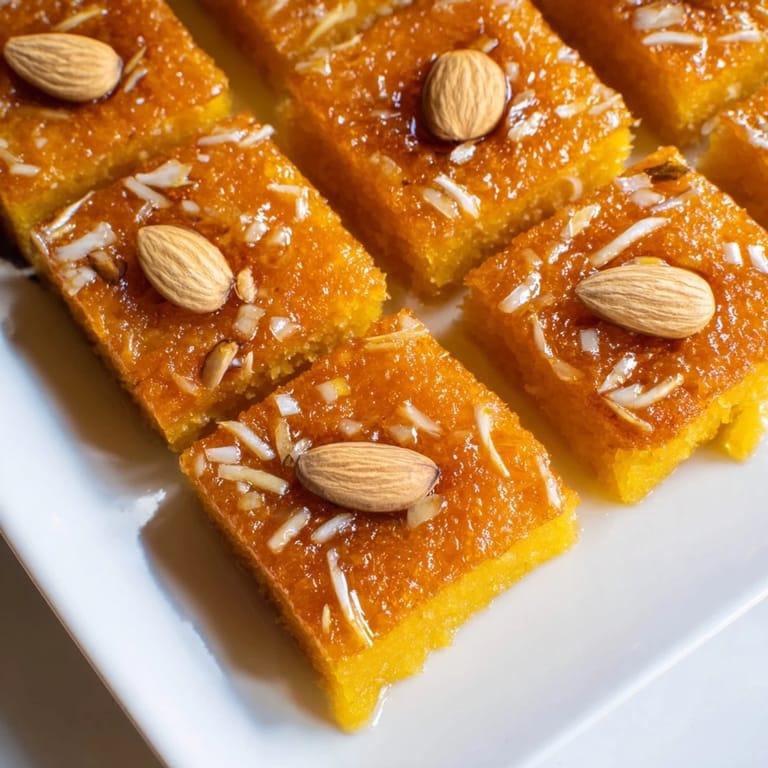
- Let the cake cool completely, then re-cut along your scored lines and serve. Each piece will be tender, moist, and glistening.
 Pin it
 My grandmother used to say basbousa is proof that simplicity isn't laziness—it's confidence. Every time I make it now, I think about that, about how the fewest ingredients done right can create something that tastes like celebration.
Why Coconut Matters Here
Coconut isn't just flavoring in basbousa; it's the structure and the soul. It absorbs the syrup differently than flour would, creating pockets that hold moisture while keeping the crumb tender rather than gummy. This is why desiccated coconut specifically works—it's already concentrated, with most of the moisture removed, so it acts like a flavor amplifier that soaks up syrup without becoming soggy.
The Syrup Strategy
The real revelation comes when you understand that basbousa is a vehicle for syrup, not a side dish to it. The warm cake has tiny spaces created by the baking process—those spaces are waiting, and when syrup hits them, it fills everything evenly. This is why temperature matters so much; cold cake won't absorb syrup the same way, and oversweetened syrup defeats the purpose. You want enough sweetness to penetrate and preserve, but not so much that it overwhelms the toasted coconut and yogurt notes underneath.
Serving and Storage
Basbousa tastes best with strong, hot tea or coffee that cuts through the sweetness without apology. It keeps for three days at room temperature in an airtight container, and actually improves slightly as the syrup continues to distribute. Some people refrigerate it, but I find room temperature brings out the coconut's warmth more.
- Serve each piece with a small spoon or fork—it's rich and meant to be savored slowly.
- If you want extra coconut flavor, toast a handful of desiccated coconut in a dry pan until golden and sprinkle it on top before serving.
- Leftover basbousa can be gently reheated in a 250°F oven for 5 minutes if you want that just-made tenderness back.
 Pin it
 Basbousa teaches you that the best recipes aren't complicated—they're just honest, made with ingredients that respect each other and time to do their work. Make this once and you'll understand why it's been made the same way for generations.
Frequently Asked Questions
- → What type of semolina is best for this dish?
Fine semolina delivers a tender and moist texture ideal for this cake. Coarser grinds may result in a grainy finish.
- → Can I use alternatives to almonds for garnish?
Yes, pistachios or hazelnuts make excellent substitutes and add a different nutty flavor and crunch.
- → How important is the syrup soaking step?
The syrup infusion ensures the cake stays moist and sweet, balancing the dense texture of semolina with fragrant notes.
- → Is it possible to enhance the coconut flavor?
Sprinkling extra desiccated coconut on top before baking intensifies the coconut aroma and texture.
- → What beverage pairs best with this dessert?
Traditional pairings include mint tea or strong Turkish coffee, which complement the cake's sweetness.