 Save
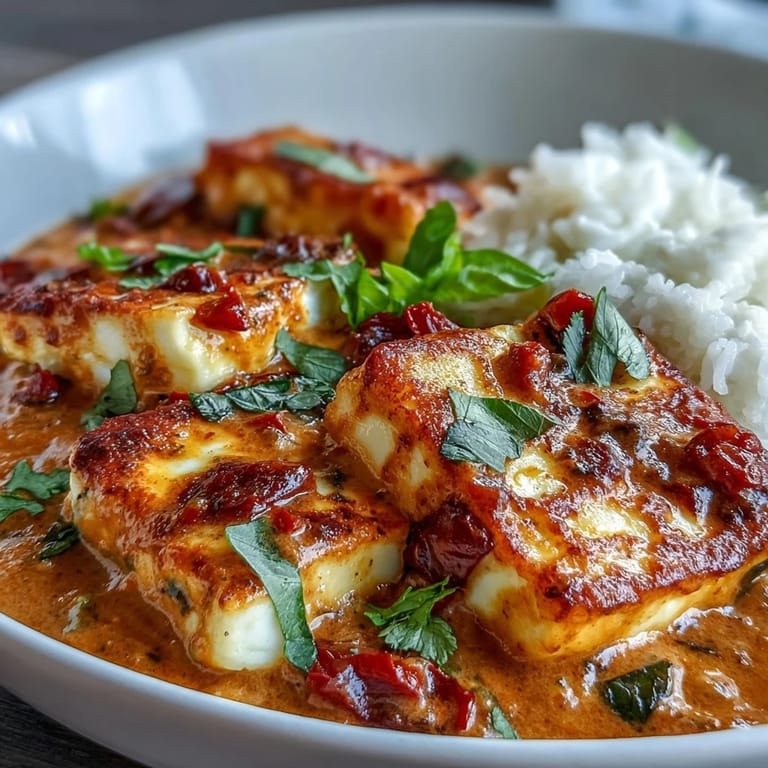
Save My neighbor brought over halloumi one evening, still warm from the Mediterranean market, and casually mentioned she'd been craving curry but wanted something gentle enough for her kids. I had coconut milk in the pantry and a handful of spices that seemed to call for each other, so we improvised together in her kitchen while her children played in the next room. That spontaneous experiment turned into this creamy halloumi and tomato curry, a dish that somehow feels both exotic and comforting, proof that the best recipes often emerge from working with what you have rather than following a plan.
I made this for a dinner party last month when a friend mentioned she'd turned vegetarian, and I wanted to prove that plant-based cooking could be just as satisfying as anything else. Watching everyone reach for seconds, their plates gleaming with that silky sauce, felt like the best kind of vindication. One guest asked if the halloumi was paneer and seemed genuinely surprised when I said no, which somehow made the whole evening feel like a small triumph.
Ingredients
- Halloumi cheese, 400 g, cut into 2 cm cubes: This squeaky, high-melting-point cheese is the star because it fries to golden perfection without collapsing into the sauce, holding up beautifully through the simmer.
- Medium onion, finely chopped: The aromatic foundation that builds sweetness as it softens, creating depth before the spices arrive.
- Garlic, 2 cloves, minced: Fresh garlic matters here more than dried; the sharpness cuts through the richness and keeps the curry from feeling one-dimensional.
- Fresh ginger, 2 cm piece, grated: Ginger adds warmth and a subtle bite that makes the coconut milk feel more sophisticated.
- Red bell pepper, 1, diced: The sweetness balances the spices and adds natural color without needing anything artificial.
- Canned chopped tomatoes, 400 g: Canned works better here than fresh because the cooking process breaks them down into a smooth sauce base.
- Garam masala, 1 tbsp: This warm spice blend is the backbone; it's what makes the curry taste like curry rather than just tomato sauce with spices.
- Ground cumin, 1 tsp: Cumin adds earthiness that keeps the dish from tasting too sweet.
- Ground coriander, 1 tsp: This subtle spice rounds out the other flavors and adds a delicate floral note.
- Turmeric, ½ tsp: Beyond color, turmeric brings a warm, slightly bitter undertone that balances the coconut.
- Chili powder, ½ tsp: Adjust this to your heat preference; it's really about your family's tolerance rather than tradition.
- Paprika, ½ tsp: This adds depth and a touch of smokiness without heat.
- Coconut milk, 200 ml, full fat recommended: Full fat creates that silky, restaurant-quality sauce; light coconut milk makes the curry taste thin and one-note.
- Tomato paste, 2 tbsp: Tomato paste concentrates the tomato flavor and adds body to the sauce.
- Vegetable oil, 1 tbsp: Just enough to get the halloumi golden without making the finished dish greasy.
- Fresh cilantro leaves, chopped: The final brightness that wakes up all the spices and makes you want another spoonful.
- Lemon wedges: A squeeze of lemon at the table lets everyone adjust the brightness to their taste.
Tired of Takeout? 🥡
Get 10 meals you can make faster than delivery arrives. Seriously.
One email. No spam. Unsubscribe anytime.
Instructions
- Get the halloumi golden:
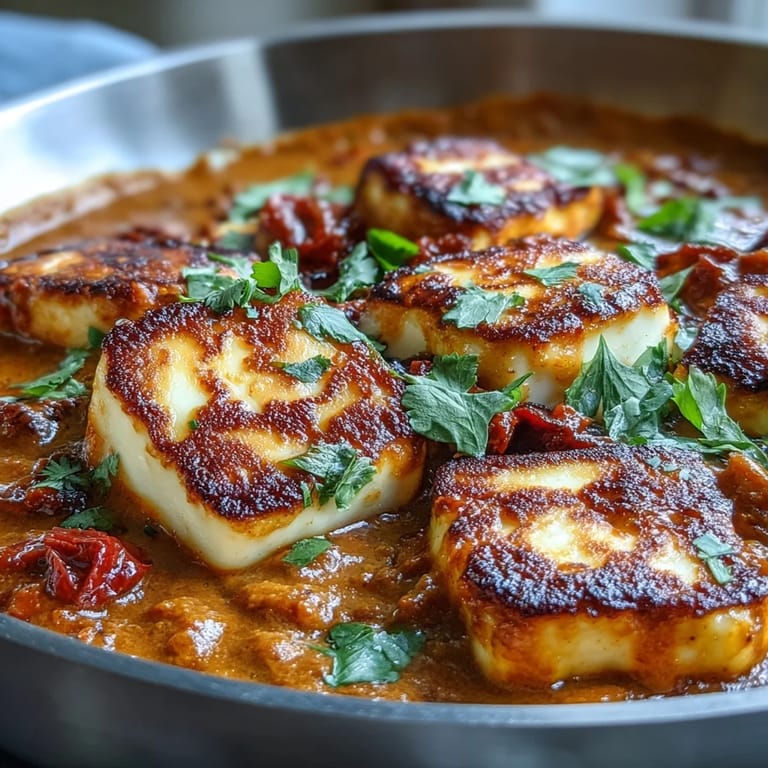
- Heat the oil in a large nonstick skillet over medium-high heat and add the halloumi cubes, letting them sit undisturbed for about 2 minutes so they develop that gorgeous golden crust. Flip each piece carefully and fry for another minute or two until both sides are golden, then move them to a plate; this step is crucial because you're building texture and flavor that will anchor the whole dish.
- Build the aromatic base:
- Reduce the heat to medium, add the chopped onion to the same pan, and let it soften for 3 to 4 minutes until it turns translucent and sweet. You'll know it's ready when the raw bite disappears and the kitchen smells like caramelizing onions.
- Add depth with ginger and garlic:
- Stir in the minced garlic, grated ginger, and diced red pepper, cooking for another 2 to 3 minutes until the aromatics bloom and the pepper begins to soften. This is when the kitchen transforms into something that smells undeniably like Indian cooking.
- Awaken the spices:
- Add the tomato paste and all the spices at once, stirring constantly for about 1 minute so they toast slightly in the warm oil and release their essential oils. Don't skip this step or rush it; this is where the magic begins, where individual spices become a cohesive curry flavor.
- Create the silky sauce:
- Pour in the canned tomatoes and coconut milk, stirring until everything combines smoothly, then season with salt and black pepper. Let it simmer gently for 8 to 10 minutes, stirring occasionally, so the sauce thickens and the flavors meld together into something rich and balanced.
- Bring the halloumi back in:
- Return the golden halloumi cubes to the pan and let them simmer gently for another 5 minutes so they absorb the curry flavors and soften slightly without falling apart. You'll notice the cheese becoming subtly infused with the spice and coconut.
- Finish and serve:
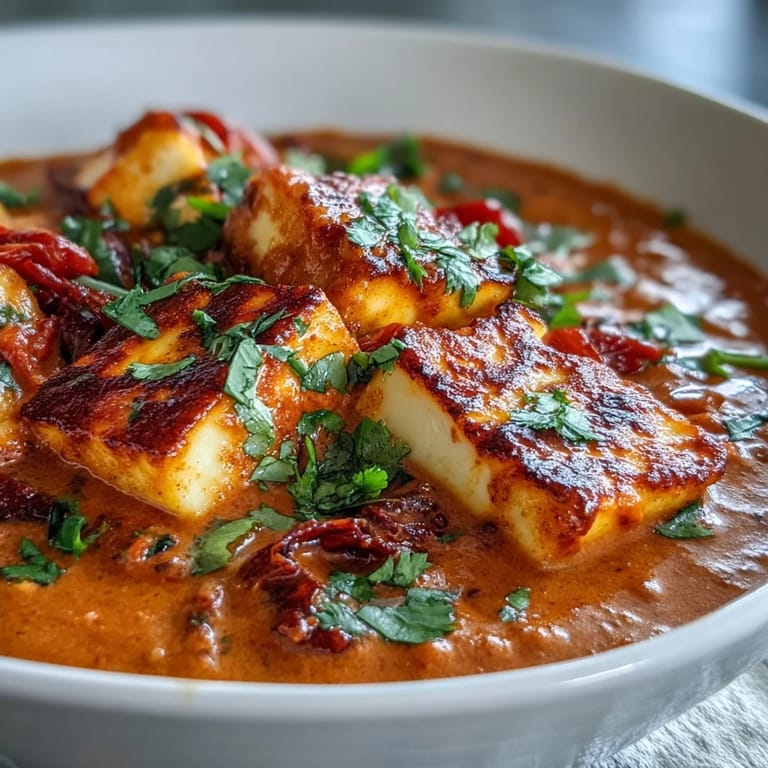
- Taste the curry and adjust the salt, spice level, or brightness with lemon juice if needed, then ladle it into bowls and shower it with fresh cilantro. Serve alongside steamed basmati rice or warm naan so everyone can soak up every drop of that silky sauce.
 Pin it
 This curry became my go-to dish for dinner parties and busy weeknights because it proves that vegetarian cooking doesn't require fancy techniques or hard-to-find ingredients, just thoughtful combinations and willingness to taste as you go. There's something deeply satisfying about serving a bowl of golden halloumi in a creamy sauce and watching everyone's face light up.
Why Halloumi Works in Curry
Halloumi's high melting point makes it uniquely suited to curry in ways that softer cheeses simply cannot match. When paneer softens in heat, halloumi stays structured, giving you that semi-firm bite that mirrors the paneer experience without requiring a specialty ingredient hunt. The cheese has a subtle salty quality that plays beautifully against the coconut sweetness, creating balance rather than competing flavors.
Serving Suggestions That Transform the Meal
Steamed basmati rice is the obvious pairing, but don't stop there because the curry is versatile enough for several accompaniments. Warm naan bread transforms the dish into something you eat with your hands, which changes the whole experience and makes it feel more casual and intimate. Some evenings I serve it over cauliflower rice for something lighter, and other times with thick yogurt on the side so people can cool down the spices as they eat.
Making This Curry Your Own
This recipe is genuinely forgiving because the base flavors are strong enough to handle variations without falling apart. I've made it spicier by adding fresh green chilies with the aromatics, creamier by using more coconut milk, and even heartier by stirring in spinach or chickpeas during the final simmer. The beauty of a curry is that it welcomes improvisation as long as you taste frequently and adjust salt and spice as you go.
- Add fresh green chili with the ginger and garlic if your family enjoys more heat.
- Swap paneer for halloumi if you want a more traditional Indian flavor or can't find halloumi locally.
- Use light coconut milk and reduce the oil if you prefer a lighter version that still tastes rich.
 Pin it
 This curry reminds me that the most memorable meals often come from improvisation rather than perfection, and that feeding people something delicious and unfamiliar is its own kind of gift. Make it once and it becomes a trusted recipe you'll return to again and again.
Frequently Asked Questions
- → Can I use paneer instead of halloumi?
Yes, paneer is an excellent substitute and provides a more traditional Indian curry experience. It has a softer texture and absorbs the sauce beautifully. Fry it the same way until golden.
- → How can I make this curry spicier?
Add a chopped green chili with the aromatics, increase the chili powder to 1 teaspoon, or stir in a pinch of cayenne pepper. You can also add red pepper flakes while the sauce simmers.
- → Can I prepare this dish ahead of time?
Yes, prepare the curry up to 2 days ahead and refrigerate. The flavors deepen over time. Reheat gently on the stovetop, adding a splash of coconut milk if needed to restore the creamy consistency.
- → What can I serve with this curry?
Steamed basmati rice is traditional and soaks up the sauce perfectly. Warm naan bread, roti, or cauliflower rice for a low-carb option all work wonderfully. Add a side of cucumber raita to balance the richness.
- → Why is my halloumi rubbery?
Overcooking makes halloumi tough and rubbery. Fry it just until golden (2-3 minutes per side), then add it back to the sauce only for the final 5 minutes of simmering to warm through and absorb flavors.
- → Can I freeze halloumi curry?
Halloumi can become slightly grainy when frozen, but the dish is still enjoyable. Freeze in airtight containers for up to 2 months. Thaw overnight in the refrigerator and reheat gently, stirring to restore texture.