 Save
Save I'll never forget the first time I attempted a black and white appetizer platter—it was for my sister's engagement party, and I was convinced that true elegance meant mathematical precision on a plate. Standing in my kitchen at midnight, arranging olives and mozzarella like chess pieces, I realized that sophistication isn't about complexity; it's about confidence in simplicity. This stunning visual arrangement became my signature move, the one dish guests always asked about first.
I remember my friend Sarah's face when she saw this platter at our dinner party—she literally gasped. She said it looked too beautiful to eat, then immediately grabbed three pieces of the olive and mozzarella combination. That's when I knew this wasn't just food; it was an experience that started before the first bite.
Ingredients
- Pitted black olives (Kalamata or Niçoise), 100 g: These are your flavor anchors—briny, sophisticated, and they provide that critical dark visual weight. Kalamata olives are meatier and more forgiving if you're arranging ahead; Niçoise olives are smaller and more delicate if you want a refined look
- Fresh mozzarella balls (bocconcini or ciliegine), 200 g: These must be drained well on paper towels before arranging or they'll weep and ruin your pristine presentation. They're the creamy counterpoint that makes this work
- Dark rye bread, 8 slices: This is your textural anchor and the base of your geometric game. Dark rye has enough structure to hold toppings and enough flavor to stand up to the other elements
- Fresh mozzarella (one large ball, sliced), 8 thin slices: Different from the balls—these create flowing lines and can be draped or fanned for dramatic effect
- Black sesame seeds, 1 tablespoon: These add texture and underscore the black-and-white theme without overwhelming delicate mozzarella
- White sesame seeds, 1 tablespoon: The textural contrast that makes rye bread visually pop and adds a subtle nutty bite
- Blanched almonds, 16 pieces: These are your minimalist accent notes—place them like punctuation marks for a refined touch
- Black mission figs, 8 halved (optional): If you want to add a whisper of sweetness and another layer of visual depth, these are your secret weapon. Skip them if you're serving before dinner when you want purely savory
- Vanilla bean, seeds scraped, 1 pod: This is the detail that makes people pause and ask what that is. It's entirely optional, but it transforms this from appetizer to experience
- Extra virgin olive oil, 2 tablespoons: Use something you'd actually drink—this is a finishing ingredient, not a hidden one
- Flaky sea salt, to taste: The seasoning that brings everything into focus. Don't use table salt; it looks wrong and tastes harsh
- Freshly cracked black pepper (optional): A whisper if you add it at all—this is about visual drama, not spice
Tired of Takeout? 🥡
Get 10 meals you can make faster than delivery arrives. Seriously.
One email. No spam. Unsubscribe anytime.
Instructions
- Prepare Your Canvas:
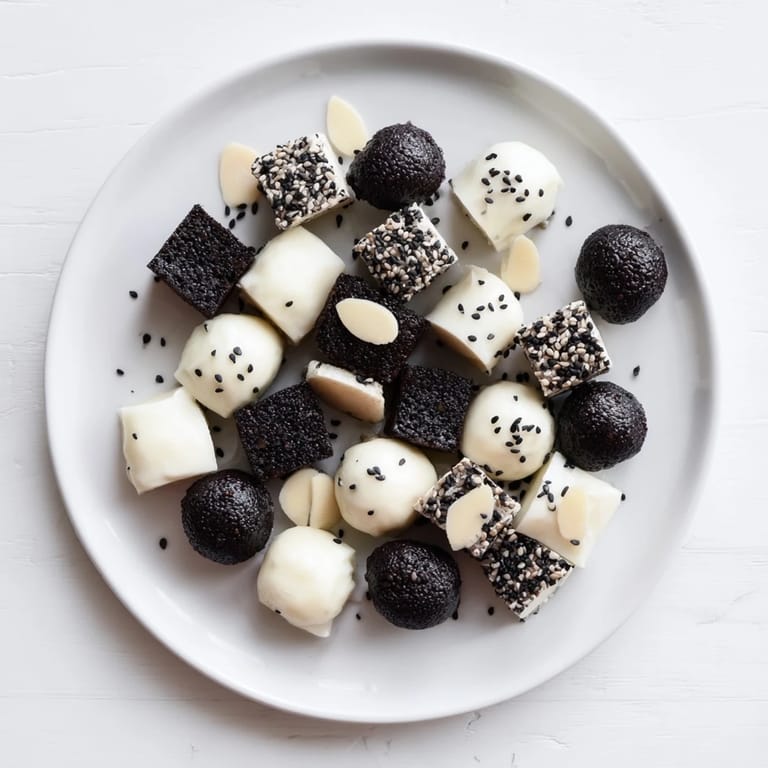
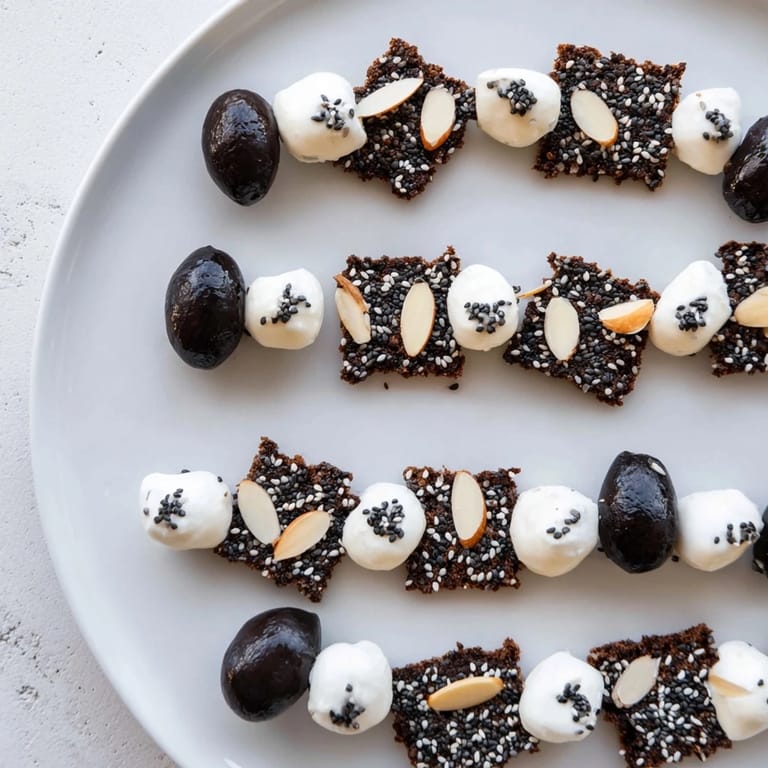
- Cut your dark rye bread into geometric shapes—squares, triangles, or rectangles—whatever feels intentional. Arrange them in a pattern on your platter. I like alternating rows or a staggered checkerboard effect. This is where you set the visual tone, so take a moment to step back and see what's working
- Create the Color Drama:
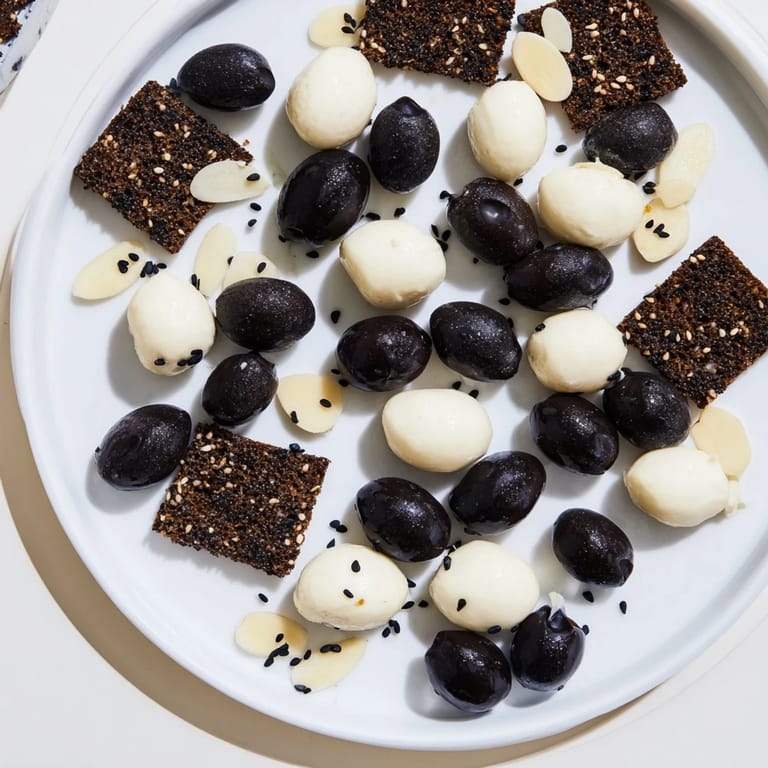
- Place black olives and fresh mozzarella balls in alternating lines or concentric circles on and around your bread foundation. This is the moment it starts looking like something worth photographing. The key is repetition and rhythm—let your eyes guide you toward balance
- Add the Sliced Mozzarella:
- Arrange your thin mozzarella slices in geometric shapes—fans, overlapping rows, or simple straight lines. These creamy white planes become the visual focus, so position them where they catch light
- Build the Texture:
- Sprinkle black sesame seeds over white mozzarella and white sesame seeds over dark rye. Use a light hand—these are accents, not coverage. You're adding visual texture and a subtle crunch that guests will be delighted to discover
- Introduce the Sweetness (If You Dare):
- If you're using black mission figs, halve them and place them strategically where they'll catch the eye. They add a touch of unexpected sweetness and another layer of sophistication
- Place Your Almonds:
- Position blanched almonds in minimalist clusters or single lines—think of them as punctuation marks rather than ingredients. They should feel intentional, not scattered
- The Finishing Oil:
- Drizzle your best extra virgin olive oil in artistic lines across the platter. This isn't about coverage; it's about shine and flavor. The oil brings everything into focus and adds that restaurant-quality sheen
- The Vanilla Moment:
- Using a small knife or the back of a spoon, gently scrape vanilla bean seeds from the pod and dot them artfully across mozzarella slices. This is entirely optional, but it adds an aromatic elegance that lingers on the palate and shows your guests you care about details
- Season and Serve:
- Finish with flaky sea salt scattered lightly across the platter and the faintest suggestion of black pepper if you wish. Serve immediately to maintain the crispness of your rye bread, or cover and refrigerate for up to an hour. The platter actually improves slightly as flavors meld, though it should be eaten within a few hours for best presentation
 Pin it
 There's a moment, right when you finish arranging everything, where you step back and see the whole platter come together—the geometric patterns, the interplay of black and white, the subtle gleam of olive oil catching light. That's when you realize you've created something that's as much about beauty as it is about flavor. That moment is worth every carefully placed olive.
The Art of Geometric Thinking
The magic of this platter isn't in the ingredients—it's in the arrangement. Before you start placing anything, take a moment to actually visualize the pattern. Are you going for a checkerboard, concentric circles, alternating lines, or something more abstract? The pattern you choose becomes the framework that makes your guests perceive this as intentional luxury rather than just cheese and bread. I've found that simpler patterns actually look more sophisticated; resist the urge to fill every space. Negative space—the bare platter showing through—is your friend.
When to Add Personal Flourishes
The vanilla bean is optional, but it's where this recipe becomes yours. Some cooks skip it entirely for a purely savory experience, which is completely valid. Others add a pinch of edible flowers or a scatter of fresh herb microgreens for color depth. If you're feeling adventurous, thinly sliced daikon radish adds a crisp, peppery white element that creates even more textural contrast. Black garlic, if you can find it, adds umami depth without disrupting the color scheme. These additions should feel spontaneous, not forced—think of them as optional encores rather than essential parts of the performance.
Building the Perfect Entertaining Moment
This platter is designed to be a conversation starter and a visual anchor on your table. Pair it with a dry sparkling wine—the bubbles cut through the richness of mozzarella beautifully—or a crisp Sauvignon Blanc that echoes the bright, clean flavors. Place it where it's visible but not in the direct path of traffic; you want it admired before it's devoured. The geometric precision makes it feel restaurant-quality, while the simplicity means you can actually enjoy your guests instead of stressing about last-minute cooking. This is the appetizer that lets you arrive at your own party feeling confident and composed.
- Prep your ingredients in advance but assemble no more than two hours before serving to maintain visual integrity and freshness
- If your kitchen is warm, keep all components chilled until the moment of assembly—cold mozzarella and bread hold their shapes better
- Remember that this is a vegetarian show-stopper; it stands on its own but can be served alongside cured meats and aged cheeses for a more elaborate spread
 Pin it
 This platter proves that elegance doesn't require complexity—just intention and a steady hand. Serve it with confidence and watch what happens.
Frequently Asked Questions
- → How do the black and white ingredients complement each other?
The combination balances bold, earthy flavors from black olives and rye bread with creamy mildness from fresh mozzarella and crunchy almonds, creating harmonious contrast.
- → What is the purpose of the geometric arrangement?
Arranging ingredients in geometric shapes enhances visual appeal, emphasizing the sharp contrast between black and white elements for a striking presentation.
- → Can this platter be prepared ahead of time?
Yes, it can be assembled and refrigerated for up to one hour before serving to maintain freshness and crispness.
- → What role does the vanilla bean play in this dish?
Vanilla bean seeds add a subtle aromatic note that complements the creamy mozzarella and adds elegance to the overall flavor profile.
- → Are there gluten-free options for this platter?
Gluten-free dark bread can replace rye slices to accommodate dietary preferences without compromising texture and taste.
- → What wines pair well with this black and white spread?
Dry sparkling wines or crisp Sauvignon Blancs complement the fresh and savory flavors, enhancing the dining experience.