 Save
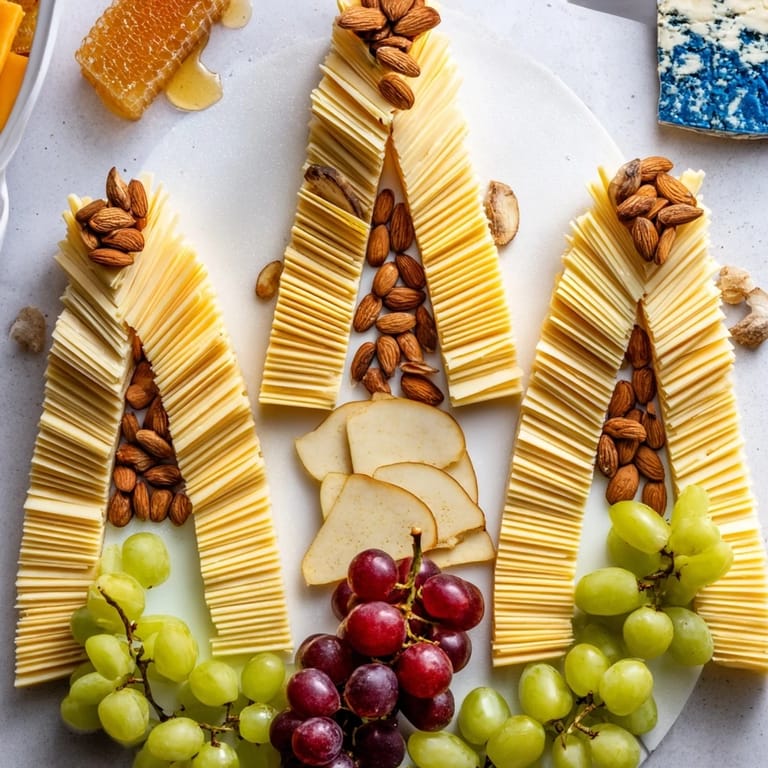
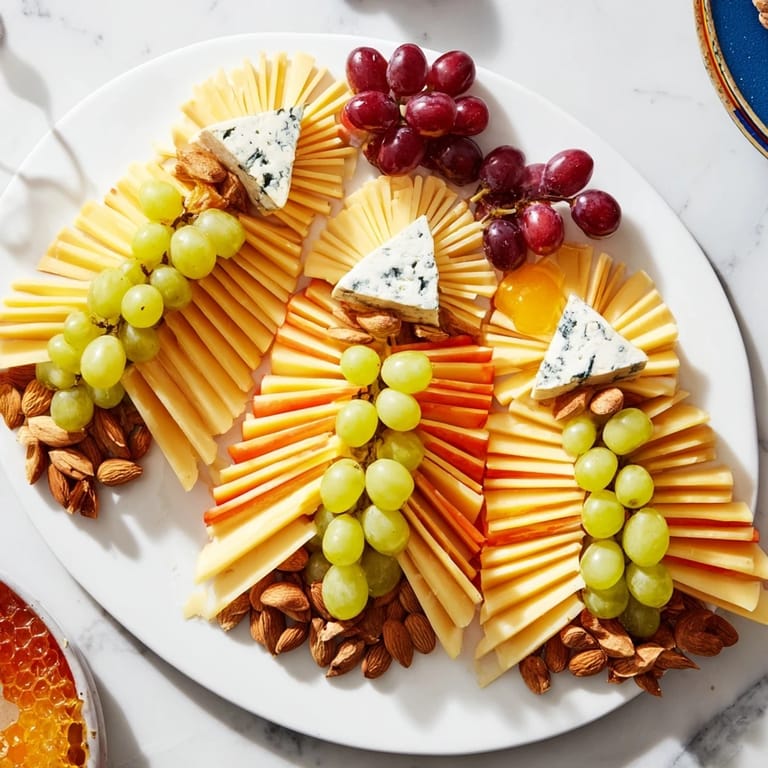
Save I discovered the magic of Art Deco design in an old library book, and it struck me that those bold geometric shapes would translate beautifully onto a cheese board. The first time I attempted this arrangement, I spent twenty minutes fanning cheddar slices like I was conducting an orchestra, getting lost in the rhythm of overlap and symmetry. My guests arrived to find something that looked more like edible architecture than a cheese platter, and honestly, I've never seen people hesitate before diving into food quite like that—they almost didn't want to disturb it.
I made this for a friend's book club meeting on a rainy October afternoon, and watching everyone stop mid-conversation to photograph the board before eating made me realize that presentation isn't shallow—it's love made visible. The honeycomb caught the light in a way that made the whole thing shimmer, and that small detail shifted the entire energy of the gathering from casual to something more intentional.
Ingredients
- Aged cheddar, sliced thin: The backbone of your first arch, sharp enough to hold its own visually and flavor-wise, and it stays firm enough to fan without crumbling if you use a wire slicer.
- Gruyère, sliced thin: This one's the sophisticated middle layer, bringing nuttiness and a slight sweetness that bridges the aged cheddar to the softer cheeses ahead.
- Manchego, sliced thin: Honestly underrated for platters because it has structure and won't slide around, plus that pale golden color adds depth to your arch design.
- Creamy brie, sliced into wedges: The foundational anchor of each arch—position these at the base where they'll catch light and signal softness to your guests before they taste it.
- Blue cheese, cut into small triangles: These sit at the top like the pointed spires of Art Deco buildings, adding drama and a peppery punch that makes people stop and ask what it is.
- Seedless green and red grapes: They fill gaps between arches with color and give texture-focused eaters something to reach for, acting like small jewels in your edible cityscape.
- Pear and apple, thinly sliced: Slice these just before serving or toss them in lemon juice—this is where everyone learns to pair fruit with cheese, and it changes how they build their bites.
- Roasted almonds: Scatter these last to catch light and add a salty-nutty contrast that makes the whole board feel complete and intentional.
- Dried apricots, halved: These bring chewiness and a subtle tang that cuts through the richness, plus they're oddly photogenic tucked between cheese fans.
- Honeycomb or good quality honey: A teaspoon or two near the brie melts into it and creates this moment where sweet and savory merge—this is what people remember about the platter.
- Baguette slices and assorted crackers: The vehicles that let your guests build their own experience, and honestly, choosing crackers matters—get a mix of flavors and textures so no two bites feel the same.
Tired of Takeout? 🥡
Get 10 meals you can make faster than delivery arrives. Seriously.
One email. No spam. Unsubscribe anytime.
Instructions
- Create your first cheese arch:
- Lay your aged cheddar slices out in a overlapping fan pattern on one side of your board, angling each slice slightly so they lean toward a center point like a sun rising. Use a wire slicer to get uniform thickness—it makes the fan dramatic and architectural.
- Build the second and third arches:
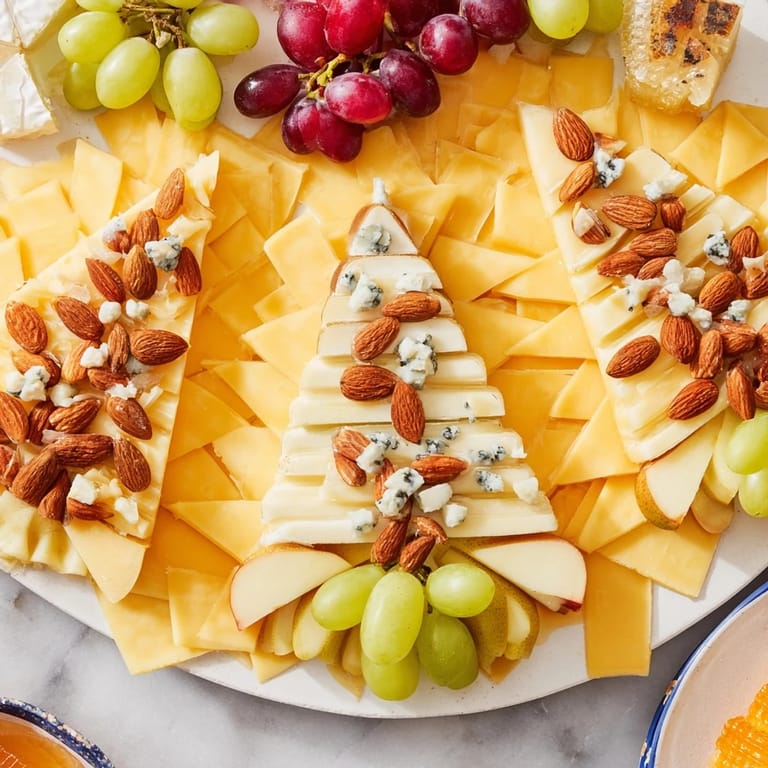
- Repeat with Gruyère and Manchego, spacing them so you have three distinct geometric shapes with breathing room between them. Step back and squint; if it looks like three buildings on a horizon, you're there.
- Anchor each arch with brie:
- Place brie wedges at the base of each arch, letting them overlap slightly to create a solid foundation that signals this board is structurally sound. These soft bases make the whole composition feel intentional rather than random.
- Crown with blue cheese:
- Position blue cheese triangles at the top center of each arch—these become your skyscraper peaks, adding height and a visual exclamation point. They should feel like an afterthought, the final flourish.
- Fill the negative space:
- Nestle bunches of grapes between your arches and tuck sliced pears and apples into any gaps that need color or softness. This is where you stop thinking like an architect and start thinking like a painter filling a canvas.
- Scatter almonds and apricots:
- Distribute these asymmetrically so they feel placed rather than measured—they catch light and add warmth to the cooler cheese tones. Think constellations, not grid.
- Add the honey moment:
- Drizzle or place honeycomb right next to the brie, letting it pool slightly—this is the final detail that transforms arrangement into experience. Serve immediately or chill for up to an hour, uncovered, so the honey and cheese can get friendly.
 Pin it
 The moment a guest took their first bite, combining brie, blue cheese, apricot, and honeycomb on a single cracker, they closed their eyes and said nothing for a full five seconds—and that silence told me the whole story about why this board matters. Food this beautiful shouldn't taste like presentation; it should taste like thought, and somehow it did.
The Geometry of Flavor
What I didn't expect when designing this board was how the arrangement actually guides how people eat. Because the cheeses fan out from a center point, guests naturally start at the edges and work toward the middle, discovering new flavor combinations as they go inward. The architecture becomes a roadmap for tasting, turning a cheese board into a narrative with a beginning, middle, and satisfying end.
Timing and Temperature
A cheese platter isn't like cooking where timing is everything—but temperature absolutely matters, and I learned this the awkward way when my brie turned to soup under summer sun. The hour before serving, I leave it out only fifteen minutes to take the chill off so flavors wake up, then return it to cool air until guests arrive. This matters more than you'd think because cold cheese tastes muted, but warm cheese tastes like itself.
Making It Your Own
The Art Deco inspiration is just a starting point—the real magic happens when you swap in cheeses you actually love or add seasonal fruits that speak to you. I've done this with autumn pears and grapes, spring rhubarb and berries, and even winter persimmons with pomegranate seeds. The geometry stays the same; the conversation changes.
- If you can't find Manchego, aged Gouda or Comté will give you the same golden color and firm structure without losing the magic.
- Pair this board with something crisp and dry like Champagne or Riesling, but honestly, a cold pilsner works just as well if that's what your guests love.
- The real test of a cheese board is whether people linger, talking and tasting, rather than just refueling—this one tends to make people slow down.
 Pin it
 This platter teaches you that hospitality isn't complicated—it's about paying attention to how food looks, tastes, and makes people feel when they gather around it. Make it once and you'll understand why Art Deco endures: some designs are timeless because they're simply beautiful to experience.
Frequently Asked Questions
- → How should the cheese slices be arranged?
Arrange cheddar, Gruyère, and Manchego slices in tiered, overlapping fans to form three distinct arches, mimicking Art Deco design.
- → What fruits complement this cheese arrangement?
Seedless green and red grapes, thinly sliced pear, and apple add fresh colors and subtle sweetness between the cheese arches.
- → Can I substitute the cheeses used here?
Yes, cheeses like Comté, Emmental, or aged Gouda can be swapped in according to preference while maintaining a balanced flavor profile.
- → What accompaniments enhance the platter’s flavor?
Roasted almonds and dried apricots provide texture and sweetness, while honeycomb drizzle adds a rich, delicate finish.
- → How do I serve the platter for best presentation?
Arrange baguette slices and crackers neatly along the sides for easy access, and serve immediately or chilled up to one hour beforehand.
- → Is there a vegan option for this arrangement?
Use plant-based cheeses and omit honey to create a vegan-friendly version that still retains the artistic display.