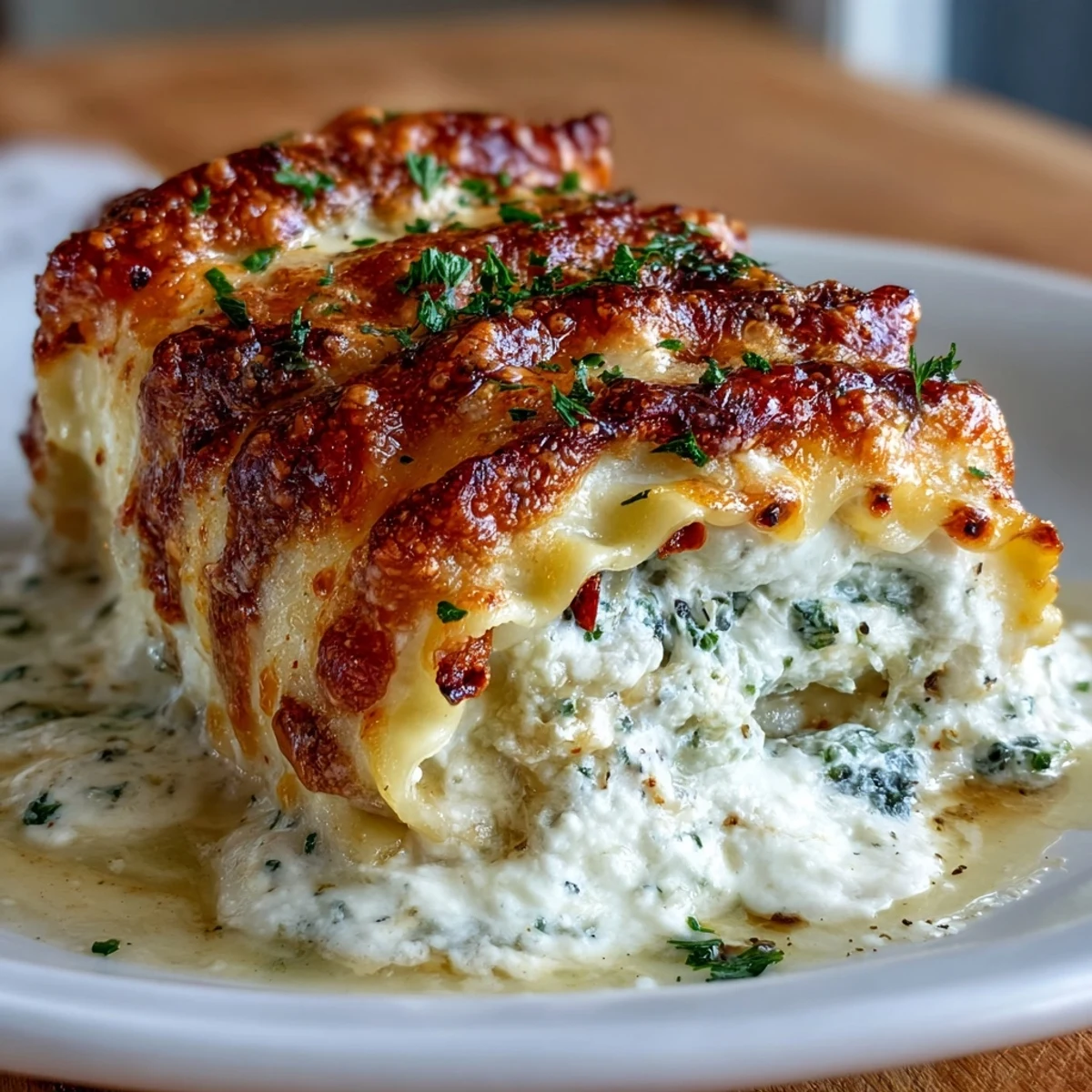
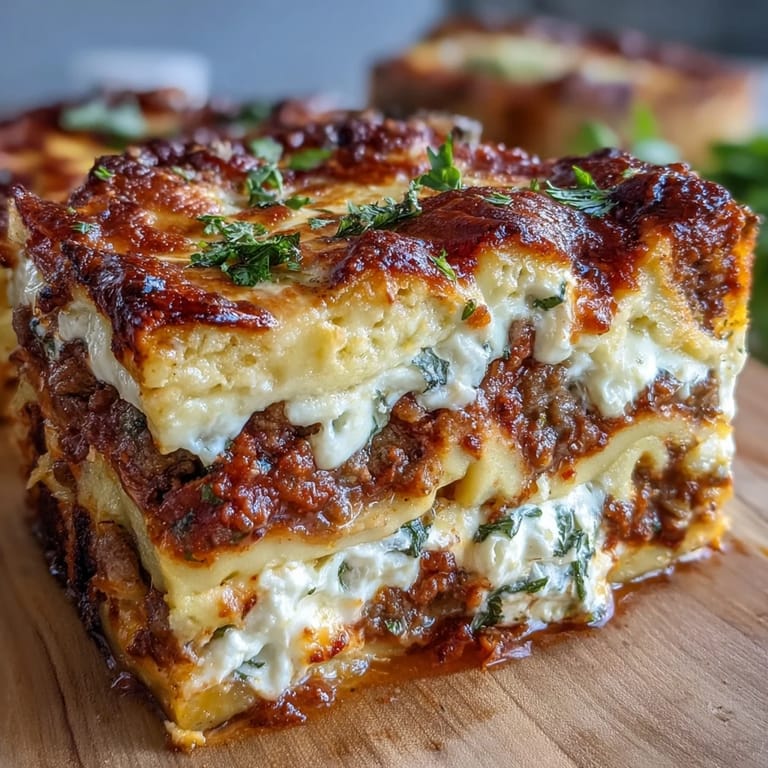
 Save
Save The first time I attempted lasagna, I used oven ready noodles that turned into chewy rubber shards halfway through baking. My husband pretended to love it anyway, picking through the layers with this pained expression. That disaster taught me everything about what makes a truly magnificent lasagna versus just an okay one.
Last winter my neighbor brought over a container of her grandmothers marinara, and something just clicked when I layered it into this lasagna. She stood in my kitchen watching me assemble the layers, correcting my technique with gentle Italian grandmother energy. Now every time I make it, I can hear her voice explaining why the ricotta needs an egg and why you never, ever rush the resting time.
Ingredients
- 12 sheets lasagna noodles: Uncooked noodles absorb moisture from the sauce as they bake, creating perfectly tender pasta without boiling
- 15 oz ricotta cheese: Whole milk ricotta gives the creamiest texture, though part skim works if you are watching calories
- 1 large egg: This binds the ricotta so it does not separate into watery puddles between layers
- 4 cups shredded mozzarella cheese: Low moisture mozzarella melts beautifully without excessive oil pooling on top
- 1 cup grated Parmesan cheese: The salty funk of aged Parm cuts through the rich cheese layers
- 1 lb ground beef: Lean ground beef provides structure without rendering too much fat into your sauce
- 1 lb Italian sausage: Remove casings and crumble the sausage for pockets of fennel and herb throughout the meat sauce
- 4 cups marinara sauce: Homemade or high quality store bought, just avoid anything too sweet or watery
- 4 cloves garlic: Minced fresh garlic blooms in the hot olive oil, infusing the entire sauce base
- 2 tablespoons olive oil: Extra virgin adds fruitiness that balances the richness of all that cheese
- ¼ cup fresh basil: Tear the basil by hand right before adding to preserve its bright, peppery aroma
- 1 teaspoon salt: Taste your sauce before adding salt since cheeses and sausage already bring plenty
- ½ teaspoon black pepper: Fresh cracked pepper adds subtle heat that lingers on the tongue
Tired of Takeout? 🥡
Get 10 meals you can make faster than delivery arrives. Seriously.
One email. No spam. Unsubscribe anytime.
Instructions
- Prepare your oven and workspace:
- Preheat oven to 375°F and clear enough counter space for your assembly station, because once you start layering, you will want everything within reach
- Build the aromatic base:
- Heat olive oil in a large skillet over medium heat, add minced garlic, and let it sizzle for about a minute until your kitchen smells like an Italian restaurant
- Brown the meats:
- Add ground beef and crumbled Italian sausage, breaking everything up with your spoon, and cook until thoroughly browned for 8 to 10 minutes
- Create the sauce:
- Drain excess fat from the skillet, stir in marinara sauce, salt, pepper, and chopped basil, then let it simmer for 10 minutes while you prep the cheese mixture
- Mix the ricotta filling:
- Combine ricotta cheese with one egg in a mixing bowl and mix until completely smooth, which prevents any grainy texture in your finished lasagna
- Start layering:
- Spread a thin layer of meat sauce on the bottom of a 9x13 inch baking dish so the noodles do not stick
- Add the first noodle layer:
- Lay four sheets of uncooked lasagna noodles over the sauce, slightly overlapping them since they will expand while baking
- Build the filling:
- Spread half the ricotta mixture over the noodles, top with a third of the mozzarella, then add more meat sauce
- Repeat the pattern:
- Add another layer of noodles, the remaining ricotta, another third of mozzarella, and more meat sauce
- Finish with style:
- Top with the final layer of noodles, remaining meat sauce, and all remaining mozzarella plus the Parmesan
- Cover and bake:
- Cover the dish tightly with foil and bake for 25 minutes, trapping steam to cook those uncooked noodles through
- Get the golden top:
- Remove foil and bake for another 15 minutes until the cheese bubbles and turns golden brown in spots
- Practice patience:
- Let the lasagna rest for at least 15 minutes before slicing, which firms up the layers so they do not slide apart
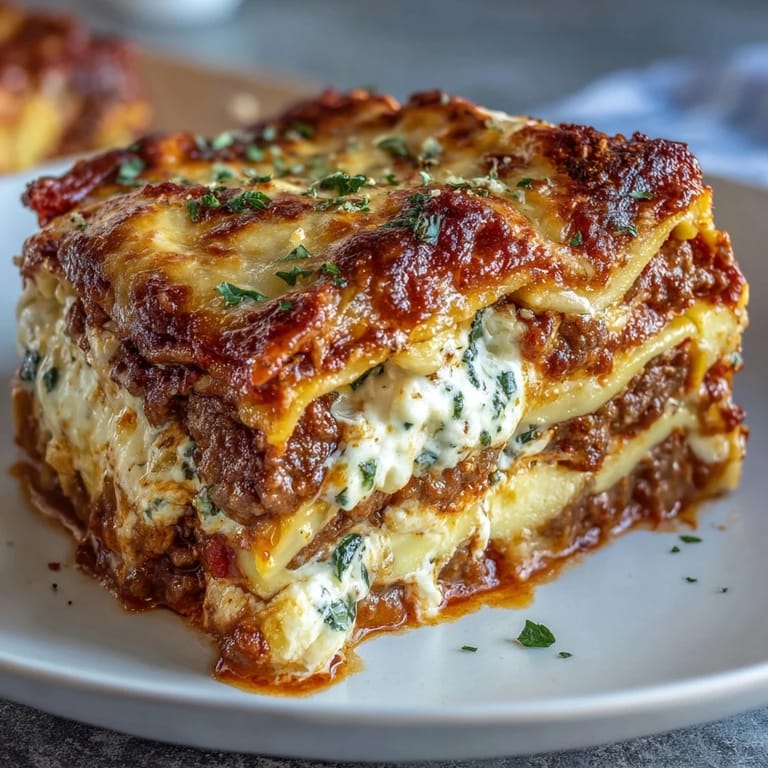 Pin it
 My sister called me at 11pm one night, crying because her date was coming over the next day and she had ruined three lasagnas trying to impress him. I walked her through the process on speaker phone while she started over, and she texted me weeks later that he proposed over that lasagna. Sometimes food really is the way to someones heart.
Make It Ahead
Assemble the entire lasagna up to 24 hours before baking, cover it tightly, and refrigerate. Add about 10 minutes to the covered baking time since it will start cold from the fridge. The flavors actually meld together better when given time to rest overnight.
Freezing Instructions
Wrap the unbaked lasagna incredibly well with plastic wrap and foil, then freeze for up to 2 months. Thaw overnight in the refrigerator before baking as directed. I always make two when I have the ingredients out, one for now and one for those nights when cooking feels impossible.
Serving Suggestions
A crisp green salad with vinaigrette cuts through all that richness, and garlic bread is non negotiable in my house. I also love setting out small bowls of red pepper flakes and extra Parmesan so people can customize their portion.
- Let everyone know it needs to rest so they do not try to rush you
- Cut the first slice carefully to see if the layers are holding together
- Leftovers reheat beautifully at 350°F for about 20 minutes
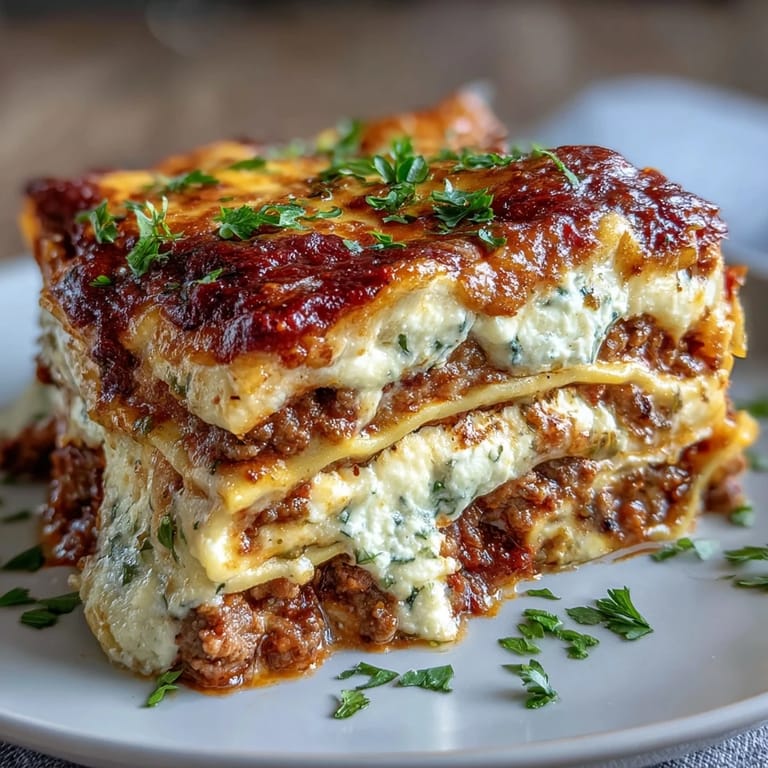 Pin it
 There is something deeply satisfying about pulling that bubbling, golden dish from the oven and watching people literally lean in when you remove the foil. Lasagna is not just food, it is an event.
Frequently Asked Questions
- → Can I prepare this lasagna in advance?
Absolutely. You can assemble the entire dish a day before baking. Cover it tightly and refrigerate. When ready to bake, let it sit at room temperature for about 30 minutes before placing it in the oven, then follow the baking instructions.
- → What's the best way to store and reheat leftover portions?
Leftovers should be stored in an airtight container in the refrigerator for up to 3-4 days. For reheating, individual slices can be warmed in a microwave or oven until heated through. Leftovers can also be frozen for up to two months.
- → Are there any meat substitutions I can make in the sauce?
Yes, you can customize the meat sauce. For a leaner option, use all ground beef or ground turkey. For a vegetarian version, swap the meat for sautéed mushrooms, lentils, or a hearty plant-based crumble.
- → Why is a resting period important after baking?
Allowing the lasagna to rest for at least 15 minutes after baking is crucial. This time allows the layers to set and the cheese to firm up slightly, preventing the layers from sliding apart when you slice and serve, resulting in a cleaner presentation.
- → Can I add extra vegetables to the layers?
Certainly! For added depth and nutrition, consider layering sautéed spinach, mushrooms, zucchini, or bell peppers with the ricotta mixture. Ensure any vegetables with high water content are pre-cooked and drained to prevent a watery dish.
- → Should I use no-boil noodles or traditional lasagna noodles?
This preparation uses uncooked traditional lasagna noodles, which absorb moisture from the sauce as it bakes, contributing to a tender texture. If using no-boil noodles, adjust liquid content slightly as they absorb less, or follow package instructions for best results.