 Save
Save There's something about the smell of celery and carrots hitting hot oil that instantly turns a regular Tuesday into something worth slowing down for. My neighbor brought over a pot of this soup one January when I was buried under work deadlines, and I remember standing in my kitchen at 6 PM, completely exhausted, suddenly aware that I was about to eat something that tasted like someone actually cared. That first spoonful changed everything about that evening. Now I make it whenever the weather turns cold enough that you can see your breath, and it's become my answer to almost every "I don't know what to cook" moment.
I made this for my partner when they came home sick one Friday, and they ate three bowls in a row while sitting on the couch watching old cooking shows. We didn't talk much, just existed quietly in that soup-warmed space, and I realized that comfort food isn't really about the ingredients at all. It's about someone choosing to feed you when you need it most.
Ingredients
- Chicken breasts: Boneless and skinless cook faster and stay tender in the broth, though thighs give you a deeper, richer flavor if you're willing to wait a few minutes longer.
- Olive oil: Use a good quality one since you're tasting it early, when it hits those vegetables in the pan.
- Yellow onion: The base of everything good in this pot, and dicing it evenly means it softens at the same rate as the carrots.
- Carrots and celery: These are your aromatic backbone, and a quick peel on the carrots makes them cook faster while keeping them tender.
- Garlic: Three cloves minced fine means no burnt pieces and an even distribution throughout every spoonful.
- Long-grain white rice: Rinsing it first removes surface starch so each grain stays distinct instead of turning mushy and starchy.
- Low-sodium chicken broth: The canvas for everything else, so taste yours first because quality varies wildly between brands.
- Thyme and rosemary: Dried herbs are your friends here since they soften into the broth rather than getting tough like fresh would.
- Bay leaves: These quietly anchor the whole soup with an earthy undertone you won't identify but will absolutely taste if they're missing.
- Fresh parsley: Added at the very end so it stays bright and doesn't turn dark and bitter from the heat.
- Lemon juice: Optional but honestly essential, since it wakes everything up and makes the flavors feel sharper and more alive.
Tired of Takeout? 🥡
Get 10 meals you can make faster than delivery arrives. Seriously.
One email. No spam. Unsubscribe anytime.
Instructions
- Sauté your vegetables:
- Heat the oil over medium until it shimmers, then add onion, carrots, and celery all at once. Listen for that soft sizzle and stir every couple minutes, watching the onion go from opaque to translucent and the carrots start to soften at the edges.
- Bloom the aromatics:
- Add garlic, thyme, and rosemary, then count to 60 while stirring gently. You'll smell it change from raw and sharp to warm and almost nutty.
- Build the broth:
- Place the chicken breasts on top of the vegetables, pour in the broth, add bay leaves, salt, and pepper. Bring it to a rolling boil by turning up the heat, then watch for the surface to just start bubbling.
- Cook the rice and chicken together:
- Stir in the rinsed rice, lower the heat to a gentle simmer, and cover with the lid slightly ajar. Set a timer for 20 to 25 minutes and resist the urge to peek constantly, though a quick glance around minute 20 won't hurt.
- Shred and finish:
- Remove the chicken to a cutting board and use two forks to pull it into tender shreds, then return it to the pot. Fish out the bay leaves, stir in parsley and lemon juice, taste it, and adjust the salt and pepper until it tastes like home.
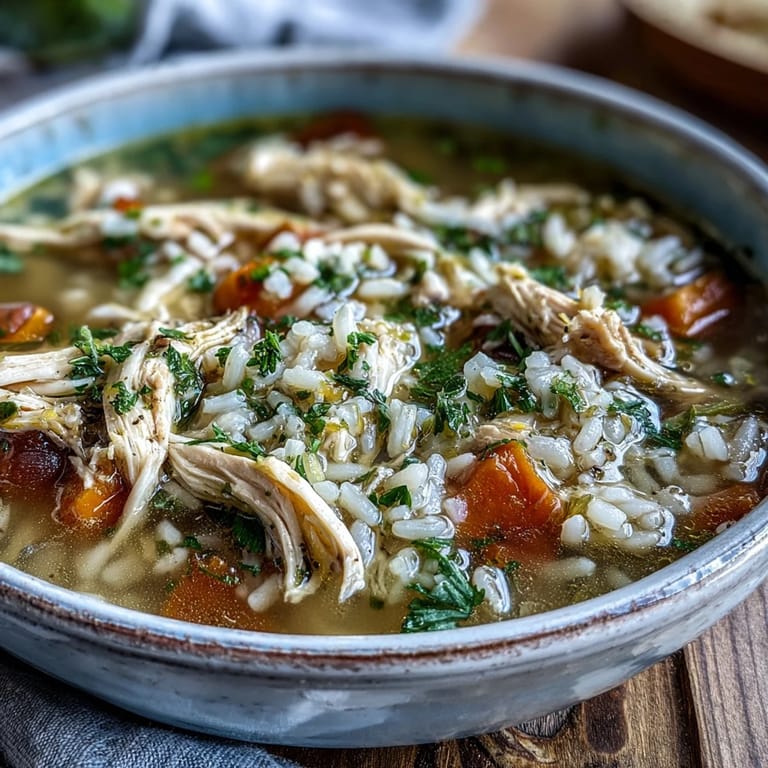 Pin it
 My daughter asked for this soup five days in a row last winter, which meant I had to figure out how to make it taste different every time even though the ingredients stayed exactly the same. By day five, I'd added a splash of cream, some fresh dill, and a pinch of cayenne, and she declared it "even better than the first time." That's when I understood that recipes aren't rules, they're invitations to play.
Building Flavor Layers
The magic isn't hidden, it's actually pretty straightforward: let the oil carry the vegetables' natural sweetness, let the herbs mellow into the broth rather than overpower it, and let everything simmer together long enough that the flavors recognize each other. I used to think soup needed to be complicated, but this one teaches you that simplicity and patience are actually the same thing.
Storage and Reheating
This soup lives in your fridge for up to four days and actually tastes better the next day because the flavors have had time to settle and deepen. Reheat it gently over medium heat, stirring occasionally, and add a splash of broth if it's thickened more than you'd like.
Simple Variations to Try
Once you've made this soup the way it's written, you'll start seeing all the directions it can go. Swap in brown rice for a nuttier flavor and more fiber, though it needs an extra 10 minutes or so. Add spinach or kale in the last few minutes for color and a quiet earthiness. A pinch of saffron or turmeric transforms it into something entirely different while keeping the soul of the dish intact.
- Stir in a splash of heavy cream right before serving for richness that rounds out all the edges.
- Use chicken thighs instead of breasts for deeper flavor and more forgiving meat that won't dry out.
- Finish with fresh herbs like dill, tarragon, or chives instead of parsley for completely different moods.
 Pin it
 This soup has quietly become the recipe I reach for when I want to say "I care" without saying much at all. It never fails, and it never feels like you're trying too hard.
Frequently Asked Questions
- → Can I use brown rice instead of white?
Yes, brown rice works well but requires longer cooking time—about 35-40 minutes total. Add extra broth as needed since brown rice absorbs more liquid.
- → Can I make this in a slow cooker?
Absolutely. Sauté vegetables first, then add everything to the slow cooker. Cook on low for 4-6 hours or high for 2-3 hours until chicken and rice are tender.
- → How long does this soup keep in the refrigerator?
Store in an airtight container for up to 4 days. The rice will absorb more broth over time, so add extra liquid when reheating.
- → Can I freeze this soup?
Yes, freeze for up to 3 months. Note that rice texture may change slightly when frozen and reheated. Consider adding fresh rice when serving.
- → What other vegetables work in this soup?
Potatoes, parsnips, or butternut squash add heartiness. Spinach or kale can be stirred in during the last few minutes for extra greens.