 Save
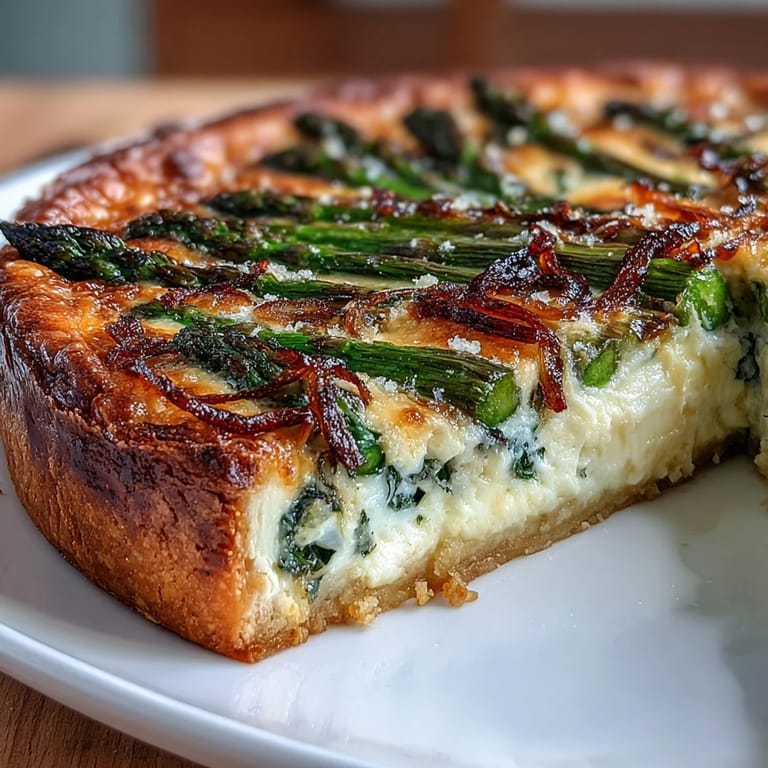
Save The first time asparagus arrived in my weekly produce box, I stood in my kitchen holding the slender green stalks, wondering how best to let them shine. The distant hum of Sunday traffic floated through the window as I rummaged for cheese and eggs, inspired by the gentle promise of a spring quiche. Gruyère's nutty aroma plus caramelized shallots sounded irresistible, and I couldn't help but smile. What began as a casual brunch idea quickly became a tradition for any bright morning. Somehow, that first attempt still makes me think fondly of the way sunlight fell across the flour-dusted counter.
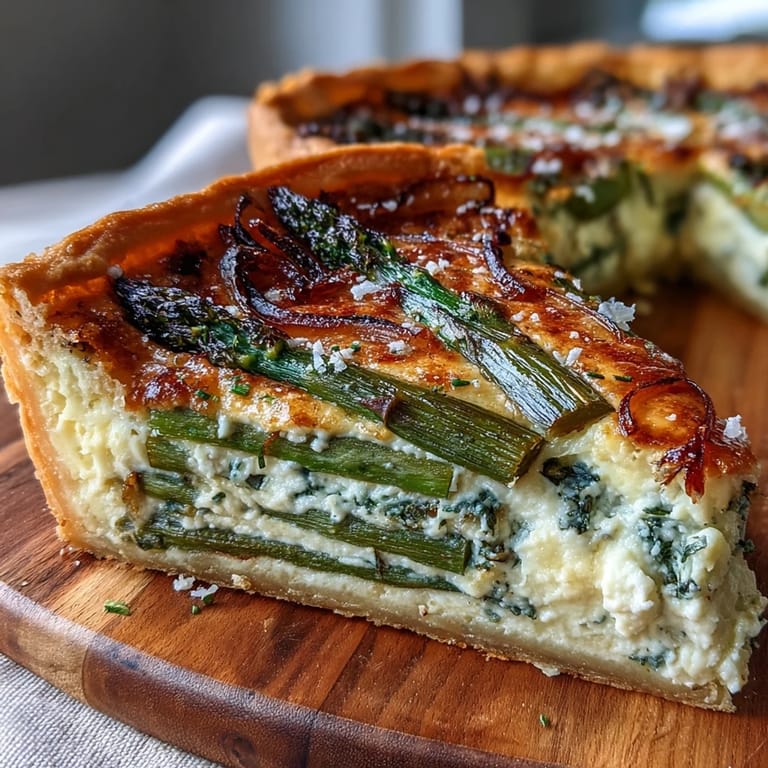
I once brought this quiche to a spring picnic, juggling a tart pan and a basket brimming with baguette and jam. Sunhats, laughter, and the clatter of plates on the checkered blanket set the mood as I carefully sliced the first piece. The melted Gruyère oozed just enough, the asparagus almost jewel bright. That day, I learned a quiche can spark conversation as easily as it pleases your tastebuds.
Ingredients
- All-purpose flour: Look for a fine, fresh flour to help the crust stay light and flaky.
- Unsalted butter: Use cold, cubed butter—handling it lightly keeps your crust tender and layered.
- Salt: Just a touch sharpens each buttery crumb.
- Ice water: Drizzle it in slowly until the dough barely holds; too much water makes things tough.
- Olive oil: It brings the shallots together without overpowering those sweet flavors.
- Shallots: Slicing them thin allows for even, gentle caramelization and beautiful flavor throughout.
- Fresh asparagus: Trimming and blanching are key—watch for bright color and tender snap.
- Gruyère cheese: Grate it yourself for better melt and flavor than pre-shredded.
- Eggs: Room temperature eggs give your custard a silky finish.
- Heavy cream: For that unmistakable richness—don't swap with low-fat milk if you want luxury.
- Whole milk: The right balance keeps the filling set but moist.
- Fine sea salt: Season carefully, as cheese brings salt too.
- Freshly ground black pepper: Adds warmth and a bit of bite.
- Ground nutmeg: A pinch brings out the savory sweetness in the custard.
Tired of Takeout? 🥡
Get 10 meals you can make faster than delivery arrives. Seriously.
One email. No spam. Unsubscribe anytime.
Instructions
- Mix the crust dough:
- Blend flour and salt in a large bowl, then gently rub in the butter until the mix looks like breadcrumbs—work quickly to keep it cool!
- Add water and chill:
- Slowly splash in ice water and stir with a fork just until clumps form; press into a disc, wrap, and chill thoroughly.
- Roll out and line the pan:
- Dust your counter, then roll the dough into a thin round and ease it into your tart pan—let the sides overhang a bit before trimming for shrinkage.
- Blind bake the crust:
- Prick the crust all over, weigh it down with parchment and beans, and bake until just starting to color; the smell is heavenly!
- Caramelize the shallots:
- Sizzle the olive oil and cook sliced shallots, stirring until golden, sticky, and oh-so-sweet—don't rush this step.
- Blanch the asparagus:
- A quick hot bath, an icy rinse, and a towel dry keeps asparagus bright and tender-crisp.
- Whisk the custard:
- Combine eggs, cream, milk, salt, pepper, and nutmeg until the mixture is pale and just a bit frothy.
- Layer the filling:
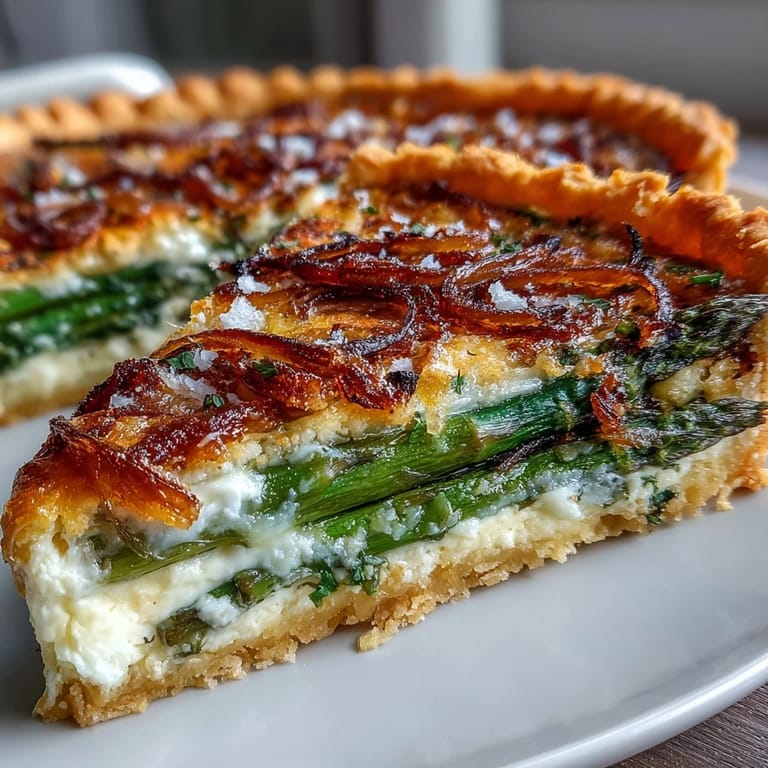
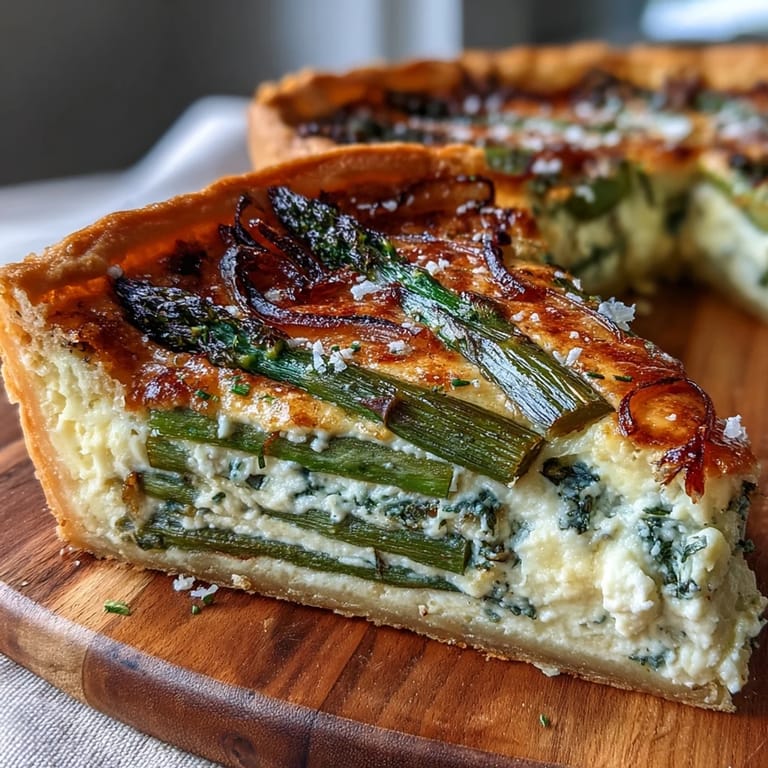
- Scatter shallots over the baked crust, then pile on the asparagus and sprinkle with Gruyère—make it artful!
- Pour and bake:
- Gently pour the custard, leaving a little crust visible, and bake until just set with a golden sheen.
- Rest, slice, and serve:
- Let the quiche cool slightly so the filling sets—you'll get neater slices and lingering aromas in your kitchen.
 Pin it
  Pin it
 When my neighbor came by for a quick coffee the day after I made this, I offered a slice as an afterthought. We ended up lingering at the table, forks resting on plates, talking about everything but food. Somehow, sharing it turned a simple lunch into a small celebration.
Secrets to a Buttery, Flaky Crust
I always rush less than I think I should, pressing the dough just until it comes together and resisting the urge to knead. You’ll notice that chilling the dough is non-negotiable: it keeps those buttery pockets intact, which puff and crisp with every bite. Embrace the mess—bits of flour on your shirt are a happy part of the process.
Choosing and Prepping Asparagus
Not all asparagus is created equal—go for slender, bright green spears at the market and avoid any that seem woody or limp. After trimming, that brief boil locks in flavor and color but skipping the cold shock will dull both. If some stalks are thick, peel them lightly to ward off stringiness.
Personalizing Your Quiche
Blend in a handful of fresh herbs—think chives or dill—for a spring boost, or toss in a bit of cooked spinach to stretch the greens. Swapping cheeses brings out different moods; sharp cheddar turns earthy, while Emmental adds a little sweetness. However you riff, don't overload the filling: restraint keeps each ingredient in focus.
- Let the baked quiche cool for 10 minutes—messy slices mean it's too hot.
- Store leftovers covered in the fridge, and reheat gently for best texture.
- You can use a store-bought crust in a pinch—just bake it briefly first to avoid sogginess.
 Pin it
  Pin it
 May this quiche brighten your table and invite easy company, whatever the occasion. I hope you enjoy making it as much as eating it.
Frequently Asked Questions
- → Why blind‑bake the crust?
Blind‑baking firms the dough and prevents a soggy bottom when the wet custard is added. Weighing the crust while it bakes keeps the edges from slumping and yields a crisp, golden shell.
- → How should I prepare the asparagus?
Trim tough ends, cut into 1‑inch pieces, and blanch in salted boiling water for about 2 minutes. Shock in ice water to stop cooking, drain and pat dry before adding to the tart so it keeps a bright color and crisp‑tender texture.
- → What cheeses make a good substitute for Gruyère?
Emmental or Swiss offer a similar melt and nuttiness; a sharp white cheddar gives more tang. Choose a cheese that melts smoothly and complements the shallots and asparagus.
- → How do I know when the custard is done?
Bake until the edges are set and the center still has a slight jiggle—it will continue to set as it rests. A light golden top and an internal temperature around 160–165°F (70–74°C) indicate doneness.
- → How long can I store leftovers and how to reheat them?
Cool completely, then refrigerate in an airtight container for up to 3 days. Reheat slices in a 325°F (160°C) oven for 10–15 minutes until warmed through to maintain flakiness; avoid microwaving to preserve texture.
- → Any tips for a flakier crust?
Keep butter cold and cut it into pea‑sized pieces, handle the dough minimally, chill the disc before rolling, and use ice water. Resting and chilling the shaped crust before blind‑baking helps prevent shrinkage.