 Save
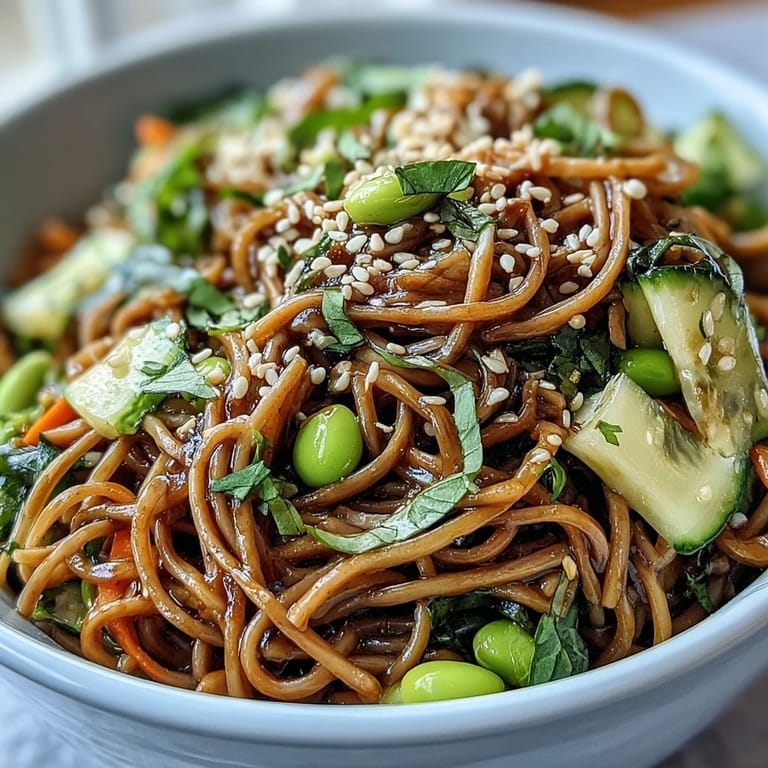
Save My kitchen window was wide open on a muggy afternoon when I first threw together this bowl, mostly because I had a bundle of soba noodles I kept forgetting about. The cool noodles against the crunch of raw vegetables felt like exactly what my body needed. I didn't follow a recipe then, just tossed things together with whatever dressing I could whisk up. It turned out better than I expected, and I've been making it ever since. Now it's my go-to when I want something that feels nourishing without turning on the stove for long.
I made this for a friend who was recovering from a cold and didn't want anything heavy. She sat at my counter while I julienned the carrots, and we talked about nothing in particular. When she took her first bite, she said it tasted clean, which I thought was the perfect word. Since then, I've brought this bowl to potlucks, served it at casual dinners, and eaten it alone on my couch more times than I can count. It never feels like leftovers, just something I'm always happy to see in my fridge.
Ingredients
- Dried soba noodles: These buckwheat noodles have a nutty flavor and hold up beautifully when chilled, so don't skip the cold rinse or they'll clump together.
- Shelled edamame: Frozen works just as well as fresh, and a quick blanch makes them tender and bright green.
- Cucumber: Julienning it instead of chopping gives you long, elegant ribbons that wrap around the noodles in every forkful.
- Carrots: Peeling them into thin matchsticks adds natural sweetness and a satisfying snap.
- Scallions: Slice them thin on the bias for a mild onion bite and a pop of color.
- Toasted sesame seeds: These add a nutty crunch that ties the whole bowl together.
- Fresh cilantro or mint: Optional but worth it, they bring a bright, herbaceous note that wakes everything up.
- Soy sauce: The salty backbone of the dressing, or swap in tamari if you need it gluten free.
- Rice vinegar: It adds a gentle tang without overpowering the other flavors.
- Toasted sesame oil: A little goes a long way, this is what makes the dressing smell so good.
- Tahini or smooth peanut butter: Either one gives the dressing body and a creamy richness.
- Honey or maple syrup: Just enough sweetness to balance the salty and tangy notes.
- Fresh ginger: Grate it finely so it melts into the dressing and gives a warm, spicy kick.
- Garlic: One small clove minced is all you need for a subtle sharpness.
- Water: Use it to thin the dressing to a pourable consistency, adding a tablespoon at a time.
Tired of Takeout? 🥡
Get 10 meals you can make faster than delivery arrives. Seriously.
One email. No spam. Unsubscribe anytime.
Instructions
- Cook the noodles:
- Boil the soba noodles according to package directions, usually about 4 to 5 minutes. Drain them and rinse under cold water until they're completely cool, this stops the cooking and keeps them from turning gummy.
- Blanch the edamame:
- While the noodles cook, drop the edamame into boiling water for 2 to 3 minutes until tender. Drain and set them aside to cool.
- Make the dressing:
- In a small bowl, whisk together the soy sauce, rice vinegar, sesame oil, tahini, honey, ginger, and garlic until smooth. Add water a tablespoon at a time until it's thin enough to drizzle but still clings to the noodles.
- Prep the vegetables:
- Julienne the cucumber and carrots into thin matchsticks, and slice the scallions thinly on an angle. Having everything prepped before you start assembling makes it feel effortless.
- Toss the noodles:
- In a large bowl, toss the cooled soba noodles with about half of the sesame dressing so every strand is lightly coated. This step ensures the noodles themselves are flavorful, not just the toppings.
- Assemble the bowls:
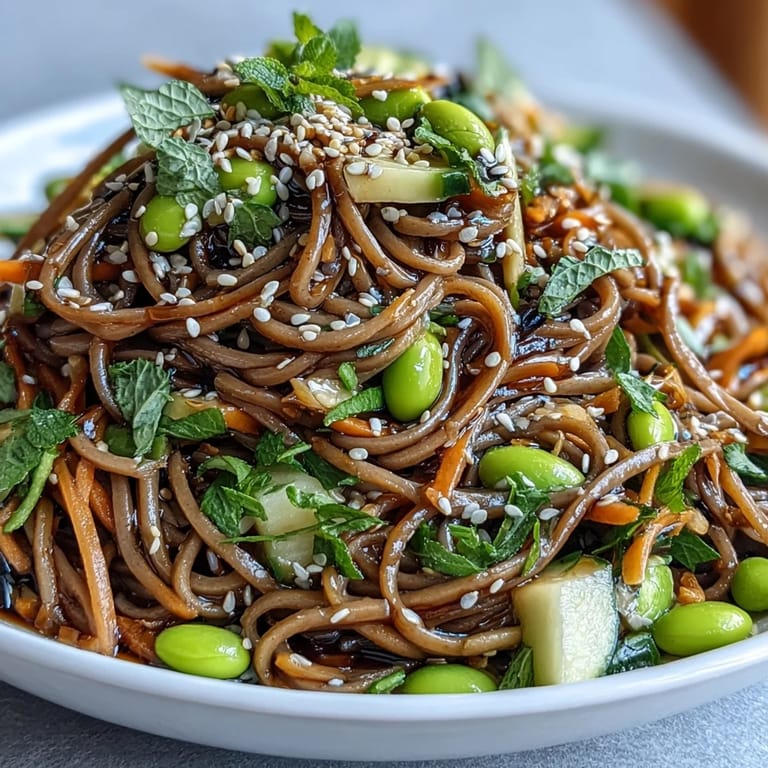
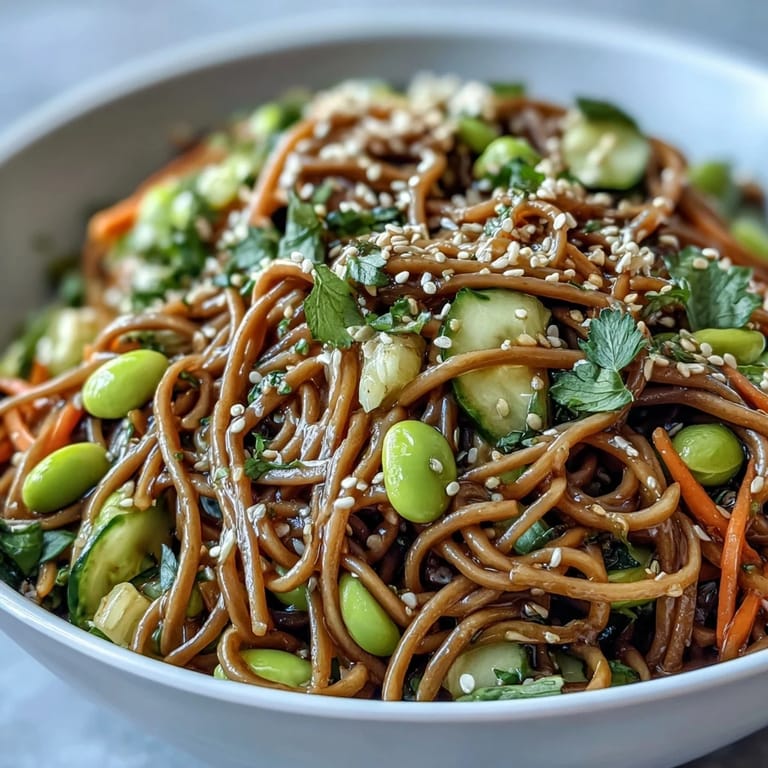
- Divide the dressed noodles among four bowls, then arrange the edamame, cucumber, carrots, and scallions on top. Drizzle the remaining dressing over everything and finish with sesame seeds and fresh herbs if you're using them.
 Pin it
 One evening I served this to a friend who didn't think she liked cold noodles. She was skeptical at first, poking at the bowl with her fork, but after the first bite she looked up and said she got it now. We ended up sitting on the floor eating straight from the serving bowl, talking until the sun went down. It reminded me that food doesn't have to be fancy or warm to feel like comfort.
How to Store and Reheat
This bowl keeps beautifully in the fridge for up to three days, though I like to store the dressed noodles and fresh vegetables separately so nothing gets soggy. When I'm ready to eat, I just toss everything together and add a splash more dressing if needed. It's one of those rare dishes that tastes just as good cold from the fridge as it does freshly made. If you want to meal prep, portion everything into individual containers so you can grab and go without thinking.
Variations to Try
I've made this bowl dozens of ways depending on what's in my fridge. Sometimes I add grilled tofu for extra protein, or a soft boiled egg with a jammy yolk that breaks into the dressing. Snap peas, thinly sliced radishes, or ribbons of red bell pepper all work beautifully in place of or alongside the cucumber and carrots. If you want a little heat, stir a teaspoon of chili oil into the dressing or sprinkle red pepper flakes on top. Once you get the base down, this bowl becomes a template for whatever sounds good.
Serving Suggestions
I usually serve this on its own because it feels like a complete meal, but it also pairs well with chilled green tea or a crisp, slightly sweet white wine like Riesling. If you're making it for a crowd, set out little bowls of extra sesame seeds, scallions, and herbs so people can customize their own. It's the kind of dish that looks impressive but doesn't ask much of you, which is exactly what I want when I'm feeding people.
- Serve it in wide, shallow bowls so all the toppings are visible and easy to mix in.
- Pair it with miso soup or a simple cucumber salad if you want to round out the meal.
- Leftovers make an excellent cold lunch the next day, no reheating required.
 Pin it
 This bowl has become one of those recipes I make without thinking, the kind that feels like muscle memory. I hope it becomes that for you too.
Frequently Asked Questions
- → What makes soba noodles unique?
Soba noodles are made from buckwheat flour, giving them a distinctive nutty flavor and chewy texture. They're naturally lower in calories than wheat pasta and provide a good source of plant-based protein and fiber.
- → Can I make this dish gluten-free?
Absolutely. Look for 100% buckwheat soba noodles and substitute tamari for the soy sauce. Always check labels carefully, as some soba blends contain wheat flour.
- → How do I prevent soba noodles from sticking together?
Rinse the cooked noodles thoroughly under cold water immediately after draining. This removes excess starch and stops the cooking process. Tossing with a small amount of sesame oil or dressing also helps prevent sticking.
- → What vegetables work best in this bowl?
julienned cucumber and carrots provide excellent crunch, but feel free to add snap peas, bell peppers, shredded red cabbage, or thinly sliced radishes. The key is maintaining crisp textures that complement the chewy noodles.
- → Can I prepare the components ahead?
Yes. Cook and rinse the noodles up to 2 days ahead, storing them tossed with a little oil. Prepare the vegetables and dressing separately. Assemble just before serving for the freshest texture and flavor.
- → What protein additions work well?
Grilled or baked tofu cubes, shredded chicken, seared salmon, or soft-boiled eggs make excellent protein additions. Simply prepare your chosen protein separately and arrange it on top of the assembled bowl.