 Save
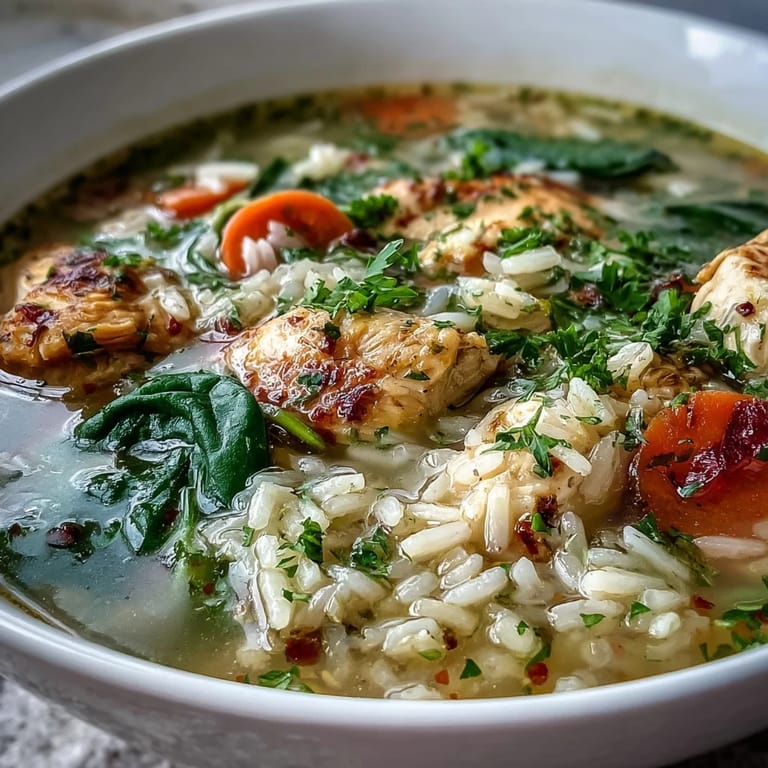
Save There's something about the sound of a wooden spoon hitting the bottom of a pot that signals comfort is coming. My sister called me on a drizzly Tuesday afternoon asking what to make with the chicken in her fridge, and I found myself describing this soup without hesitation—the kind of dish that tastes like someone actually cared about feeding you. One pot, bright lemon cutting through warm broth, rice that absorbs all the flavor, and somehow it all comes together in less than an hour.
I made this for my neighbor who had just moved in, and watching her take that first spoonful—how her eyes widened when she hit a pocket of lemon and spinach—that's when I realized this soup does something special. It's humble enough to feel unpretentious but complete enough that you don't need anything else, and people notice that.
Ingredients
- Boneless, skinless chicken breasts (2, about 350 g, diced): Dicing them fairly small means they cook through quickly and distribute throughout the pot instead of sinking to the bottom in sad chunks.
- Medium carrots (2, peeled and sliced): Peel them first, then slice on a slight bias—it looks nicer and they cook more evenly.
- Celery stalks (2, sliced): This is the quiet flavor hero that nobody talks about but everyone tastes.
- Small yellow onion (1, diced): Yellow onions have a gentler sweetness than white ones, which matters when you're building a delicate broth.
- Garlic cloves (3, minced): Mince it small enough that it dissolves into the broth and seasons everything rather than sitting in chunks.
- Baby spinach (100 g, about 2 cups packed): It wilts dramatically at the end, so don't worry about it looking like too much—it shrinks to practically nothing.
- Lemon zest and juice (from 1 large lemon): The zest goes in last so it stays bright; the juice is your seasoning more than salt ever will be.
- Long-grain white rice (120 g or 2/3 cup, rinsed): Rinsing removes the starch that would make it gluey—this is the step that changes everything.
- Low-sodium chicken broth (1.3 liters or 5 1/2 cups): Low-sodium lets you control the salt, and honestly, homemade broth makes this transcendent if you have it.
- Water (500 ml or 2 cups): Water dilutes the broth just enough so the soup tastes fresh rather than heavy.
- Bay leaf (1): You'll remove it later, but it's quietly seasoning everything while it cooks.
- Dried thyme (1/2 tsp): Thyme feels like home in a bowl.
- Dried oregano (1/2 tsp): Just enough so you taste herbs without them taking over.
- Salt and black pepper: Taste as you go—you might need more than you think because the broth itself isn't always salty.
- Fresh parsley (2 tbsp chopped, plus extra for garnish): The parsley goes in at the very end, split between the pot and the bowl so it stays green and fresh-tasting.
- Olive oil (1 tbsp): This is just enough to get the vegetables going without making the soup oily.
Tired of Takeout? 🥡
Get 10 meals you can make faster than delivery arrives. Seriously.
One email. No spam. Unsubscribe anytime.
Instructions
- Get your vegetables ready:
- Dice your onion, slice your carrots and celery, mince your garlic, and squeeze that lemon over a small bowl so the juice doesn't splash everywhere. Having everything prepped means you can move quickly and stay calm once the heat is on.
- Start the flavor base:
- Pour olive oil into your pot over medium heat and let it warm for just a breath—you'll feel the heat rising when you hold your hand above it. Toss in the onion, carrots, and celery, stirring occasionally for 4 to 5 minutes until the edges of the carrots soften and the onion turns translucent.
- Wake it up with garlic:
- Add your minced garlic and stir for about a minute—you'll smell it immediately, a bright signal that things are happening. Don't let it brown or it turns bitter.
- Brown the chicken:
- Push the vegetables to the sides, add your diced chicken to the center, and let it sit for a minute before stirring. Cook for 3 to 4 minutes, stirring now and then, until the outside is no longer pink—it won't be cooked through yet, and that's exactly right.
- Build the broth:
- Add your rinsed rice, bay leaf, thyme, and oregano, stirring everything together so the rice gets coated and the spices distribute. Pour in your broth and water, watching as the pot comes alive with liquid.
- Simmer gently:
- Bring the whole thing to a boil—you'll hear it before you see it bubbling—then lower the heat to medium-low, cover with a lid, and let it cook undisturbed for 18 to 20 minutes. The rice will absorb the liquid and the chicken will finish cooking in the steam.
- Brighten with greens and lemon:
- Fish out the bay leaf, stir in your baby spinach and lemon zest and juice, and simmer for 2 to 3 minutes while the spinach surrenders. This is when the soup transforms from warm and savory into something that tastes alive.
- Taste and season:
- Sample a spoonful, then add salt and pepper—start with less than you think and build from there. Stir in your fresh parsley, saving a pinch for each bowl.
- Serve immediately:
- Ladle into bowls while the soup is steaming and the flavors are brightest, garnishing with that extra parsley and a slice of lemon if you want to be fancy about it.
 Pin it
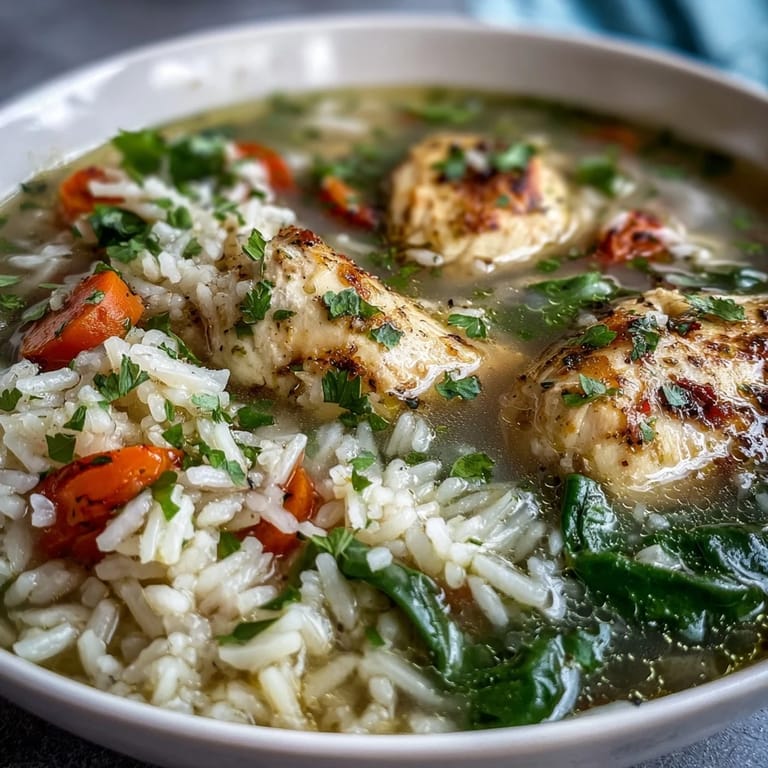
 My dad, who usually just eats what's put in front of him without comment, asked for seconds and then a small container for the next day. That's when I realized this soup had shifted from a recipe I made to something that quietly earned its place at the table.
Why This Works As a One-Pot Meal
The magic is in the layering—you build flavor at each stage instead of cooking everything separately and combining it all at once. The vegetables soften and sweeten, the chicken absorbs the broth as it finishes cooking, the rice drinks in all those flavors and becomes tender, and then the spinach and lemon arrive like an unexpected gift at the end. Nothing gets overcooked because you're timing it so everything finishes together.
How to Adapt It to What You Have
This soup is forgiving in a way that matters when you're cooking at home. If you have kale instead of spinach, it'll work just fine—just give it a full minute to wilt since it's tougher. Chard is beautiful in this, too, and it holds its color even longer. Brown rice absolutely works if that's what you have, but you'll add about 10 to 15 extra minutes to the simmer time, and you might need to add a splash more water halfway through. For a vegetarian version, swap the chicken for white beans or chickpeas and use vegetable broth instead—the soup becomes lighter but still complete.
Small Moments That Make It Special
I've learned that the tiny details are what people remember about a meal, even if they can't put their finger on why they loved it. Grating the lemon zest right over the pot at the very end so it stays fragrant, using a ladle instead of pouring from the pot so the broth flows gently into the bowl, even the sound of the wooden spoon scraping the bottom of the pot as you stir—these things matter. If you want to make it richer, swirl in a tablespoon or two of cream at the very end, or even a beaten egg yolk stirred in slowly so it creates silky ribbons through the broth. Crusty bread for soaking up every last spoonful is not optional—this is the rule.
- Fresh lemon slices floated on top make it look like you spent hours on this instead of 50 minutes.
- A crack of black pepper right at the end tastes fresher than pepper mixed in earlier.
- Leftover soup keeps in the fridge for three days and tastes even better the next day when the flavors have had time to know each other.
 Pin it
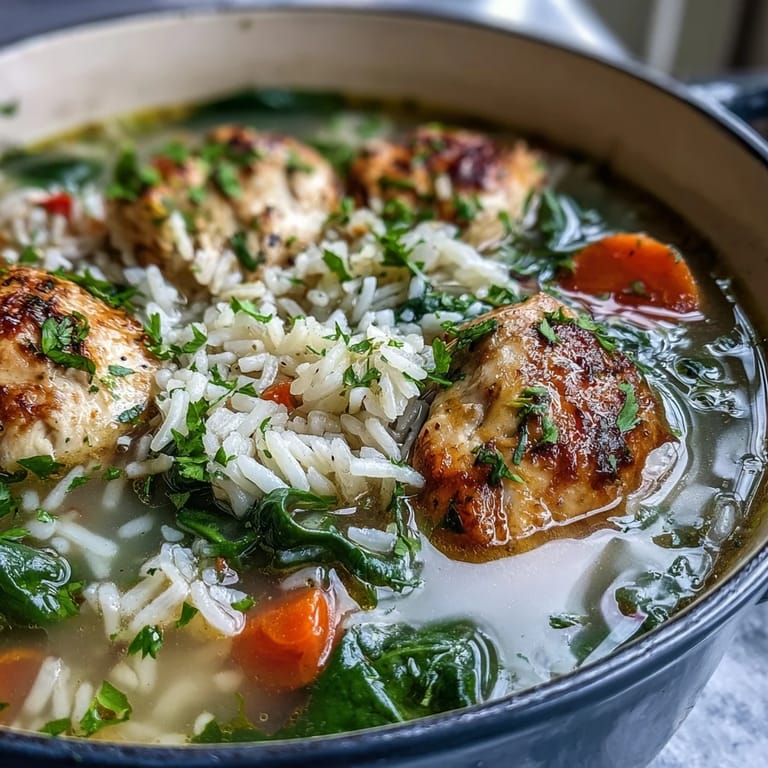
 This soup is the kind of dish that shows up at the right time, fills you up without weighing you down, and reminds you that some of the best meals are the simplest ones. Make it on a Tuesday when you need comfort, or on a Sunday to have it ready for the week ahead.
Frequently Asked Questions
- → Can I make this soup ahead of time?
Absolutely. This soup actually tastes better the next day as flavors have time to meld. Store in an airtight container in the refrigerator for up to 4 days. The rice will absorb more liquid over time, so you may need to add extra broth or water when reheating.
- → Can I use brown rice instead of white rice?
Yes, brown rice works well in this soup but requires a longer cooking time. Increase the simmering time by 10-15 minutes and add extra liquid as needed since brown rice absorbs more liquid than white rice.
- → What vegetables can I substitute for the spinach?
Kale or Swiss chard make excellent substitutes for spinach. Add them during the last 3-4 minutes of cooking to wilt properly. You can also add other vegetables like diced potatoes, green beans, or peas during the simmering stage.
- → Is this soup freezer-friendly?
This soup can be frozen for up to 3 months, though the rice texture may change slightly upon thawing. For best results, cool completely before transferring to freezer-safe containers. Thaw overnight in the refrigerator before reheating.
- → How can I make this vegetarian?
Omit the chicken and replace the chicken broth with vegetable broth. Add a can of drained white beans or chickpeas during the last 5 minutes of cooking to maintain protein content. The vegetables and rice will still create a hearty, satisfying bowl.