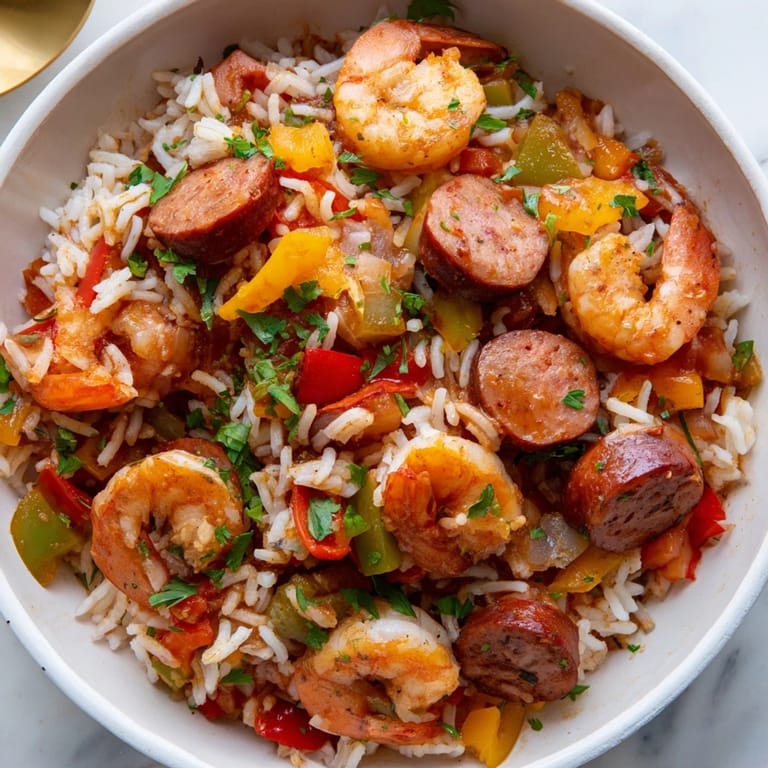
 Save
Save There's something about the sizzle of andouille hitting a hot skillet that instantly transports me to a humid evening in New Orleans, even though I was cooking in my tiny apartment kitchen with the windows fogged up. My neighbor had just moved away after raving about jambalaya for months, and I decided I'd figure out why everyone down south seemed to have such strong opinions about this one dish. That first pot taught me that jambalaya isn't fussy—it's honest, bold, and actually forgiving if you respect the fundamentals.
I made this for a small dinner party last spring when I was trying to prove I could handle more than pasta, and watching people go quiet during that first bite—really quiet, not polite-quiet—made me realize I'd accidentally stumbled onto something special. My friend Marcus asked for the recipe before dessert even arrived, which is how I knew it landed.
Ingredients
- Andouille sausage (225 g / 8 oz, sliced): This smoky, slightly spicy sausage is what gives jambalaya its backbone. Buy it sliced if your market has it, or ask the butcher to slice it thick so it gets edges on it.
- Large shrimp (225 g / 8 oz, peeled and deveined): Don't skip the deveining step—it makes a real difference. Add them late so they stay tender and don't turn rubbery.
- Yellow onion (1 medium, diced): This is your aromatic base, so don't rush chopping it fine.
- Red and green bell peppers (1 each, diced): The mix gives both sweetness and visual brightness. If you only have one color, that's okay, but the combination is worth seeking out.
- Celery (2 stalks, diced): This is part of the holy trinity of Creole cooking, and it quietly builds depth.
- Garlic (3 cloves, minced): Fresh garlic matters here; don't use powder as a substitute.
- Long-grain white rice (200 g / 1 cup): Long-grain stays separate instead of clumping, which is essential for proper texture.
- Low-sodium chicken broth (400 ml / 1⅔ cups): This lets you control the salt level and taste the spices instead of just salt.
- Diced tomatoes (400 g / 1 can, undrained): The juice is flavor gold, so don't drain it.
- Smoked paprika (1 tsp): This is the secret weapon that makes it taste warm and layered instead of one-note.
- Dried thyme and oregano (½ tsp each): These are gentle but necessary—they keep the dish from tasting like it's just heat and smoke.
- Cayenne pepper (½ tsp, adjustable): Start here and taste as you go; you can always add more but you can't take it back.
- Freshly ground black pepper (½ tsp) and salt (1 tsp): Freshly ground black pepper actually tastes different and better than pre-ground.
- Olive oil (2 tbsp total): Use good oil—you'll taste the difference since it's not cooked down into oblivion.
- Fresh parsley (2 tbsp chopped, for garnish): This is the final bright note that makes the whole dish feel intentional, not heavy.
Tired of Takeout? 🥡
Get 10 meals you can make faster than delivery arrives. Seriously.
One email. No spam. Unsubscribe anytime.
Instructions
- Brown the sausage:
- Heat 1 tablespoon of olive oil in your large skillet over medium-high heat until it shimmers. Add the sausage slices and let them sit for a minute before stirring—you want those edges to turn dark brown and crispy, which takes about 3 to 4 minutes total. This browning is where half the flavor comes from, so don't skip it or rush it.
- Build the base:
- Push the sausage to the side and add the remaining tablespoon of oil. Toss in your diced onion, peppers, and celery all at once, and stir everything together for about 4 to 5 minutes until the vegetables soften and the onion turns translucent at the edges. Add the garlic and cook for just 1 more minute until you can smell it—that's how you know it's ready.
- Toast the rice with spices:
- Stir the uncooked rice directly into the vegetables along with the smoked paprika, thyme, oregano, cayenne, black pepper, and salt. Keep stirring for about 1 minute so every grain gets coated with oil and spice—this toasting step wakes up the flavors and keeps the rice from getting mushy.
- Bring it together:
- Return the sausage to the skillet, then pour in the tomatoes with their juice and the chicken broth. Stir everything once to make sure nothing is stuck to the bottom, and let it come to a simmer. You'll see it bubble slightly at the edges.
- Let it simmer low and slow:
- Lower the heat to medium-low, cover the skillet with a lid, and let it cook undisturbed for 20 minutes. Resist the urge to peek constantly—each time you lift the lid, you're letting steam escape and adding cooking time. After 20 minutes, the rice should be tender and most of the liquid should be absorbed, but a little moisture is okay.
- Add the shrimp and finish:
- Arrange the shrimp on top of the rice in an even layer, cover again, and cook for 5 to 7 minutes just until they turn pink and opaque. Overcooked shrimp gets tough, so set a timer and check at 5 minutes—they cook fast.
- Fluff and serve:
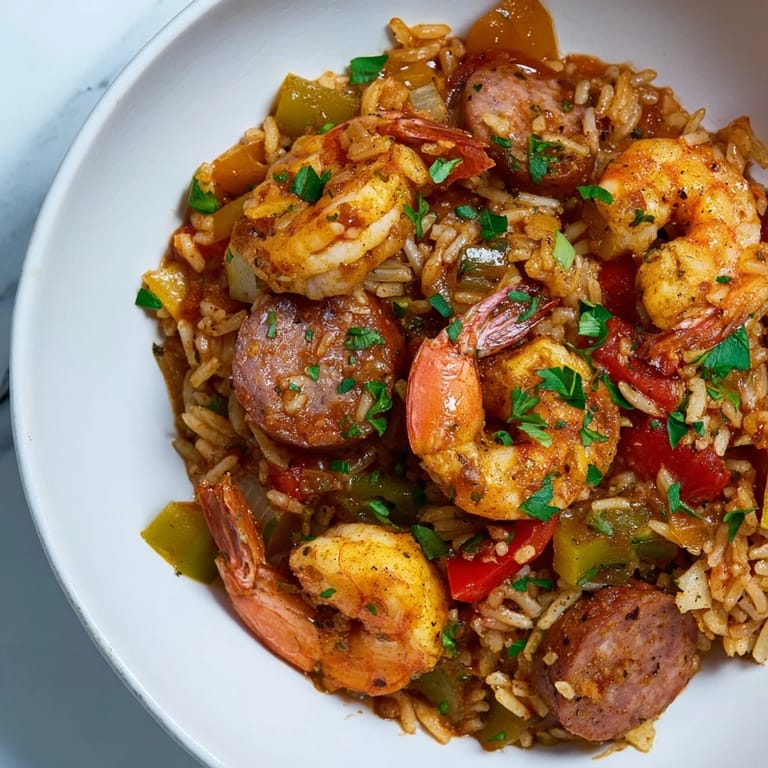
- Remove from heat and let it sit covered for 1 minute. Use a fork to gently fluff the rice, breaking up any clumps. Scatter fresh parsley over the top and serve immediately while everything is still steaming.
 Pin it
 The moment I understood jambalaya was when my mom took a bite and said it tasted like someone who actually cared made it, and I realized the secret wasn't some fancy technique—it was just not cutting corners on the brown, the sauté, and the spices. That's when cooking stopped feeling like following instructions and started feeling like having a conversation with the food.
The Holy Trinity of Creole Cooking
Every proper Creole dish starts with onion, celery, and bell pepper in specific proportions, and there's a reason this combination has survived centuries in the kitchen. The onion brings sweetness and body, the celery adds earthiness and subtle complexity, and the bell pepper rounds it out with brightness and a gentle pepper flavor. Together they create a base that tastes balanced instead of raw, which is why jambalaya works as a cohesive dish instead of tasting like a collection of separate ingredients.
Why One Skillet Changes Everything
Cooking this in one pan isn't just about cleanup—it's about how the flavors layer as you go. The browned sausage sticks around and keeps releasing its smoke into everything that follows, the vegetables cook in that sausage fat, the rice toasts in spiced fat and vegetable juice, and then everything simmers together until the boundaries blur and it becomes one unified dish. If you separated these steps into different pans, you'd lose that continual flavor building, and the result would taste disjointed and less alive.
Making It Your Own
Jambalaya is flexible by design because it started as a way to use what was on hand, and that spirit is still the heart of it. The framework of sausage, shrimp, rice, the holy trinity, and Creole spices is non-negotiable if you want it to taste like jambalaya, but within that framework there's room to move.
- Swap the shrimp for diced chicken, andouille for spicy chorizo, or use both proteins if you're feeding hungry people.
- Add okra in the last few minutes if you like its texture and thickening effect, or leave it out if you prefer things lighter.
- Use a Cajun spice blend instead of measuring out individual spices if you trust your brand and want one fewer step, but taste it first because some blends are saltier than others.
 Pin it
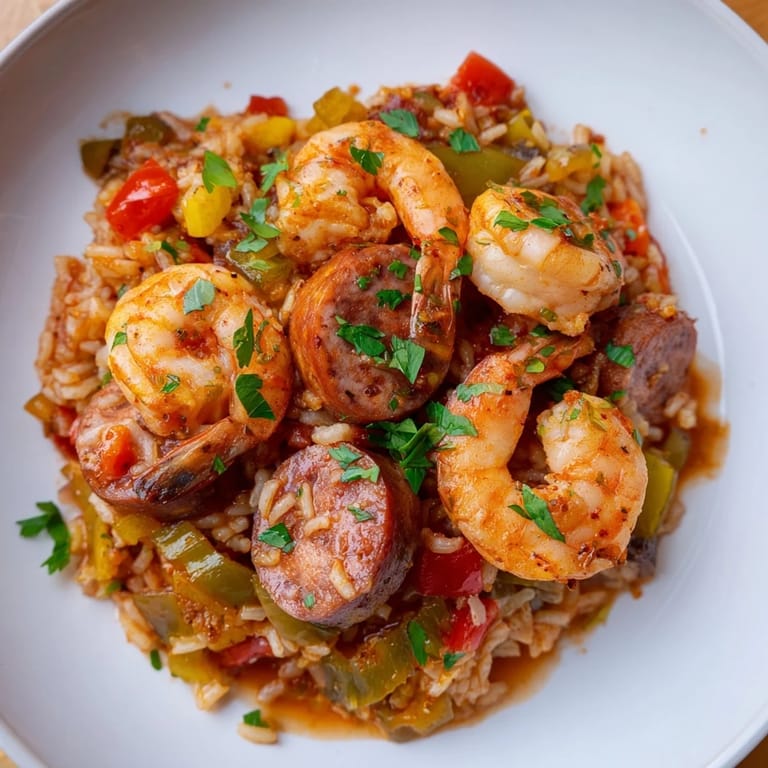
 This is the kind of dish that tastes impressive but doesn't demand perfection—it just asks you to slow down, brown things properly, and taste as you go. Make it once and you'll understand why people have opinions about jambalaya.
Frequently Asked Questions
- → Can I use different proteins in this dish?
Yes, chicken can replace shrimp or be combined with it for varied flavors while maintaining the dish's hearty character.
- → How can I add more heat to the meal?
Adjust the cayenne pepper to taste or serve alongside your favorite hot sauce for an extra spicy kick.
- → What type of rice is best for this skillet?
Long-grain white rice works well because it cooks evenly and absorbs the flavors of the spices and broth without becoming mushy.
- → Is it important to brown the sausage first?
Browning the sausage adds depth of flavor and helps render fat, which enhances the overall taste and texture of the dish.
- → Can I prepare this dish ahead of time?
It’s best served fresh, but leftovers can be refrigerated and gently reheated while preserving the flavors and texture.