 Save
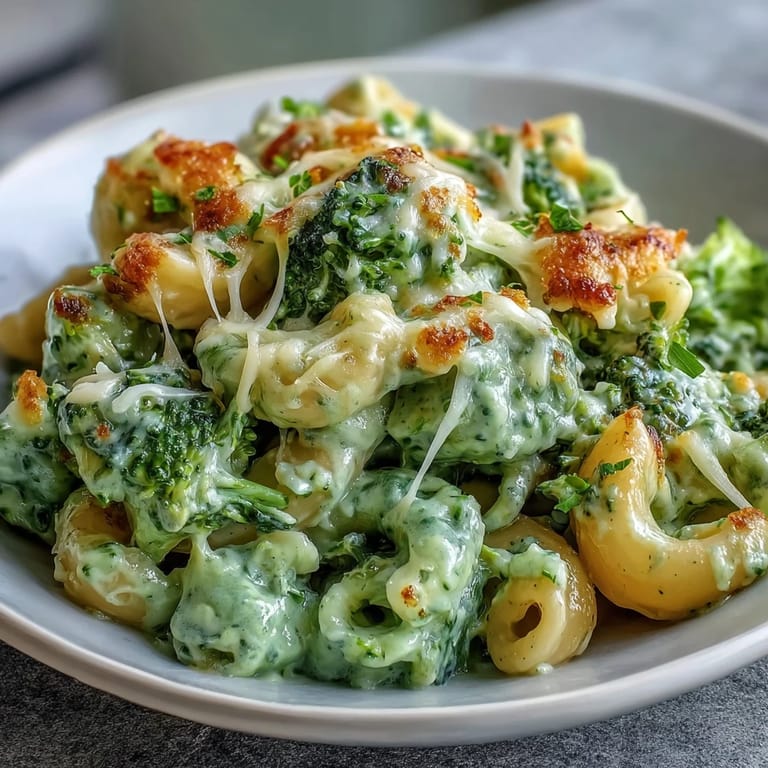
Save My daughter came home from school announcing she'd decided vegetables were now acceptable, which felt like winning the lottery. I stood there skeptical, spatula in hand, wondering if this phase would last through dinner or just through the conversation. That evening, I decided to test her newfound enthusiasm with something that felt like comfort food but actually snuck in the greens she'd been avoiding for years. The result was this vibrant green mac and cheese, and honestly, watching her go back for seconds without suspicion felt like the small victory every parent dreams of.
I made this for a potluck once, bringing it in a cast iron skillet because I couldn't be bothered to transfer it. Three people asked for the recipe before I'd even set the dish down, and one gentleman spent ten minutes trying to figure out why it was green, convinced I'd somehow hidden cream of broccoli soup inside pasta. The best part wasn't the compliments though—it was my friend Sarah saying she'd never felt so satisfied eating something that actually had vegetables in it.
Ingredients
- Elbow macaroni: Use about 340g (12 oz) of a good quality pasta; it should have some texture to grab onto the sauce rather than sliding around like ice.
- Fresh spinach: Around 200g (7 oz) washed and ready to go; the volume shrinks dramatically when cooked, so don't be alarmed by how much you're starting with.
- Broccoli florets: Keep them roughly 200g (7 oz) and cut into small enough pieces that they feel like part of the pasta, not obstacles.
- Onion and garlic: One small onion finely chopped plus 2 minced cloves—they're the quiet foundation that makes everything taste richer than it has any right to.
- Unsalted butter and all-purpose flour: 2 tablespoons each forms the roux that thickens everything; this is where patience actually matters because rushing creates lumps.
- Whole milk: About 500ml (2 cups) creates the creamy base; don't use low-fat milk or the sauce will feel thin and disappointed.
- Sharp cheddar, Parmesan, and mozzarella cheese: A blend of 120g sharp cheddar, 60g Parmesan, and 60g mozzarella gives you complexity—the sharp cheddar leads, Parmesan adds depth, and mozzarella keeps everything silky.
- Salt, pepper, nutmeg, and Dijon mustard: The seasonings that whisper rather than shout; nutmeg feels weird until you taste it, then you'll understand why it belongs.
- Fresh parsley for garnish: About 2 tablespoons chopped, adding brightness and the visual reminder that you made something thoughtful.
Tired of Takeout? 🥡
Get 10 meals you can make faster than delivery arrives. Seriously.
One email. No spam. Unsubscribe anytime.
Instructions
- Get the water boiling and pasta started:
- Fill a large pot with salted water and bring it to a rolling boil—this is your foundation, so don't skimp on the salt. Cook the macaroni according to package directions until it's al dente, then in the last 2 minutes, add the broccoli florets so they cook just enough to be tender without turning to mush.
- Wilt the spinach while everything cooks:
- Heat a large skillet over medium heat and add your washed spinach, stirring it around until it transforms from leafy to silky, about 2 minutes. Transfer it to a blender and set it aside; this is your secret weapon for the color and nutritional punch.
- Build the flavor base:
- In the same skillet, melt the butter and add your finely chopped onion, letting it soften for 3 to 4 minutes until it becomes translucent and sweet. Add the minced garlic and cook just 1 minute more—you want fragrant, not burned.
- Make the roux and add milk:
- Sprinkle the flour over the onion mixture and stir constantly for about 1 minute to cook out the raw flour taste. Slowly add the milk while whisking constantly, which prevents those annoying lumps and creates a smooth sauce that thickens as it simmers, about 4 to 5 minutes.
- Add the cheeses and seasonings:
- Once your sauce is thick enough to coat the back of a spoon, add all three cheeses plus salt, pepper, the optional nutmeg and Dijon mustard. Stir until everything melts into a smooth, luxurious sauce that tastes like you've been cooking for hours.
- Blend the spinach into the sauce:
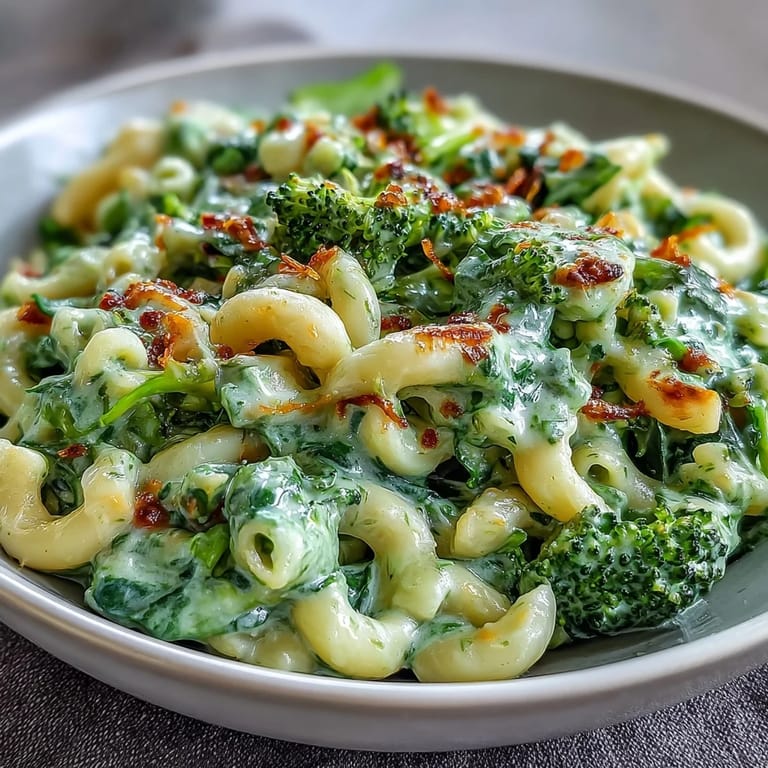
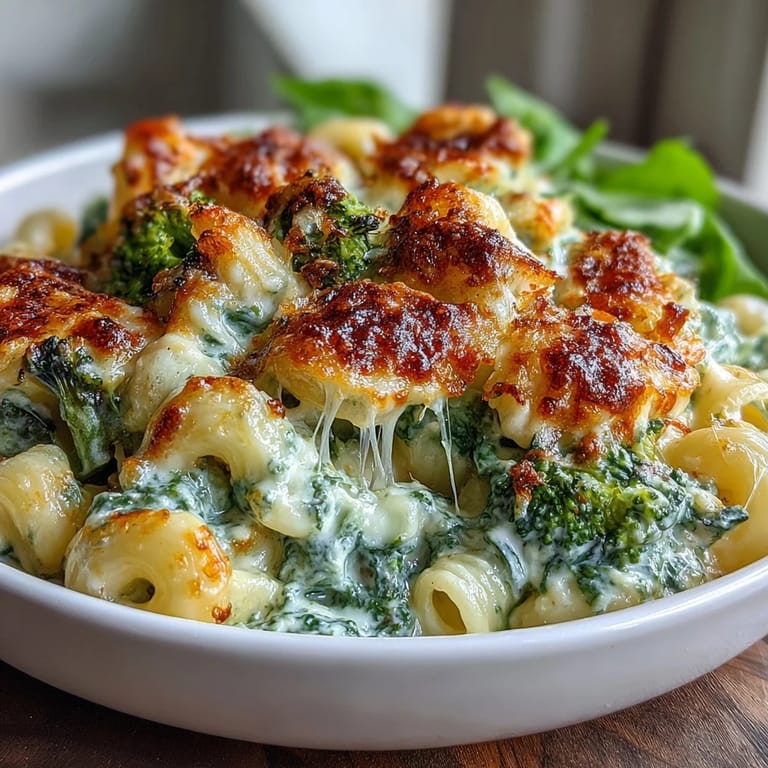
- Pour about half of your cheese sauce into the blender with the wilted spinach and blend until it's completely smooth and an impossibly beautiful bright green. This is the step that transforms mac and cheese into something that looks like you tried.
- Combine everything together:
- Pour the blended spinach sauce back into the skillet with the remaining cheese sauce and stir to combine. Add your drained pasta and broccoli, tossing everything gently until every piece is coated in the vibrant green sauce.
- Finish and serve:
- Heat everything gently for a minute or two just to make sure it's all warm and cohesive. Serve immediately garnished with fresh parsley and extra Parmesan, and prepare yourself for people asking if you've been holding out on your cooking skills.
 Pin it
 There's something quietly magical about serving food that's both genuinely good for you and tastes like a warm hug. My family has now requested this at least once a month, and I've stopped trying to pretend it's a healthy compromise and started celebrating it as what it actually is—a dish that works because it doesn't apologize for being delicious.
The Blending Technique That Changes Everything
The decision to blend half the sauce with the spinach isn't just for show, though the color is admittedly stunning. When I first made this without blending, the spinach stayed chunky and separated, sinking to the bottom like it didn't want to be there. Blending creates an emulsion where the spinach becomes part of the sauce itself, creating a unified texture and vibrant hue that looks professionally done while being completely simple.
Making This Work for Different Diets
The beautiful thing about this recipe is how flexible it actually is once you understand the foundation. I've made it gluten-free by swapping the pasta and using cornstarch instead of flour, and the result was honestly indistinguishable. For someone watching dairy, you could use dairy-free butter and a combination of cashew cream and nutritional yeast, though it becomes a different dish—one that works but requires respect for its new identity.
Taking It Further and Staying Adaptable
Once you've made this once or twice, you'll start seeing variations everywhere. Kale brings an earthier note, peas add sweetness, and I've even tried mixing in roasted butternut squash for autumn versions that feel seasonal without being gimmicky. The constant is the technique—the roux, the milk, the blended greens—everything else is your kitchen telling you what it wants to be.
- If you want a baked version, transfer the finished mac and cheese to a baking dish, top with breadcrumbs and extra cheese, and bake at 200°C (400°F) for 10 to 15 minutes until the top is golden and irresistible.
- Use whatever cheese you have on hand as long as you keep the ratio of sharp to mild, since sharp cheddar is doing the flavor work while the others support it.
- Make this ahead and reheat gently with a splash of milk, which keeps everything creamy rather than letting it seize up from sitting.
 Pin it
 There's comfort in a dish that feeds both the body and the desire to feel like you're doing something right in the kitchen. This green mac and cheese has become my answer to a lot of dinner questions because it works, it tastes like care, and it somehow makes eating vegetables feel like a choice rather than an obligation.
Frequently Asked Questions
- → What vegetables are included in this dish?
Fresh spinach and broccoli florets are used to add vibrant color and nutrients.
- → How is the cheese sauce thickened?
Butter and flour are cooked to form a roux, then milk is gradually added and simmered until the sauce thickens.
- → Can this dish be made gluten-free?
Yes, by substituting regular pasta and flour with gluten-free alternatives.
- → Why blend spinach into the sauce?
Blending spinach creates a smooth, vivid green sauce that enhances both flavor and nutritional value.
- → What cheeses are used in the sauce?
Sharp cheddar, mozzarella, and grated Parmesan combine for a rich, creamy texture and depth of flavor.