 Save
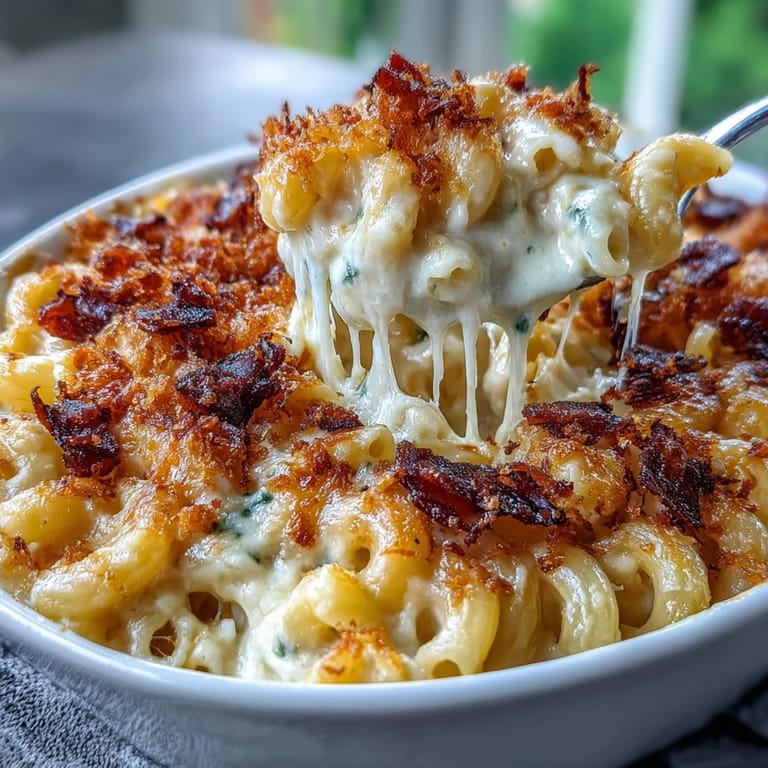
Save My kitchen still smells like melted cheese and crispy bacon from the afternoon my neighbor dropped by unannounced, and I realized I had exactly what I needed to make something that would make her stay longer than the quick coffee we'd planned. There's something almost alchemical about watching a simple roux transform into silky sauce, how the sharp cheddar and creamy Gruyère swirl together until they're indistinguishable, and how those bacon crumbs catch the light when they hit the golden bubbly top. This isn't fancy cooking, but it's the kind of dish that turns an ordinary Tuesday into something worth remembering.
I made this for my sister's first apartment housewarming, before she learned to cook anything beyond toast, and watching her face when she tasted it made me understand why people call mac and cheese soul food. She asked for the recipe three times that night, which was her way of saying it meant something to her. Now whenever she visits, that's what she requests, and I never say no.
Ingredients
- Elbow macaroni (400 g): Keep it al dente—overcooked pasta will turn mushy in the oven, so taste it a minute before the package suggests and trust yourself more than the instructions.
- Unsalted butter (2 tbsp for sauce, 2 tbsp melted for topping): Using unsalted lets you control the salt level and keeps the cheese flavors from getting muffled by overly salted butter.
- All-purpose flour (2 tbsp): This creates the roux that thickens everything into silky luxury, so don't skip whisking it smoothly into the butter or you'll end up with floury lumps.
- Whole milk (500 ml) and heavy cream (120 ml): The combination matters—milk alone would be thin and one-dimensional, but the cream adds that richness that makes people ask if you added extra butter.
- Sharp cheddar cheese (200 g), Gruyère cheese (100 g), and Parmesan cheese (50 g): Three cheeses might seem excessive until you taste how they layer—sharp cheddar brings bite, Gruyère adds subtle sweetness and nuttiness, and Parmesan brings salty depth that ties everything together.
- Mustard powder (1 tsp), garlic powder (½ tsp), and cayenne pepper (¼ tsp optional): These aren't toppings, they're the secret architecture that makes people ask what you did differently—the mustard powder especially enhances cheese flavor without tasting like mustard itself.
- Salt and black pepper: Taste before the oven goes in, because baking won't develop flavors the way stovetop cooking does.
- Streaky bacon (4 slices): Cook it until it shatters between your fingers, and save a tablespoon of the rendered fat for the breadcrumbs if you're feeling indulgent.
- Panko breadcrumbs (60 g): Panko's larger crumbs stay crispier than regular breadcrumbs, which is why the topping doesn't get soggy even sitting in the hot dish for a few minutes.
- Fresh parsley (2 tbsp, optional): This brightens the richness, so include it unless you're going for pure, unapologetic decadence.
Tired of Takeout? 🥡
Get 10 meals you can make faster than delivery arrives. Seriously.
One email. No spam. Unsubscribe anytime.
Instructions
- Heat the oven and prepare:
- Preheat to 190°C (375°F) and grease your baking dish thoroughly—this prevents the crispy bottom bits from sticking and tearing when you serve it. A 2-liter dish is the right size to give the macaroni some depth without spreading too thin.
- Cook the pasta perfectly:
- Salt your water generously and cook the elbow macaroni until just al dente, about a minute under what the package says. Drain it well but don't rinse it—the starch helps the sauce cling.
- Make the roux base:
- Melt butter over medium heat and whisk in the flour immediately, stirring constantly for a full minute to cook out the raw flour taste. You're looking for it to smell a bit nutty, which means it's ready.
- Build the sauce:
- Pour in the milk and cream slowly while whisking constantly, watching for lumps and breaking them up as you go. Simmer gently for 3-4 minutes until it coats the back of a spoon, then you know it's thickened enough.
- Blend in the cheese and seasonings:
- Remove from heat, then stir in all three cheeses, mustard powder, garlic powder, cayenne, salt, and pepper until completely smooth and glossy. If the sauce seems thick, you can add a splash more milk, but remember it will thin slightly when you fold in the pasta.
- Combine pasta and sauce:
- Pour the cooked macaroni into the sauce and fold gently until every piece is coated, then transfer everything to your prepared baking dish. Don't overmix or you'll tear the pasta, just make sure there are no dry bits at the bottom.
- Prepare the bacon topping:
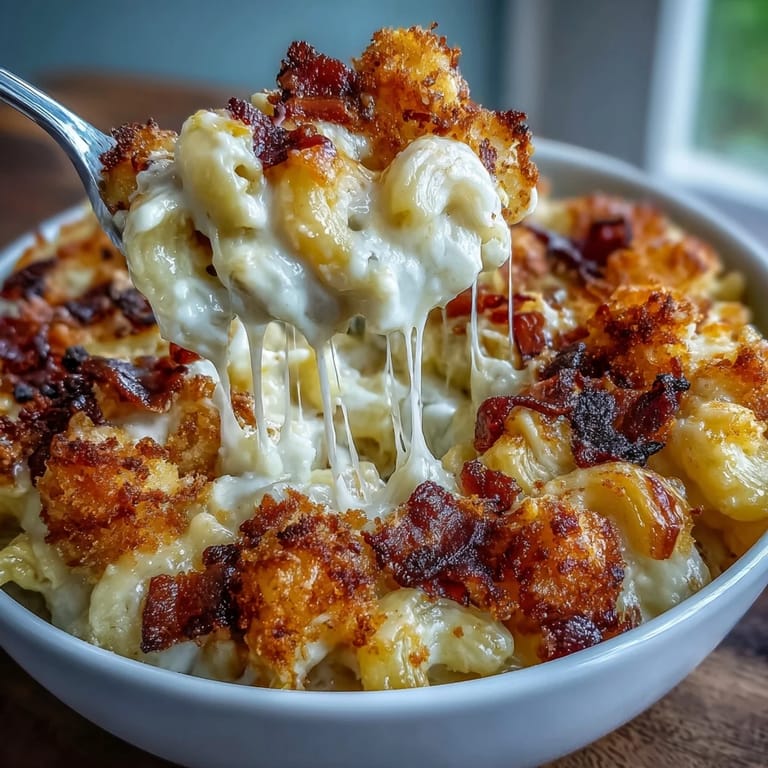
- Cook bacon in a skillet until it's crackling and dark at the edges, then drain on paper towels and crumble it into bite-sized pieces. While it's cooling, combine panko, melted butter, and parsley in a bowl, then fold in the bacon.
- Top and bake:
- Sprinkle the bacon crumb mixture evenly over the macaroni, making sure you cover the edges where it tends to dry out. Bake for 25-30 minutes until the top is deeply golden and you can see it bubbling at the edges, which means the sauce is hot all the way through.
- Rest before serving:
- Let it cool for 5-10 minutes before serving—this lets it set just enough to scoop cleanly while still staying creamy inside.
 Pin it
 There was an evening when my oldest friend came over stressed about a job interview, and we sat at the kitchen counter eating this straight from the baking dish, not even plating it, and somewhere between the second and third forkful she stopped talking about the interview and started laughing about something completely unrelated. Sometimes food is just food, and sometimes it's the thing that lets people remember how to exhale.
Why the Cheese Blend Matters So Much
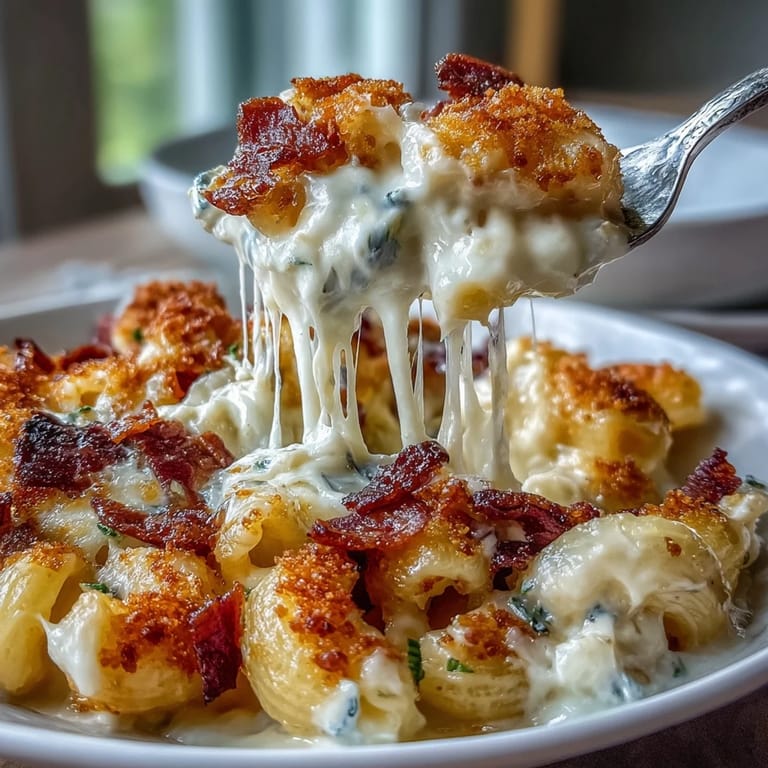
Using one cheese would be simpler, but it would be boring—sharp cheddar alone makes the dish acidic and one-note, while Gruyère by itself feels fancy but doesn't have enough backbone. The real magic happens when you layer them: the cheddar provides the recognizable cheese flavor people expect, the Gruyère adds complexity and a subtle sweetness that rounds out the sharpness, and the Parmesan brings umami and nuttiness that makes people taste something delicious without being able to name it. This is why people keep coming back for seconds, because their brain is experiencing three different cheese experiences in one bite.
The Science of Not Overcooking the Pasta
Everyone knows that pasta continues cooking in residual heat, but this is especially important for mac and cheese because the pasta then bakes in a hot oven surrounded by hot sauce for another 25-30 minutes. If you cook it to fully al dente the first time, it will be slightly overdone by serving time, which changes the texture from tender to mushy. The solution is to actually undercook it by about one minute—pull it out when it still has a thread of firmness in the center, and by the time it hits the table, it will be perfect. This single adjustment is the difference between dishes people rave about and dishes that disappear quietly from your rotation.
Variations and Storage
This recipe is sturdy enough to handle experimentation without falling apart, which is why it's become my template for exploring flavors without starting from scratch. You can add smoked paprika for depth, substitute Swiss cheese for Gruyère if that's what you have, or create a vegetarian version by replacing the bacon with sun-dried tomatoes and adding extra herbs to the breadcrumb topping. For storage, let leftovers cool completely, then cover and refrigerate for up to three days—you can either reheat it gently in a 160°C oven covered with foil, or eat it cold straight from the container, which my roommate insists is secretly the best way.
- Smoked paprika adds a subtle richness that makes people think you've added something mysterious and special.
- Leftover mac and cheese makes the best next-day lunches because it actually tastes better once the flavors have had time to settle and merge.
- If you're feeding a crowd, this recipe doubles easily—just use a larger baking dish and add 5-10 minutes to the baking time.
 Pin it
 This is the dish I make when I want to feel like I'm taking care of people, when the kitchen fills with steam and butter-toasted smells and someone inevitably says this tastes like home. That might be the real recipe right there.
Frequently Asked Questions
- → What cheeses are used in this dish?
The dish combines sharp cheddar, Gruyère, and Parmesan for a rich, layered cheese sauce.
- → How is the bacon crumb topping prepared?
Bacon is cooked until crisp, crumbled, then mixed with panko breadcrumbs, melted butter, and parsley before sprinkling on top.
- → Can the bacon be omitted or substituted?
Yes, for a vegetarian option, omit bacon and add smoked paprika or sun-dried tomatoes to the topping for flavor.
- → What texture should the pasta have before baking?
Cook the macaroni until just al dente so it retains firmness after baking.
- → How do you ensure a creamy cheese sauce without lumps?
Whisk the butter and flour to create a roux, then gradually add milk and cream, stirring continuously until thickened before mixing in the cheeses.