 Save
Save My uncle's kitchen in New Orleans always smelled like this—that mix of browned meat and the holy trinity of vegetables hitting hot oil, which meant dirty rice was coming. He'd stand at the stove with a wooden spoon in one hand and a cold beer in the other, stirring in those Cajun spices with the confidence of someone who'd made this a hundred times without measuring. I watched him work once, realizing he wasn't following a recipe but having a conversation with the food, tasting as he went, adjusting the heat by ear. Now when I make it, I'm trying to capture that same ease he had.
I made this for a friend who'd never had proper Cajun food, and watching her take that first bite—eyes widening at the layers of spice and depth—reminded me why this dish matters. It's unpretentious but somehow impressive, the kind of food that makes people feel welcomed without you having to fuss.
Ingredients
- Ground pork and beef (or chicken livers): The combination gives you richness; using livers is traditional and adds a deeper, almost mineral quality that makes this authentically Cajun.
- Onion, bell pepper, and celery: This is the holy trinity—don't skip the ratios, as they're what build the flavor foundation.
- Garlic: Fresh minced garlic, not powder, makes a noticeable difference in brightness.
- Long-grain white rice: Rinse it first to remove excess starch, so each grain stays separate and fluffy rather than clumpy.
- Chicken broth: Use a good one—this is your liquid base and it deserves quality.
- Cajun seasoning: Store-bought works fine, but if you have smoked paprika, thyme, cayenne, and salt on hand, you can adjust the blend to your heat preference.
- Smoked paprika: This adds a subtle smokiness that hints at traditional fire cooking.
- Spring onions: Save these for garnish; they add a fresh, sharp note at the end that cuts through the richness.
Tired of Takeout? 🥡
Get 10 meals you can make faster than delivery arrives. Seriously.
One email. No spam. Unsubscribe anytime.
Instructions
- Brown the meat with confidence:
- Heat your oil until it shimmers, then add the ground pork and beef (or livers if you're going traditional). Break the meat into small pieces as it cooks—you want texture, not one big clump. This takes about 6 to 7 minutes and the kitchen will smell incredible once it's golden.
- Build the base with vegetables:
- Add your chopped onion, pepper, and celery to the browned meat. You'll hear the sizzle and smell the vegetables releasing their sweetness. Let them soften for about 5 minutes, stirring occasionally so nothing sticks to the bottom.
- Coat everything in spice:
- This is where the magic happens—sprinkle in your Cajun seasoning, thyme, paprika, salt, pepper, and cayenne if you want heat. Stir it all together and let the spices warm for a moment, which releases their oils and deepens their flavor.
- Toast the rice briefly:
- Add your rinsed rice and stir for 1 to 2 minutes. This toasting step keeps the grains from becoming mushy later and adds a subtle nutty note to the final dish.
- Let the broth do the work:
- Pour in your chicken broth and bring everything to a boil. Once it boils, reduce the heat to low, cover the pot, and let it simmer for 20 to 22 minutes until the rice is tender and the liquid is absorbed—this is the hands-off part where you can step back.
- Rest and fluff:
- Turn off the heat and let the pot sit, covered, for 5 minutes. This allows the rice to finish cooking gently. Fluff it with a fork before serving.
- Finish with brightness:
- Top each serving with sliced spring onions, which add a fresh bite that balances all that richness.
 Pin it
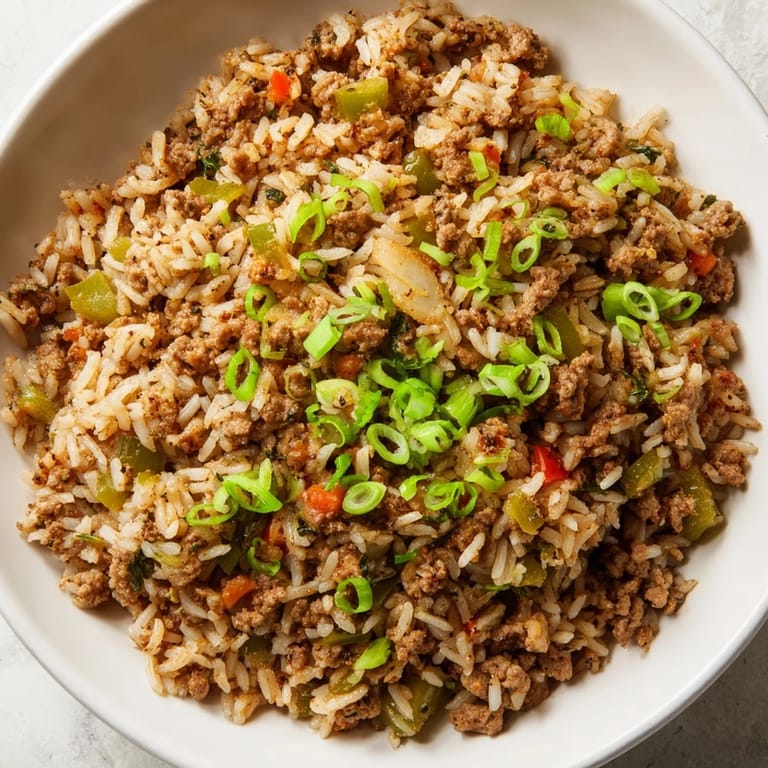
 There's a moment after the cover comes off and you fluff the rice where the whole dish transforms—the steam rises, the aroma hits, and it suddenly feels like celebration. That's when I understood why my uncle loved making this so much.
The Heart of Cajun Cooking
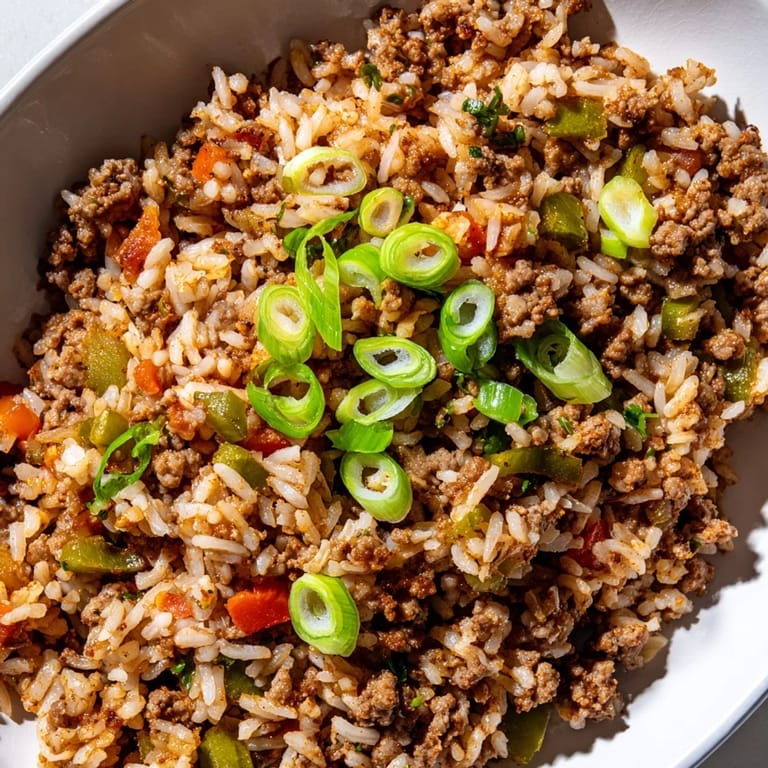
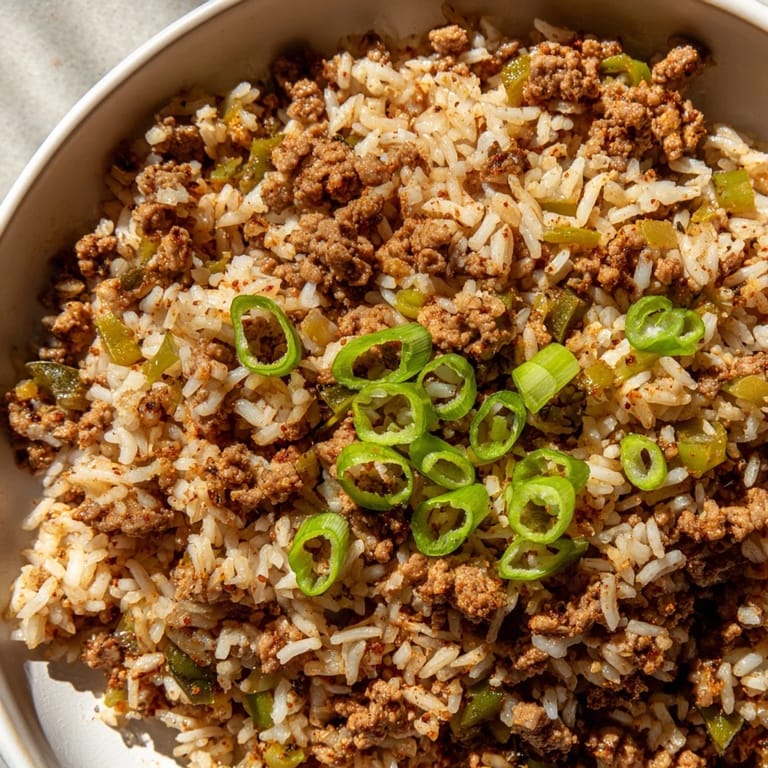
Dirty rice isn't fancy, and that's exactly why it works. It's built on the belief that bold flavors and honest ingredients are enough—no cream, no complicated techniques, just good food that tastes like home. The word dirty comes from the appearance; the meat and vegetables mix into the rice and darken it, but that color is pure flavor. This is comfort food for people who understand that the best meals are the ones that satisfy without pretense.
Heat Level and Customization
The Cajun seasoning already carries some heat, but you control it completely. If you're cooking for people who avoid spice, leave out the cayenne and go easy on the Cajun seasoning. If you want to turn up the fire, add more cayenne or a dash of hot sauce at the table. Some cooks add chopped parsley for freshness, or a handful of diced tomatoes for acidity—these additions don't hurt the dish; they just shift the balance slightly.
Serving and Pairing
This dish is a complete meal on its own, but it shines alongside something crisp—a cold lager, a chilled white wine, or even iced tea with lemon if you're keeping it non-alcoholic. Serve it in bowls while it's still warm, and always have hot sauce within reach for people who want to add their own heat at the table. Some people like to squeeze a little lime over the top at the end, which adds a brightness that cuts through the richness.
- Serve family-style in a big pot so people can help themselves and the warmth lingers longer.
- Leftover dirty rice reheats beautifully in a skillet with a splash of broth, making it perfect for lunch the next day.
- This recipe easily doubles if you're feeding more people, and the flavors don't suffer at all.
 Pin it
 This is the kind of food that brings people to the table, the kind that makes you want to cook it again before you've even finished eating the first time. Make it often, adjust it to your taste, and let it become yours the way my uncle let it become his.
Frequently Asked Questions
- → What meats are used in this dish?
Ground pork and beef are the primary meats, with chicken livers as a traditional alternative for richer flavor.
- → Which spices create the Cajun flavor?
Cajun seasoning combined with smoked paprika, thyme, black pepper, and optional cayenne provides the distinctive bold taste.
- → How is the rice cooked perfectly fluffy?
Rinsed long-grain rice is toasted briefly with the spices, then simmered with chicken broth until tender and liquid is absorbed.
- → Can this dish accommodate dietary restrictions?
This dairy-free dish contains no major allergens unless present in store-bought seasonings or broth, so check labels accordingly.
- → What are good serving suggestions?
Garnishing with fresh spring onions adds brightness; it pairs well with hot sauce, crisp lager, or chilled white wine.