 Save
Save There's something almost magical about what happens when you roast garlic until it turns sweet and mellow instead of sharp and biting. I discovered this soup on a grey afternoon when I had nothing but pantry basics and a craving for something warm that didn't feel heavy. The kitchen filled with this gentle, savory aroma as the garlic softened in the pot, and by the time I blended it all together, I'd stumbled onto something I couldn't stop making.
I made this for my neighbor who was recovering from a cold, and she called me three days later asking for the recipe because she'd already made it twice. That moment taught me that the best dishes are the ones that make people feel genuinely better, not just fed.
Ingredients
- Onion and leek: These are your flavor foundation, and slicing the leek thin ensures it breaks down into silky strands that make the soup feel luxurious without cream doing all the work.
- Garlic cloves: Ten cloves sounds ambitious until they cook down, and here's what I learned the hard way: don't peel and chop them until you're ready to cook, or they'll start turning brown and bitter.
- Potatoes: Medium dice means they cook through evenly in 20 minutes and thicken the soup naturally when blended, so you don't need heavy cream to get that velvety texture.
- Vegetable broth: Use something with real flavor because this is literally your soup's backbone, and a bland broth makes everything taste underseasoned no matter how much salt you add.
- Milk: Whole milk adds richness, but honestly, plant-based versions work just as well, and I've stopped being precious about which one I use depending on what's in my fridge.
- Fresh thyme, parsley, and chives: Fresh herbs are non-negotiable here because they're what make this taste like someone cared, not like you opened a can.
- Olive oil: Two tablespoons is enough to coat everything gently and let flavors develop without making the soup feel greasy.
- Salt and pepper: Always taste at the end because seasoning builds gradually, and what seems right at step three might need adjustment once the milk goes in.
Tired of Takeout? 🥡
Get 10 meals you can make faster than delivery arrives. Seriously.
One email. No spam. Unsubscribe anytime.
Instructions
- Start with your base:
- Heat the oil until it shimmers just slightly, then add the onion and leek. You want them to turn translucent and soft, which takes about five minutes if you stir occasionally, and this is where patience pays off because rushing this step makes the soup taste raw.
- Let the garlic whisper in:
- Add your sliced garlic and keep the heat gentle, stirring constantly because burnt garlic will ruin everything and you'll know it the second you taste it. Two to three minutes is all you need to coax out the sweetness without any bitterness.
- Build the soup:
- Toss in the diced potatoes along with the thyme and a good pinch of salt and pepper, then let everything get friendly for about two minutes. The salt starts breaking down the potatoes even before the broth hits the pan.
- Simmer until tender:
- Pour in the broth, bring it to a boil, then turn the heat down and let it bubble gently uncovered for 20 minutes. The potatoes should fall apart easily when you poke them with a fork, which is your signal that you're ready for the next step.
- Add the cream and herbs:
- Turn off the heat and stir in the milk along with most of the parsley and chives, keeping a little back for garnish because those fresh flecks on top are what make people lean in with their spoon. The warmth will wilt the herbs just enough.
- Blend to your preference:
- Use an immersion blender to purée until the soup is completely smooth, or leave it a little chunky if that's what you like, since this is your soup and your spoon. Taste it now and adjust the seasoning because this is the moment of truth.
- Serve with ceremony:
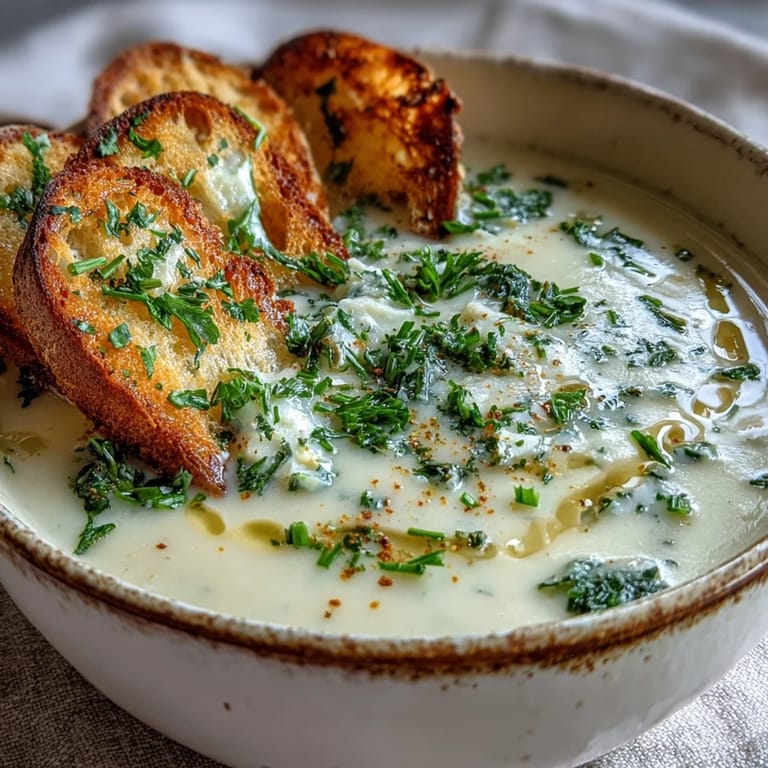
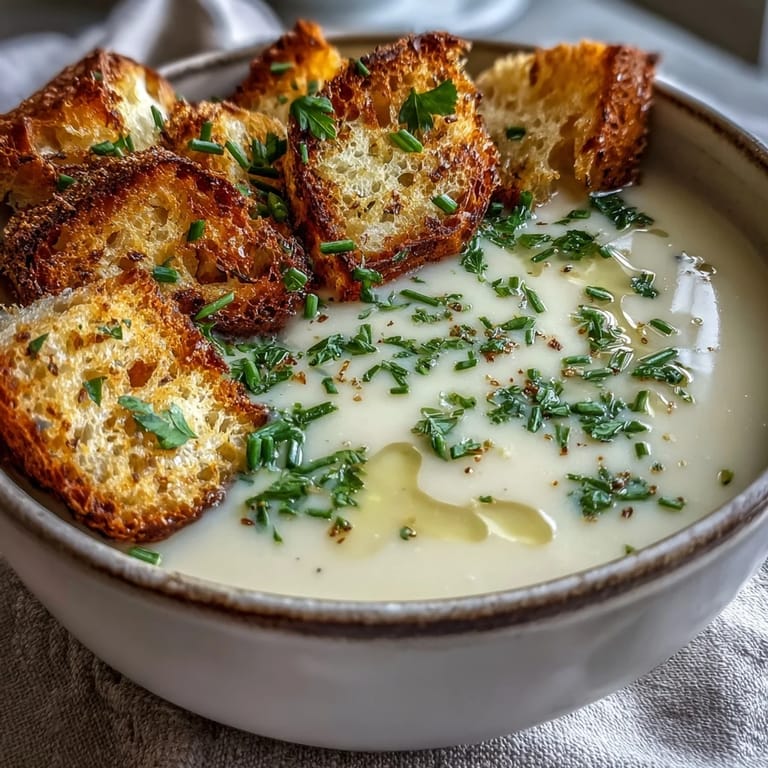
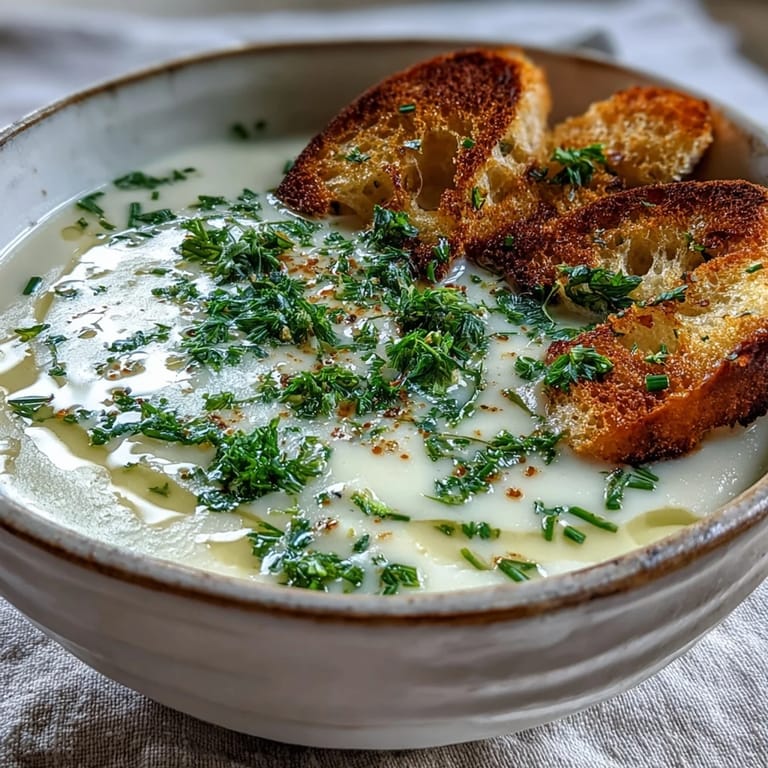
- Ladle it into bowls and top with the reserved herbs, maybe a pinch of Parmesan if you're feeling indulgent, and definitely some croutons if you have bread around. The contrast between the creamy soup and the crispy garnish is part of what makes this feel special.
 Pin it
 My mother made something similar the winter my dad was learning to cook, and he made this soup three nights in a row just to prove he could get it right. Now it's become the thing he cooks when he wants to show someone they matter, which is maybe the best fate any recipe can have.
The Garlic Question
People always ask if ten cloves of garlic is too much, and the answer is that it depends entirely on how gently you treat it. When garlic cooks slowly in fat and then simmers in broth, it stops being aggressive and becomes almost sweet, like it's been tamed into submission. I've learned that the fear of garlic is usually fear of the sharp, raw bite, and this soup eliminates that entirely.
Making It Your Own
The beauty of this soup is that it's flexible without being fussy. I've added roasted red peppers when I had them, thrown in fresh spinach at the very end, and once substituted half the potato with cauliflower when that's what was in my crisper drawer. The framework stays the same, but you get to paint with whatever vegetables are calling to you that day.
Timing and Storage
This soup tastes best the day you make it when all those fresh herbs are at their most vibrant, but it keeps beautifully in the refrigerator for three days and freezes well for up to two months if you store it properly. I always save a little extra herbs to stir in after reheating so it tastes almost as fresh as the first bowl.
- Make it in the morning and let it cool completely before refrigerating so it doesn't warm up your whole fridge.
- When you reheat, add the milk slowly and stir constantly to avoid curdling if you're using dairy.
- Freeze it without the herbs and milk, then stir those in after thawing and reheating for the best flavor.
 Pin it
 This soup proves that the most comforting meals don't need to be complicated or time-consuming, just made with enough attention that someone can taste the care. Make it once for yourself and you'll understand why it keeps showing up on my table when the weather turns cool.
Frequently Asked Questions
- → Does the garlic taste overpowering?
Not at all. The garlic mellows significantly during cooking, becoming sweet and subtle rather than pungent. Ten cloves might seem like a lot, but gentle sautéing transforms them into a mild, aromatic base.
- → Can I make this ahead of time?
Absolutely. This actually tastes better the next day as flavors have time to meld. Store in the refrigerator for up to 3 days and reheat gently, adding a splash of liquid if needed.
- → Is this suitable for freezing?
Yes, freeze for up to 3 months. Allow to cool completely before transferring to airtight containers. Thaw overnight in the refrigerator and reheat slowly.
- → What's the best way to achieve a smooth texture?
An immersion blender works beautifully directly in the pot. If using a countertop blender, work in batches and be careful with hot liquid. For safety, vent the blender and cover with a kitchen towel.
- → Can I use dried herbs instead of fresh?
Fresh herbs provide the best flavor, but dried will work in a pinch. Use one-third the amount: about 2 teaspoons dried thyme and 1 teaspoon each of dried parsley and chives.