 Save
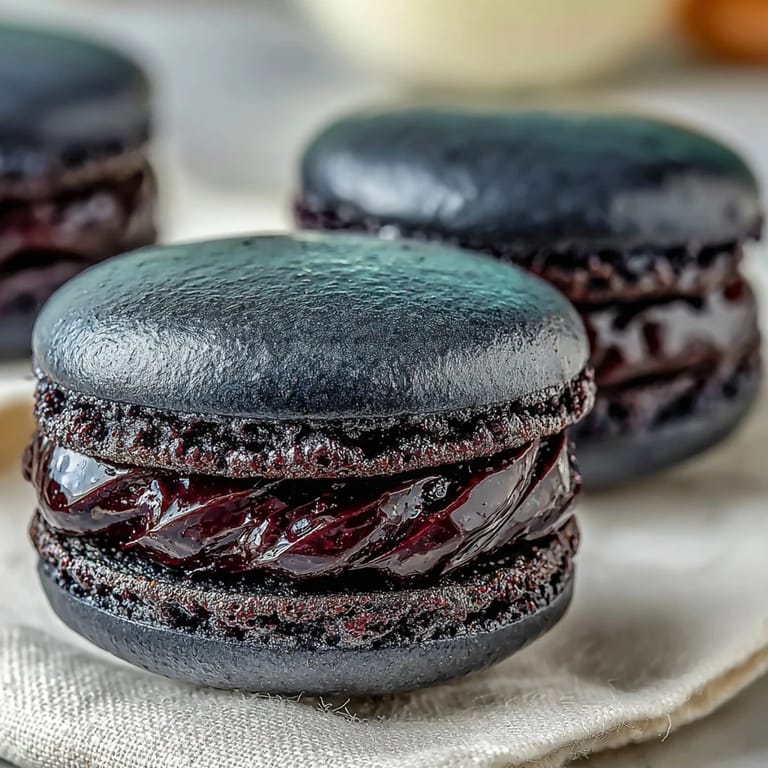
Save The first time I piped a macaron shell, my hands shook so badly that I nearly squeezed the entire batch across the baking sheet like an accordion. That kitchen disaster taught me patience, precision, and the quiet magic of French meringues. These black currant macarons arrived in my life during a particularly gray winter when I needed something luminous and delicate to look forward to. What started as nervous experimentation became an obsession with those paper-thin shells and the tart, luxurious ganache hiding inside. Now when I make them, the kitchen fills with a specific kind of calm, like I'm finally speaking a language I've learned to understand.
I brought a batch to my neighbor who had just returned from the hospital, and watching her close her eyes while eating one felt like witnessing a small miracle. She told me later that the tartness of the black currant cut through the richness perfectly, and that the delicate sweetness reminded her of a patisserie she visited in Lyon forty years ago. That conversation stayed with me because it reminded me that these little cookies carry memory and care in ways that transcend ingredients.
Ingredients
- Egg whites, aged: Sitting in the fridge for a day or two thins them out slightly and makes them whip into a more stable, glossy meringue than fresh ones ever could.
- Granulated sugar: This dissolves completely into the whites, creating that signature glossy peak that signals you've got the foundation right.
- Powdered sugar and almond flour: The combination creates the tender crumb, but sifting them together first removes lumps that would sabotage your shells' smooth surface.
- Food coloring: Gel coloring is forgiving compared to liquid, which can throw off your ratios and weep during baking.
- Blackcurrant purée: Straining out the seeds matters more than you'd think because they create a gritty texture that catches between your teeth.
- White chocolate and butter: The butter softens the chocolate's sweetness and creates that silky ganache texture that spreads without cracking the shells.
- Lemon juice: Just a whisper of brightness that makes the black currant taste more like itself, the way salt does for chocolate.
Tired of Takeout? 🥡
Get 10 meals you can make faster than delivery arrives. Seriously.
One email. No spam. Unsubscribe anytime.
Instructions
- Sift your dry ingredients with intention:
- Run the almond flour and powdered sugar through the food processor, then press them through a fine sieve using a rubber spatula. This step separates the light, fine particles from the heavier bits, and it's what gives macarons their characteristic smooth domes instead of grainy, cracked tops.
- Whip your egg whites until they shine:
- Start on medium speed and add the granulated sugar gradually once the whites turn foamy. Beat until stiff peaks form and the meringue looks like glossy clouds. This is your structure, so don't rush it or skip it.
- Fold with a gentle hand and a patient rhythm:
- Add the almond mixture in three additions, folding gently after each one using a rubber spatula. The batter should eventually flow like thick lava, and you should be able to draw a figure-eight without it breaking apart. Overmixing deflates all your careful whipping, so resist the urge to be thorough.
- Pipe with control and confidence:
- Use a piping bag with a 1 cm round tip and hold it perpendicular to the sheet. Squeeze gently and release pressure before lifting away, aiming for circles about 3.5 cm across. The more you do this, the more automatic your hand becomes.
- Tap and listen for air bubbles:
- Give your baking sheets a firm tap on the counter, then use a toothpick to burst any remaining bubbles before resting. This prevents those ugly hollow shells that crack instead of forming feet.
- Rest them without rushing:
- Let the shells sit at room temperature for 30 to 45 minutes until a thin, papery skin forms on top. Run your finger gently across one—it should feel dry, not tacky. This skin is what allows macarons to develop their signature feet during baking.
- Bake one tray at a time, rotating halfway:
- Set your oven to 150°C (300°F) and resist the urge to open the door too early. Bake for 13 to 15 minutes, rotating the tray halfway through to ensure even color. The shells should lift cleanly from the parchment when completely cool.
- Prepare the ganache while shells cool:
- Heat the blackcurrant purée until it steams gently, then pour it over finely chopped white chocolate. Let it sit for a moment to soften the chocolate before stirring in smooth, slow circles. Add the softened butter and lemon juice at the end and stir until the ganache becomes silky and thick enough to pipe.
- Pair, fill, and sandwich with care:
- Match shells by size so your finished macarons look intentional. Pipe a small dollop of ganache onto one shell and gently press the partner shell down, twisting slightly if needed.
- Age them overnight for flavor to develop:
- Store the filled macarons in an airtight container in the refrigerator for at least 24 hours. The shells soften slightly and the flavors marry together, making them infinitely better than eating them fresh.
 Pin it
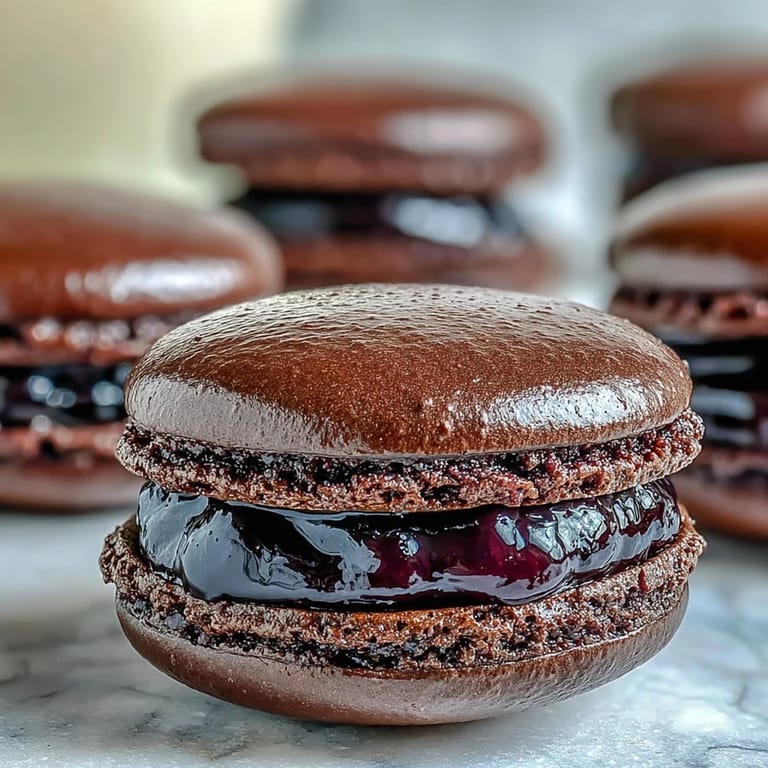
 There's a specific moment when you pull macarons from the oven and see those delicate ruffled feet for the first time that makes all the precision feel worth it. It's not quite accomplishment and not quite relief—it's something gentler, like you've just spoken a language fluently after months of practice.
The Secret of Perfect Meringue
Aged egg whites really do make a difference, though I resisted this step for months thinking it was unnecessary fussiness. Then I compared batches side by side and realized the aged whites whipped into peaks faster and held them longer without weeping. The first time I aged eggs on purpose, I labeled them with a sticky note and felt absurdly proud of this small act of planning. Now I keep a covered bowl of egg whites in the back of my fridge at all times, ready for whenever the macaron mood strikes.
Why Black Currant Belongs with White Chocolate
This pairing works because black currant is tart and assertive, never cloying, and white chocolate provides sweetness without darkness that would overshadow the fruit flavor. I learned this by accident when I substituted cassis purée in desperation and found it almost too refined, whereas the pure blackcurrant taste felt more honest. The lemon juice is the final secret—just a teaspoon of it makes the currant flavor snap into focus like you've suddenly turned up the volume on a quiet song.
Storing and Serving for Maximum Impact
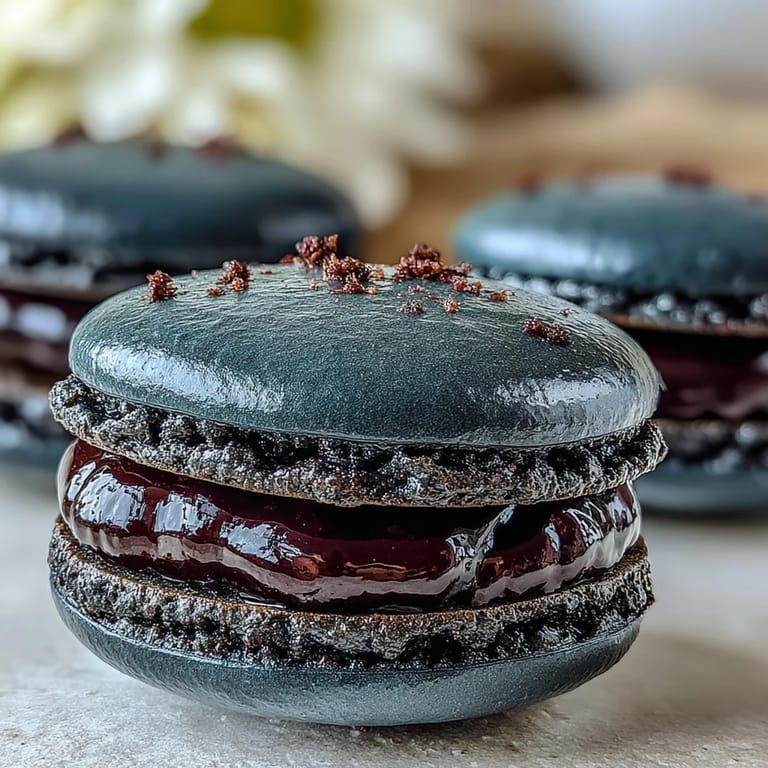
Macarons genuinely taste better on day two, so resist the urge to serve them immediately after assembly. They keep beautifully in the refrigerator for up to five days in an airtight container, and they freeze for up to a month if you want to spread your baking labor across weeks. Here's what I've learned about serving them as if you planned this moment all along.
- Remove them from the refrigerator about fifteen minutes before serving so they soften to their ideal texture and the ganache becomes less dense.
- Arrange them on a small white plate or in a paper box lined with parchment because macarons deserve to be presented like the delicate things they are.
- Serve with strong black tea or sparkling water since their sweetness benefits from something to cut through it.
 Pin it
 Making macarons became a language I speak now, one small ceremony at a time, and I hope they become that for you too. There's quiet power in mastering something delicate.
Frequently Asked Questions
- → Why must I age egg whites before making macarons?
Aging egg whites for 24-48 hours allows moisture to evaporate, creating a more stable meringue with better volume. This dehydration helps achieve the glossy, stiff peaks needed for proper macaronage and reduces risk of hollow shells.
- → How do I know when macaron batter is properly folded?
The batter should flow like thick ribbons from your spatula. Test by drawing a figure-8—the batter should hold the shape without breaking for 10 seconds. Under-mixed batter creates peaked shells; over-mixed batter spreads flat without developing feet.
- → Why do macarons need to rest before baking?
Resting develops a skin on the shell surface, allowing steam to escape from underneath during baking. This creates the signature ruffled 'feet' while keeping the top smooth. Test by gently touching—a properly rested shell should feel dry and not sticky.
- → Can I substitute blackcurrant purée?
Cassis purée makes an excellent alternative. Other berry purées like raspberry or blackberry work but will alter the flavor profile. Ensure any substitute is strained thoroughly to prevent seeds from clogging your piping tip and creating texture issues.
- → Why must macarons mature for 24 hours?
This crucial resting period allows moisture from the ganache to soften the interior shells, creating that characteristic chewy texture. The flavors meld and develop complexity. Skipping this step results in dry, crumbly cookies without the prized melt-in-your-mouth quality.
- → What causes hollow macaron shells?
Hollow shells typically result from over-beating egg whites, incorrect oven temperature, or under-baking. Ensure meringue forms stiff glossy peaks, use an oven thermometer, and bake until shells can be lifted cleanly from parchment. Proper macaronage technique is essential.